

Maddy summaryHR 7166, the Stop Online Ammunition Sales Act of 2026, requires all ammunition sales to occur in person with identity verification, directly affecting licensed ammunition dealers and unlicensed buyers. The bill mandates that dealers verify a buyer’s identity using a photo ID during every transaction and prohibits online or remote sales. It also creates new recordkeeping rules requiring dealers to report multiple sales of over 1,000 ammunition rounds to an unlicensed person within 5 business days. These provisions update existing federal firearms laws to apply specifically to ammunition transactions.
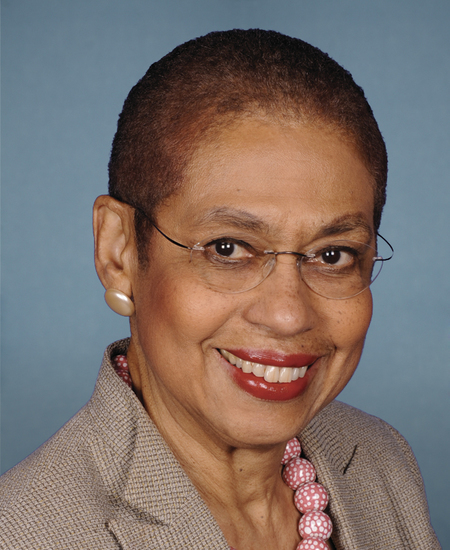
Rep. Eleanor Holmes Norton
Sponsored bills
Maddy summaryThis bill requires U.S. Department of Homeland Security (DHS) law enforcement officers and agents to follow a new department-wide policy on use of force. It mandates that officers use only objectively reasonable force, prioritize de-escalation, ban chokeholds and carotid restraints, and complete regular training. The policy also requires DHS components to establish internal review teams to analyze incidents and report detailed data every six months - including incidents causing injury, death, or involving deadly force - to the public via the DHS website. Additionally, DHS must brief Congress and inform the public within 24 hours of any incident resulting in hospitalization or death.
Maddy summaryHRES 1004 is a symbolic House resolution honoring Dr. Martin Luther King, Jr.'s legacy by celebrating diversity and condemning hate. It specifically calls for the House to celebrate his 97th birthday on January 19, 2026, and to condemn harassment, discrimination, or prejudice targeting Black Americans, Indigenous people, Jewish, Asian-American/Pacific Islander, Muslim, Hispanic/Latino communities, and LGBTQ+ individuals. The resolution affirms Dr. King’s teachings on unity and equality but does not create new laws or impose obligations on any entity. As a ceremonial resolution, it has no legal effect and directly affects no individuals or groups.
Maddy summaryThe SEPSIS Act (HR 7116) establishes a dedicated sepsis program within the CDC to improve national sepsis response. It requires the CDC Director to lead education campaigns on hospital sepsis best practices, enhance pediatric sepsis data collection, and coordinate with Medicare/Medicaid to develop quality measures. Hospitals would be asked to report on sepsis protocol adoption, with a voluntary "honor roll" recognizing top performers in early detection and treatment. The bill authorizes $20 million annually (2026-2030) for these efforts and mandates annual congressional briefings on sepsis data and hospital progress. This directly affects hospitals, CDC operations, and federal health agencies working to reduce sepsis-related deaths and costs.
Maddy summaryHR 7095 bans the importation of energy products (like refined oil) classified under chapter 27 of the U.S. tariff system if they were produced using crude oil originating from Russia, even if processed outside Russia. This directly affects U.S. importers and companies handling such energy products. The bill amends existing law to prohibit these imports by requiring customs to block shipments tied to Russian crude oil, regardless of where refining occurred. It targets "laundered" Russian oil that might otherwise enter the U.S. market through third-country refineries. The policy change focuses on restricting the flow of Russian energy revenue through import channels.
Maddy summaryHR 7101, the "No Delay in Representation Act," requires the House of Representatives to seat members elected in special elections within five legislative days of certification of results. It mandates that newly elected members be sworn in and seated as House Members by this deadline, overriding any existing rules or laws that might delay the process. If a member declines the oath during this period, the Speaker must administer it on a mutually agreed date. This bill directly affects individuals elected to fill House vacancies through special elections, ensuring faster integration into the legislative body.
Maddy summaryThe NO NATO for Purchase Act bans federal agencies from using government funds to buy land or assets in NATO member countries. It directly affects all federal departments and agencies by prohibiting such acquisitions as defined in the 1949 North Atlantic Treaty. The key provision blocks any action or expenditure related to purchasing territory within NATO nations. This prevents U.S. government purchases of foreign territory belonging to NATO member countries.
Maddy summaryHR 7089, the PARK Act, prohibits national parks and wildlife refuges from waiving entrance fees to honor the birthday of a sitting U.S. President, unless that birthday falls on a federal holiday. This policy directly affects all national park units and wildlife refuges that charge entrance fees under federal law. The key provision bans fee waivers specifically for presidential birthdays, maintaining standard fees except when the birthday aligns with a designated federal holiday like Independence Day. The bill makes no changes to other fee waivers or park operations, focusing solely on this specific exception.
Maddy summaryThis bill requires federal agencies that use or fund complex AI systems (called "covered algorithms") to establish civil rights offices staffed by experts. These offices must monitor and report on potential bias in algorithms affecting programs like benefits, housing, or loans, particularly regarding traits like race, gender, or disability. Agencies must submit detailed reports every two years starting one year after the bill passes, outlining risks, mitigation steps, stakeholder engagement, and recommendations. The law also creates an interagency working group to coordinate efforts across agencies. It directly affects any federal agency using or overseeing such AI systems, aiming to prevent unfair outcomes through transparency and accountability.
Maddy summaryHR 7100 establishes a Department of Justice Task Force on Anti-Sikh Hate and Discrimination to address systemic bias against Sikhs. The Task Force must draft a formal definition of anti-Sikh hate for DOJ use, develop educational programs for law enforcement and schools, and produce annual reports on hate crimes and trends. It requires quarterly collaboration with Sikh organizations and translation of materials into Punjabi. The bill directly affects Sikhs in the U.S. (who face disproportionate targeting as noted in FBI data) and mandates federal agencies to improve hate crime data collection and response. This is a policy-focused measure to standardize definitions, enhance reporting, and support community safety through DOJ action.