

Maddy summaryHCONRES 68 would require the President to remove U.S. military forces from Venezuela unless Congress has explicitly authorized their use through a declaration of war or a specific law. This applies to any U.S. Armed Forces currently stationed in Venezuela without such authorization. The resolution is based on the War Powers Resolution, which mandates congressional oversight of military deployments. It directs the immediate withdrawal of unapproved forces without adding new time limits or conditions.
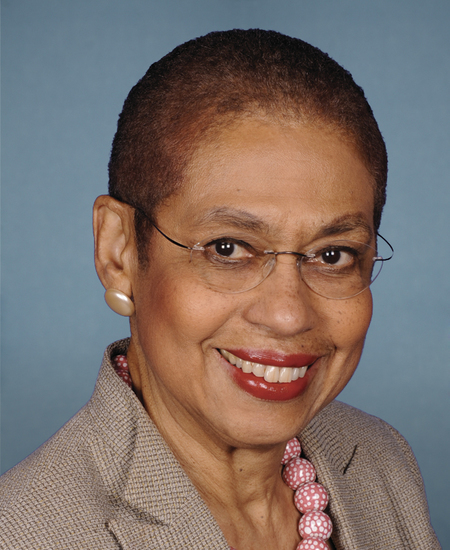
Rep. Eleanor Holmes Norton
Sponsored bills
Maddy summaryHRES 1018 is a resolution calling for the U.S. government and international partners to prioritize women's rights in Haiti's crisis response. It specifically demands ensuring at least 30% of Haiti's leadership positions (including security, humanitarian, and election roles) are held by women, funding services for gender-based violence survivors, and requiring gender-disaggregated data collection in all aid programs. The resolution also urges rebuilding U.S. Women, Peace, and Security programs and mandates that all policies address women's distinct needs in Haiti's transition. This resolution directly affects U.S. foreign policy implementation and Haiti's transitional government, emphasizing that women's inclusion is critical for stability.
Maddy summaryThis bill requires the Social Security Administration to maintain at least the 2025 level of field office personnel and prevent closures without strict review. It mandates 180 days' public notice, two local hearings, and input from Congress and local governments before closing or reducing services at any office, with a 30-day moratorium pending Inspector General approval. The law directly affects Social Security beneficiaries, particularly vulnerable groups like seniors, people with disabilities, and those with language barriers who rely on in-person services. It also requires a detailed report to Congress on past closures, GSA's role in relocation decisions, and a 10-year plan to maintain service levels.
Maddy summaryThe Language Access for All Act of 2026 requires federal agencies to ensure meaningful access to government services for people with limited English proficiency (LEP). Agencies must translate vital documents into languages commonly spoken in the U.S. (based on Census data), provide multilingual digital tools, interpretation services, and use bilingual staff as an alternative to professional interpreters. Each agency must create a language access plan within one year, detailing how it will serve LEP populations - including during emergencies - and annually certify compliance with technical standards. Noncompliance is treated as discrimination under civil rights law, with enforcement by the Department of Justice.
Maddy summaryHR 7227, the Mental Health and MAMA Act of 2026, eliminates cost-sharing (like copays or deductibles) for mental health and substance use treatment services during pregnancy and for one year after childbirth. It directly affects pregnant and postpartum individuals covered by group health plans or individual insurance policies, requiring these plans to cover such services with no out-of-pocket costs from pregnancy diagnosis through the 12-month period following birth. The law applies to in-network providers and includes telehealth services, with implementation delayed until two years after enactment. It amends key laws including the Public Health Service Act, ERISA, and the Internal Revenue Code to standardize this coverage requirement across health insurance systems. This policy change aims to improve access to care during a critical health period without altering existing coverage definitions.
Maddy summaryThe Ensuring Access to General Surgery Act of 2026 directs the Health Resources and Services Administration to study how to better identify areas with insufficient general surgeons, particularly in rural and underserved communities. The study will evaluate current shortage designations and test a new methodology using hospital service areas and surgeon-to-population ratios to set accurate thresholds for shortage levels (e.g., critical shortage, adequate supply). Within one year, the Secretary must submit a report to Congress and publish data on surgeon availability, with annual updates to any designated shortage areas. This process aims to improve the accuracy of shortage identification to inform future resource allocation for surgical care access.
Maddy summaryThis bill requires the Department of Homeland Security to publicly share flight details within 72 hours for aircraft used by ICE, CBP, or the Coast Guard in immigration enforcement operations involving detention, deportation, or transporting individuals in custody. It mandates disclosure of specific data including departure/arrival times, airport codes, aircraft registration, number of detainees, and demographic information (nationality, age, family status, and restraints used). Private aircraft operators working directly with immigration enforcement agencies can no longer claim privacy for these flights, ending their eligibility to withhold such information. The law applies specifically to federally funded flights for immigration enforcement, not general aviation.
Maddy summaryHRES 1013 proposes creating a Permanent Select Committee on Aging in the U.S. House of Representatives. This committee would study aging-related issues affecting older Americans - including income, health, housing, employment, and long-term care - without having the power to pass laws. It would also work to coordinate government and private programs supporting seniors and review recommendations from the President or White House Conference on Aging. The resolution, introduced by Rep. Magaziner and Rep. Salazar, is currently referred to the House Rules Committee.
Maddy summaryThis resolution designates July 6, 2025, as "A Day of Compassion" to commemorate the 90th birthday of the Dalai Lama. It expresses congressional support for the Tibetan people's human rights, religious freedom, and cultural/linguistic protections. The resolution affirms that decisions about Tibetan Buddhist religious leadership - including the selection of a future Dalai Lama - must be made by Tibetan Buddhist authorities, not the Chinese government. It does not create new laws or policies but serves as a symbolic expression of support through congressional recognition.
Maddy summaryThe MOLD Act (HR 7188) establishes uniform health and safety standards for military housing managed by private contractors, directly affecting approximately 700,000 service members and their families living in privatized housing across 78 developments. It requires the Defense Secretary to set enforceable limits on indoor humidity (below 50%), mandate third-party inspections after tenant complaints or unit turnover, and hold contractors fully responsible for mold remediation, relocation costs, and property damage. The bill also mandates public reporting of complaints, inspection results, and remediation timelines, and requires contractors to use certified professionals for mold assessments. These provisions aim to reduce mold-related health risks and improve accountability in privatized military housing.