District of Columbia Zoning Commission Home Rule Act This bill removes the Architect of the Capitol and the Director of the National Park Service from the Zoning Commission for the District of Columbia. Currently, the commission consists of two federal officials and three mayoral appointees.
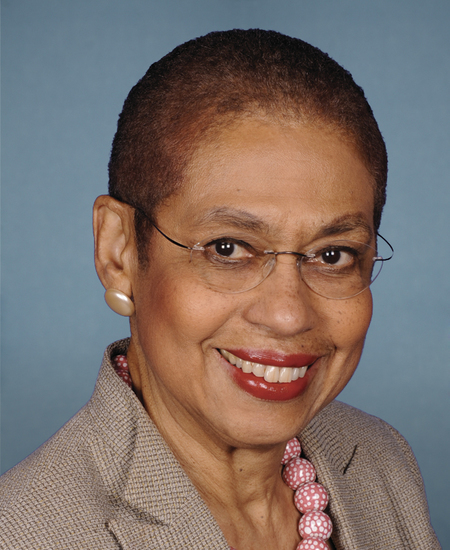
Rep. Eleanor Holmes Norton
Sponsored bills
9/11 Responder and Survivor Health Funding Correction Act This bill increases funding for and otherwise modifies a federal program that provides medical monitoring and treatment to responders and survivors who suffer from health conditions related to the September 11, 2001, attacks on the World Trade Center. Among the changes, the bill allows certain health care providers other than physicians to determine whether an individual's health condition is related to the attacks, and it establishes a research program to study the impacts of the attacks on health and educational outcomes of individuals who were 21 years of age or younger when the attacks occurred.
Real Emergency Access for Aging and Disability Inclusion for Disasters Act or the REAADI for Disasters Act This bill establishes programs and requirements to assist individuals with disabilities and older adults (age 50 or older) with disaster preparedness. Among other provisions, the bill requires the establishment of an advisory committee that includes disabled individuals and older adults to oversee the use of funds made available by this bill; allows states to contract with Centers for Independent Living to provide services and support to disabled individuals in preparing for hazards; requires the Department of Health and Human Services to award grants to carry out projects of national significance that, among other things, create opportunities for disabled individuals and older adults to directly contribute to disaster preparedness, recovery, and mitigation; modifies and expands the membership of the National Advisory Committee on Individuals with Disabilities and Disasters to ensure that it represents the diversity of the disabled and older adult communities; and establishes the Disability and Disaster Preparedness Advisory Commission to review settlement agreements involving potential violations of the Rehabilitation Act of 1973 and the Americans with Disabilities Act of 1990. The Government Accountability Office must study the compliance of federal agencies with such enactments in expending funds to support disabled individuals and older adults in responding to, recovering from, and mitigating disasters.

Disaster Relief Medicaid Act This bill establishes a series of programs and requirements relating to Medicaid coverage of individuals affected by a federally declared major disaster. In particular, the bill provides for specific disaster relief coverage under Medicaid for individuals who meet specified income eligibility standards and, during the seven-day period preceding the disaster, were either residents of the impacted area or were employed in the impacted area (and subsequently lost employment). Coverage is effective for two years after the date of the disaster declaration. State Medicaid programs must provide disaster relief coverage that is at least as comprehensive as the state's Medicaid coverage and the Medicaid coverage of the individual's home state, as applicable. The bill applies a 100% Federal Medical Assistance Percentage (i.e., federal matching rate) to such coverage and related administrative expenses.
Children's Mental Health Infrastructure Act of 2021 This bill provides funding through FY2026 to the Health Resources and Services Administration for grants to improve the capacity of children's hospitals to provide pediatric behavioral health services, including by modernizing sites of care and enhancing telehealth capabilities.
State Public Option Act This bill allows residents who are not already eligible for Medicaid and not concurrently enrolled in other health insurance coverage to buy into a state Medicaid plan beginning January 1, 2022, at the option of the state. State Medicaid programs may set premiums and cost-sharing requirements for such coverage in accordance with specified limitations. The bill also (1) provides the enhanced Federal Medical Assistance Percentage (i.e., federal matching rate) to every state that expands Medicaid coverage for individuals who are newly eligible under the Patient Protection and Affordable Care Act, regardless of when such expansion takes place; and (2) requires state Medicaid programs to cover comprehensive reproductive health care services, including abortion services.
Helping Kids Cope Act of 2021 This bill provides funding through FY2026 to the Health Resources and Services Administration (HRSA) for grants to enhance access to and provider training in pediatric behavioral health care. Specifically, HRSA must award grants to pediatricians, children's hospitals, and other providers to support pediatric behavioral health integration and coordination within communities. Grant-funded activities may include hiring community navigators to assist families in accessing appropriate services, incorporating behavioral health services in pediatric practices, and delivering services via telehealth. In addition, HRSA must award grants to children's hospitals to expand training for providers in the pediatric behavioral health workforce.
Refund to Rainy Day Savings Act This bill directs the Internal Revenue Service (IRS) to establish and implement the Refund to Rainy Day Savings program (i.e., a program to provide for unexpected expenses) to allow taxpayers to deposit 20% of their income tax refunds into the savings program. The bill sets forth rules for investments in and disbursement from the savings program. The bill also reauthorizes the Assets for Independence Act for FY2022-FY2026. The IRS may make grants to qualified entities to conduct AFI innovation projects. The bill directs the Department of Health and Human Services to establish a three-year matched savings account pilot program to encourage savings by participants in the savings program.
Maintaining Access to Essential Services Act of 2021 This bill establishes several loan programs to assist households with paying utility bills for drinking water, wastewater, stormwater management, energy (e.g., electricity, natural gas, or propane), and internet services during the COVID-19 public health emergency. Under the programs, the utilities may apply for loans that are equal to the amount of the payment shortfall from their customers during the emergency.
Hello Girls Congressional Gold Medal Act of 2021 This bill provides for the award of a single Congressional Gold Medal in honor of the female telephone operators of the Army Signal Corps, commonly known as the Hello Girls , in recognition of their military service, devotion to duty, and 60-year struggle for veterans' benefits and recognition as soldiers.