Reducing Obesity in Youth Act of 2021 This bill requires the Centers for Disease Control and Prevention, in coordination with the Administration for Children and Families, to award grants to nonprofits, institutions of higher education, or consortia of these entities to promote healthy eating and physical activity and address food insecurity among children in early care and education settings.
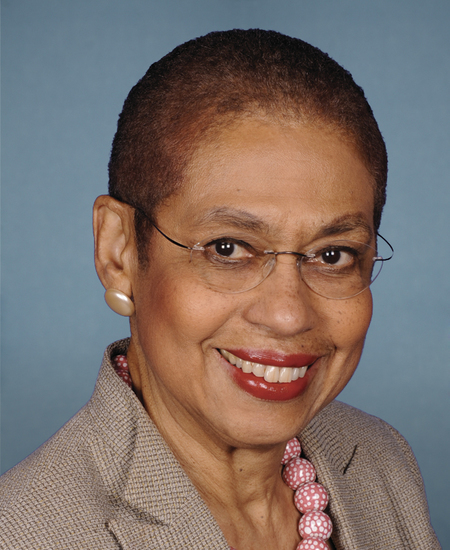
Rep. Eleanor Holmes Norton
Sponsored bills
Expediting Assistance to Renters and Landlords Act of 2021 This bill modifies the Department of the Treasury's Emergency Rental Assistance program by extending time limits on payments, allowing landlords to seek rents and arrears from the program without renter consent, and allowing renters to prove eligibility through attestation. The program provides grants to state and local governments to assist eligible households in paying rent and utility costs and other expenses related to housing incurred due to the COVID-19 pandemic. The bill extends the availability of program assistance from 18 to 24 months for eligible households. The bill also relaxes requirements for proof of eligibility by requiring only that households attest that they meet eligibility requirements instead of requiring proof of eligibility. It also allows for direct payment of funds to eligible households where the landlord refuses direct payment. Additionally, the bill allows a landlord to apply for program funds without the consent of a renter if the landlord agrees to certain terms, including a 120-day bar on evicting the renter for nonpayment. This bill also expands the stable housing services available under the program to additional low-income households. Further, the bill requires Treasury and state and local governments to increase outreach to renters and landlords and allows for coordination with public entities to provide application assistance services.
This resolution (1) calls upon the Members of Congress and all people of the United States to observe September 11, 2021, as a National Day of Service and Remembrance in honor of those who lost their lives or were injured in the September 11, 2001, attacks, and in tribute to those who came to the aid of those in need and to the defense of the United States; and (2) recognizes the heroic actions of first responders and other citizens in New York, the District of Columbia, and Shanksville, Pennsylvania.
This resolution expresses support for recognition of a National Latino Small Business Day.
Flood History Information Act of 2021 This bill provides for the sharing of National Flood Insurance Program policy and claim information. Specifically, the Federal Emergency Management Agency (FEMA) may share this data through an agreement with certain private insurance providers for the purposes of policy underwriting, establishing premium rates, and adjusting claims. Additionally, FEMA must provide specified flood insurance information to a purchaser, lessee, or current owner of a property upon request.
Streamlining Nutrition Assistance Paperwork Act of 2021 or the SNAP Act of 2021 This bill provides statutory authority for a Department of Agriculture (USDA) waiver that allows states to use a written record to document telephonic signatures for Supplemental Nutrition Assistance Program (SNAP) applications. Under current law, states may allow individuals to sign their SNAP applications over the telephone, but states must preserve audio recordings of those telephonic signatures. During the COVID-19 emergency, USDA waived the requirement to preserve the audio recording and allowed states to document the telephonic signatures through written records.
John R. Lewis Voting Rights Advancement Act of 2021 This bill establishes new criteria for determining which states and political subdivisions must obtain preclearance before changes to voting practices may take effect. Preclearance is the process of receiving preapproval from the Department of Justice (DOJ) or the U.S. District Court for the District of Columbia before making legal changes that would affect voting rights. A state and all of its political subdivisions shall be subject to preclearance of voting practice changes for a 10-year period if 15 or more voting rights violations occurred in the state during the previous 25 years; 10 or more violations occurred during the previous 25 years, at least 1 of which was committed by the state itself; or 3 or more violations occurred during the previous 25 years and the state administers the elections. A political subdivision as a separate unit shall also be subject to preclearance for a 10-year period if three or more voting rights violations occurred there during the previous 25 years. States and political subdivisions that meet certain thresholds regarding minority groups must preclear covered practices before implementation, such as changes to methods of election and redistricting. Further, states and political subdivisions must notify the public of changes to voting practices. Next, the bill authorizes DOJ to require states or political subdivisions to provide certain documents or answers to questions for enforcing voting rights. The bill also outlines factors courts must consider when hearing challenges to voting practices, such as the extent of any history of official voting discrimination in the state or political subdivision.
This resolution expresses support for the designation of National Prostate Cancer Awareness Month.
This resolution condemns racism, xenophobia, discrimination, scapegoating, and ethnic and religious bigotry. It acknowledges the climate of hate that Arab, Muslim, Middle Eastern, South Asian, and Sikh communities have experienced since September 11, 2001, and suggests specified relief to support those affected. Specifically, the resolution calls for the creation of an interagency task force to work with community-based organizations to review government policies that targeted such communities, investigate and document their impact, and dismantle those policies that continue to profile and target such communities; calls for hearings to explore the findings and recommendations of the task force; supports allocating resources to community-based organizations outside and independent of law enforcement that center the experiences and demands of Arab, Muslim, Middle Eastern, South Asian, and Sikh communities to support the needs of victims of hate and state violence and to create alternatives to law enforcement and transformative justice programs that focus on vulnerable populations within these communities; and calls on the Department of Health and Human Services, the National Institutes of Health, and the National Science Foundation to work together to study the impact of hate, government targeting, and profiling on physical and mental health.

This resolution expresses the sense of the House of Representatives that the United States shall recognize kind actions in our country, encourage kindness, spread love, and foster a culture of being kind to one another.