

Maddy summaryThe ACHE Act of 2025 requires the National Institute of Environmental Health Sciences to study health impacts of mountaintop removal coal mining on communities in Kentucky, Tennessee, West Virginia, and Virginia. It imposes a temporary moratorium on new federal permits for such mining until the study concludes, while mandating ongoing pollution monitoring (water, air, soil) at existing sites with public reporting of results. Coal mining companies must pay a fee to cover federal costs for the study and monitoring program. The bill directly affects coal mining operations in the specified Appalachian regions and the communities living near them, focusing on evidence-based health research and transparency.
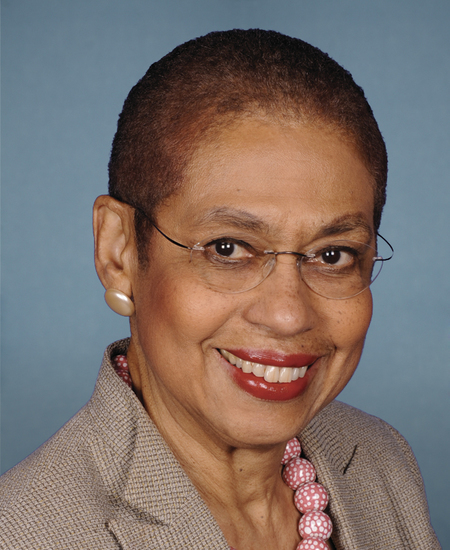
Rep. Eleanor Holmes Norton
Sponsored bills
Maddy summaryHR 4667, the VISIBLE Act, requires U.S. Immigration and Customs Enforcement (ICE), U.S. Customs and Border Protection (CBP), and other authorized immigration officers to visibly display their agency name and either their last name or unique badge number during all public immigration enforcement activities (such as stops, arrests, raids, or checkpoints). This identification must be clearly legible from 25 feet away on outer clothing, not obscured by gear, and officers cannot wear face coverings that hide their face during public interactions unless for covert operations or hazardous conditions. The bill mandates DHS to discipline non-compliant officers and submit annual reports to Congress detailing enforcement activities, violations, and disciplinary actions. It also directs DHS’s Civil Rights Office to investigate public complaints about noncompliance.
Maddy summaryHR 4699, the BIKE Act of 2025, requires federal grant funding to support bicycle safety education programs for elementary and secondary school students. It mandates the Secretary of Transportation to revise Highway Safety Program Guideline No. 14 to include specific provisions for teaching bicycling skills, traffic rules, road navigation, safety precautions, and helmet use. The revised guidelines must be developed with input from educators and disseminated to state education agencies for integration into school curricula. This bill directly affects public school students and school districts through new safety education requirements and federal funding opportunities.
Maddy summaryHR 4651 requires U.S. Immigration and Customs Enforcement (ICE) and U.S. Customs and Border Protection (CBP) officers, as well as detention facility staff interacting with detainees, to wear body cameras during all official operations. The bill mandates cameras be turned on at shift start and remain active continuously, with footage made available to parties in related legal proceedings. It also establishes policies for using AI/facial recognition on footage, prohibits staff from claiming camera malfunctions without evidence, and subjects violators to disciplinary actions like pay reduction or suspension. The law must be implemented using existing funding, with annual privacy assessments of how footage is handled.
Maddy summaryHR 4719, the Freedom to Move Act, would create $5 billion in federal grants to help cities, counties, and transit agencies make public transportation free and improve service quality. Local governments applying for these grants must demonstrate how they will redesign bus routes to prioritize low-income and minority neighborhoods, eliminate criminal penalties for fare evasion, and address transit gaps in underserved communities. The grants cover lost fare revenue and fund specific improvements like safer bus stops, dedicated bus lanes, and better service frequency. This directly affects transit agencies and riders in communities currently lacking reliable, affordable transportation options.
Maddy summaryHCONRES 45 is a symbolic congressional resolution recognizing barriers to physical access in federally funded facilities for people with disabilities. It reaffirms support for the Americans with Disabilities Act (ADA) and the Architectural Barriers Act of 1968, and pledges to prioritize inclusive design in future infrastructure projects. The resolution does not create new legal requirements or funding but formally acknowledges ongoing accessibility challenges faced by over 70 million Americans with disabilities. It cites recent data on disability prevalence and existing federal guidelines for pedestrian access, emphasizing the need for equal access to public facilities.
Maddy summaryHRES 603 is a symbolic resolution (not a law) that reaffirms core constitutional principles like separation of powers, judicial independence, and Congress's authority over funding. It specifically condemns public officials who ignore court orders, undermine congressional oversight, or attempt to consolidate power across branches of government. The resolution emphasizes that congressional appropriations are binding law, not suggestions, and urges all officials to uphold the constitutional order. It does not create new legal requirements but serves as a formal statement of these principles.
Maddy summaryThis bill would prohibit the detention of pregnant women, lactating women, and postpartum mothers (within one year of childbirth) in immigration custody, requiring their immediate release except in rare circumstances involving public safety threats. It bans the use of physical restraints on these individuals during pregnancy, labor, delivery, and postpartum recovery, with only extremely limited exceptions. The bill mandates that facilities provide comprehensive reproductive health care including prenatal care, labor and delivery services, postpartum care, and access to abortion services. It requires facilities to maintain medical records, obtain informed consent for medical procedures, and conduct weekly reviews of any detained individuals under exceptional circumstances. The bill also establishes reporting requirements for facilities and creates transparency through public reporting of detention practices.
Maddy summaryHR 4627 amends the Foreign Assistance Act of 1961 to update U.S. foreign aid programs combating HIV/AIDS. It specifically adds funding for HIV pre-exposure prophylaxis (PrEP) medications as a covered activity and designates all HIV prevention efforts - including those targeting at-risk populations identified by the World Health Organization - as "core life-saving humanitarian assistance." This change ensures such prevention activities receive priority funding under U.S. foreign aid programs. The bill directly affects how U.S. government agencies allocate resources for global HIV/AIDS prevention initiatives.
Maddy summaryHR 4717 creates a refundable tax credit of up to 10% of a home's purchase price (capped at $15,000) for first-time homebuyers purchasing a principal residence in the United States. The credit is subject to limitations based on modified adjusted gross income (phased out if income exceeds 150% of the area median income) and home price relative to area median purchase prices in the buyer's location. Homebuyers must meet age requirements (at least 18 years old), not have owned a home in the past three years, and purchase with a federally backed mortgage. The credit is subject to a four-year recapture period if the home is sold within that timeframe, and taxpayers may transfer the credit to their mortgage lender as a down payment or closing cost assistance.