

Maddy summaryThis bill expands access to Head Start services by raising the family income eligibility threshold to 138% of the federal poverty level and broadening the definition of "public assistance" to include programs like SNAP and Medicaid. It authorizes $36 billion annually for Head Start programs (2025-2030), plus $1 billion yearly for infrastructure grants to modernize aging facilities meeting specific safety and health criteria. Additionally, it creates $6.8 billion in annual funding for Head Start employee salary increases and offers student loan forgiveness for childcare workers employed full-time in Head Start/Early Head Start programs for three years. These changes directly affect low-income families seeking early childhood education and Head Start staff in over 1,000 agencies nationwide.
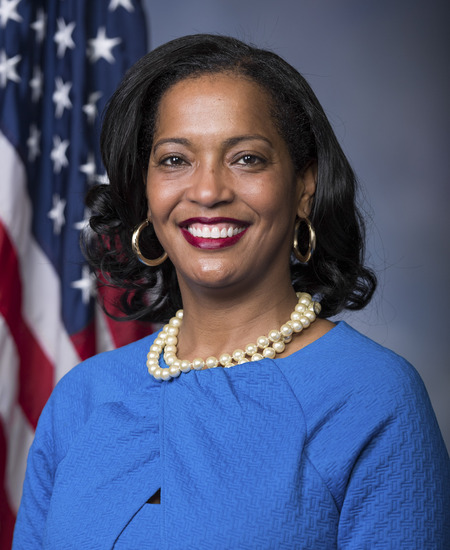
Rep. Jahana Hayes
Sponsored bills
Maddy summaryHR 5783, the Blue Collar and Green Collar Jobs Development Act, establishes a federal program to improve training and education for workers in energy-related industries, directly affecting educational institutions, energy employers, and individuals seeking jobs in these sectors. The bill requires the Secretary of Energy to create a nationwide workforce development program that prioritizes disadvantaged communities and minority-serving institutions, provides grants to cover training costs for eligible workers, and establishes a public clearinghouse with regional workforce data on energy job needs. Key provisions include developing voluntary STEM education guidelines for energy careers, creating a grant program to cover up to 45% of training wages for small businesses, and requiring collaboration with state workforce boards and energy industries. The program authorizes $15 million annually for workforce development and $50 million for the grant program through 2028. This legislation aims to connect job seekers with training opportunities in sectors like renewable energy, energy efficiency, and advanced manufacturing without mandating adoption by states or schools.
Maddy summaryThis bill requires federal agencies to adjust contract prices to reimburse contractors for paying employees during government funding lapses (e.g., shutdowns). It covers costs for furloughed, laid-off, or reduced-hour workers, or for restoring paid leave used during the lapse, with a weekly cap of $1,442 per employee. Directly affecting federal contractors and their employees who experienced work disruptions due to funding gaps, it mandates agencies to make these adjustments promptly after enactment. Contractors must provide proof of costs, and the Office of Federal Procurement Policy must report on implementation to Congress within a year.
Maddy summaryHR 5784 would provide federal grants to public schools (including Bureau of Indian Education schools) to make them more environmentally sustainable and equitable. It prioritizes schools in the most vulnerable communities (based on CDC Social Vulnerability Index) for full funding to become "healthy zero-carbon schools" through energy-efficient retrofits and new construction, while offering reduced funding for less vulnerable schools. The grants require community engagement in planning, mandate hiring from local communities with specific diversity goals, fund social services and mental health support, and include strict energy efficiency standards for all projects. The bill also includes funding for educational equity planning and climate resiliency programs to help schools serve as community centers during disasters.
Maddy summaryHRES 733 is a non-binding resolution expressing concern about the rising number of book bans in U.S. schools and libraries. It cites data showing nearly 3,400 book removals affecting 1,557 titles from July 2022-June 2023, with disproportionate targeting of books featuring LGBTQ+ themes (36%) and racial justice content (37%). The resolution urges school districts to follow established best practices for handling book challenges and reaffirms the importance of protecting students' access to diverse materials. It does not create new laws but calls for local governments to support free expression as protected by the First Amendment.
Maddy summaryHR 5758 would reimburse federal employees, District of Columbia workers, and federal contractors for out-of-pocket costs (like loan payments or credit card fees) incurred during government shutdowns. It requires the Treasury to pay these costs as soon as possible after a shutdown ends, with applicants submitting documentation within one year. States that cover federal programs during shutdowns lasting 14 days or more would also receive reimbursement for those expenses. The bill establishes a Reserve Fund in the Treasury to cover future reimbursement costs.
Maddy summaryThe Alice Cogswell and Anne Sullivan Macy Act amends the Individuals with Disabilities Education Act to better serve children and youth who are deaf, hard of hearing, deafdisabled, blind, visually impaired, or deafblind. It requires states to identify and provide appropriate services to these students regardless of how they're classified in disability categories, ensures access to language instruction in the student's primary language (including American Sign Language), and mandates improved data collection about these students. The bill establishes the Anne Sullivan Macy Center on Visual Disability and Educational Excellence to support research, training, and program development for blind and visually impaired students. These changes aim to improve educational outcomes by addressing the unique language, communication, and learning needs of students with sensory disabilities through concrete policy changes to IDEA.
Maddy summaryThe WIC for Kids Act expands eligibility for the Special Supplemental Nutrition Program for Women, Infants, and Children (WIC) by adding new qualifying pathways. It allows children to qualify if they live in households where someone receives Head Start, Indian reservation food assistance, or Puerto Rico/Northern Mariana Islands nutrition block grants, and streamlines documentation by permitting states to use existing records. The bill extends certification periods for children from one to two years and automatically enrolls infants born to current WIC participants. This directly affects low-income families with children who qualify for related assistance programs but previously faced barriers to WIC access.
EITC Age Parity Act of 2023 This bill modifies the age requirement for the earned income credit. Under current law, an individual taxpayer must have attained age 25, but not age 65, to claim the credit. This bill reduces the base year to age 18 and eliminates the age 65 cap on the credit.
Maddy summaryThis bill requires federal financial regulators (like the Fed and Consumer Bureau) to create guidance for banks within 180 days of enactment. The guidance directs banks to help consumers and businesses affected by government shutdowns - including furloughed federal workers, DC employees without pay, and contractors with reduced income - by adjusting loan terms, preventing payment hardships, and stopping negative credit reporting during temporary financial difficulties. Banks must also immediately notify regulators, consumers, and businesses if a shutdown begins. After a shutdown ends, regulators must report to Congress on the guidance's effectiveness and update it within 180 days if needed.