

This concurrent resolution recognizes the difficult challenges Black veterans faced when returning home after serving in the Armed Forces, their heroic military sacrifices, and their patriotism in fighting for equal rights and for the dignity of a people and a nation. The concurrent resolution also recognizes the need for the Department of Veterans Affairs to continue to work to eliminate any health and benefit disparities for minority veterans.
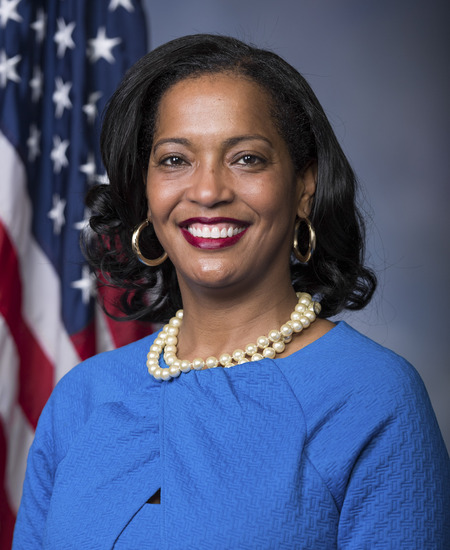
Rep. Jahana Hayes
Sponsored bills
Maddy summaryThe FAMILIES Act creates a program allowing courts to divert eligible parents and caregivers from incarceration into community-based supervision instead of prison or probation. Eligible individuals include parents of minor children, expectant parents, and caregivers for minors, elderly, or disabled family members. The program provides comprehensive services like education, job training, substance abuse treatment, and family counseling, with provisions to prevent financial barriers from hindering participation. Courts must consider factors like caregiver responsibilities and risk to family members when determining eligibility, and successful participants may qualify for record expungement.
Veterans Service Organization Modernization Act of 202 3 This bill requires the Department of Housing and Urban Development to provide competitive grants to veterans service organizations for repairs or rehabilitation of existing facilities and for modernization of technologies.
Maddy summaryHR 6293, the Fair Wages for Incarcerated Workers Act of 2023, would extend the Fair Labor Standards Act (FLSA) to require that incarcerated workers in public or privately operated correctional facilities receive fair wages. The bill directly affects individuals working in prisons or related programs (like UNICOR or work release) by prohibiting deductions for board, lodging, or court-imposed fees from their wages. Key provisions amend the FLSA to define "incarcerated worker" and explicitly state that such workers must be paid at least the minimum wage, with costs for facilities and court fees excluded from their earnings. This would ensure incarcerated workers keep more of their earnings from prison labor programs.
Maddy summaryHR 6204, the "See the Board Act," establishes a federal grant program to provide free eye care services to students in public elementary and secondary schools. The bill directs the Health and Human Services Secretary to fund nonprofit organizations that operate mobile eye clinics using portable equipment to deliver screenings, exams, and glasses directly at schools. This program covers costs for equipment, personnel, and operational expenses, targeting students in schools defined under the Elementary and Secondary Education Act. The initiative is authorized for fiscal years 2024 through 2029.
Maddy summaryHR 6076 establishes a $600 million program to fund energy efficiency improvements for small- and medium-sized manufacturers (defined as businesses with 750 or fewer employees in manufacturing sectors 31-33). Qualified entities like state energy offices, tribes, or nonprofits receive grants to provide subgrants directly to these manufacturers for projects that reduce electricity or natural gas use. The bill requires all iron and steel products used in funded projects to be "produced in the United States" (with limited waivers for cost or availability issues), and mandates labor compliance checks for contractors. It also requires manufacturers to develop energy management plans and share data on energy savings with program managers.
Maddy summaryThis bill excludes veterans' disability and dependency payments from income calculations for HUD housing assistance programs. It directly affects veterans and their families receiving disability compensation under Title 38, U.S. Code, by ensuring these benefits don't reduce their eligibility or housing assistance amounts. Specifically, it prevents HUD from counting these payments when determining eligibility, benefit amounts, or rent calculations for assisted housing. The policy change applies solely to HUD-administered housing programs, not other federal benefits.
Maddy summaryThe Stop Sexual Harassment in K-12 Act requires schools receiving federal funding to hire additional full-time Title IX Coordinators (one per 75,000 students in 7th grade and above, one per 150,000 students in 6th grade or below) and ensures these coordinators don't have other school responsibilities that create conflicts of interest. The bill mandates annual trauma-informed prevention education about sex-based harassment, clear reporting procedures, and anonymous annual surveys to assess harassment experiences among students and staff. Schools must provide accessible information about Title IX rights and maintain grievance procedures addressing discrimination on the basis of sex, including sexual orientation and gender identity. The legislation authorizes $50 million annually for staff training grants and $10 million for survey implementation to support schools in meeting these requirements.
Maddy summaryHR 5983, the Clean Water Act of 2023, redefines "protected water resources" under federal law to explicitly include all interstate and intrastate waters (such as intermittent and ephemeral streams), wetlands, and their tributaries. This directly affects federal agencies like the EPA, states managing water quality, and developers or landowners needing permits for activities near these waters. The bill eliminates the Supreme Court’s narrow "navigable waters" definition from Sackett v. EPA (2023), restoring protections for tens of millions of acres of wetlands and millions of miles of small streams. Key mechanisms require the EPA to annually review and adjust exclusions from protections based on scientific evidence, ensuring water bodies critical to drinking water, flood control, and ecosystems remain safeguarded.
Maddy summaryHRES 819 is a symbolic resolution recognizing the 5-year anniversary of the October 27, 2018, antisemitic attack at Pittsburgh’s Tree of Life Synagogue, which killed 11 people. It condemns antisemitism and references rising hate incidents, including the Anti-Defamation League’s 2022 report of record antisemitic activity (3,697 incidents). The resolution honors the victims, expresses solidarity with affected Jewish communities, and reaffirms the U.S. commitment to combatting hate and protecting religious freedom. As a procedural resolution (not a law), it has no binding effect but serves as a formal statement of congressional stance.