This resolution condemns all forms of discrimination and expresses support for policies to prevent and respond to hate crimes, including education and training on prevention and response.
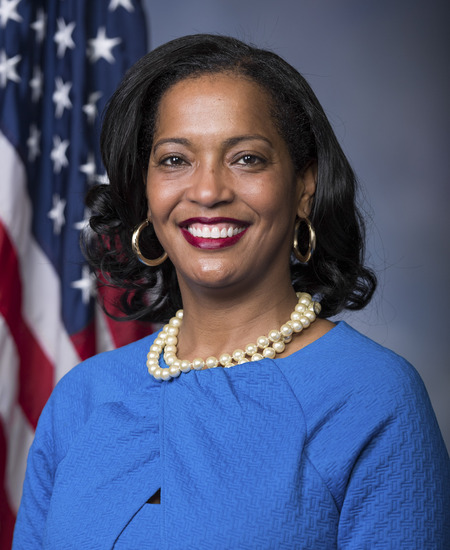
Rep. Jahana Hayes
Sponsored bills
Maddy summaryHR 6720 creates a grant program administered by the U.S. Department of Agriculture to provide stabilization payments to farmworkers, meat processing workers, and grocery workers affected by natural or other disasters designated by the Secretary. Eligible entities - such as labor unions or membership organizations representing these worker groups - can apply for funding to support affected workers. The program is authorized to spend up to $50 million, with the Secretary required to report on its outcomes within four years. This bill directly affects workers in specific food industry sectors during disaster events, offering financial stabilization through grants administered by the Agricultural Marketing Service.
Maddy summaryThe CReatES Act authorizes federal grants to states to create or improve public online repositories that compile detailed information about education and training programs, credentials (such as certificates, licenses, and degrees), and their outcomes. These repositories must include data on costs, career pathways, skills developed, employment outcomes, and employer use of credentials to help workers, employers, and educators make informed decisions. States receiving grants (up to $10 million for three years) must ensure repositories are publicly accessible, updated continuously, interoperable with other states, and exclude personally identifiable information. The bill requires states to collect specific outcome data and submit annual reports on repository development, with funding authorized for fiscal year 2025 through 2027.
Maddy summaryThis bill authorizes the posthumous presentation of a Congressional Gold Medal to honor Marshall "Major" Taylor, a pioneering Black cyclist who broke racial barriers in the late 19th and early 20th centuries. It recognizes his athletic achievements, including world records and international championship wins, as well as his advocacy for equality in sports. The medal, designed by the Treasury Secretary, will be presented to Taylor's great-granddaughter, Karen Donovan, following the congressional authorization. As a commemorative act with no policy changes, it serves solely to honor Taylor's legacy as a trailblazer and role model.

Maddy summaryThis bill amends the Equal Credit Opportunity Act to require lenders to collect and report data on loans to LGBTQI-owned businesses. It specifically adds "LGBTQI-owned" to existing categories for data collection, includes sexual orientation, gender identity, and intersex status as protected characteristics in lending data, and defines an "LGBTQI-owned business" as one where over 50% of ownership/control and net profit/loss accrues to self-identifying LGBTQI individuals. The policy change directly affects financial institutions that report lending data to the government, mandating they track and disclose these new categories. This provides concrete data on lending practices for LGBTQI business owners, who face documented barriers in accessing credit.
Maddy summaryThe YouthBuild for the Future Act increases annual funding for the YouthBuild program, authorizing $159.5 million for 2024 with incremental growth through 2029. It reserves 20% of funds above $125 million for rural programs and tribes, while adding new requirements like meal assistance, benefits counseling for programs like SNAP, and support services for participants with disabilities. The bill updates participant eligibility terms (e.g., "youth justice-involved" instead of "youth offender") and mandates annual consultation with program providers to set performance goals. It directly affects low-income youth in rural areas, tribal communities, and justice-involved youth through expanded workforce training and support services.
Maddy summaryThe PLAN for School Safety Act of 2023 creates a federal program to fund State and regional centers that help schools develop and improve individualized safety plans. These centers, established by eligible entities like state education agencies or Tribal organizations, provide tailored consulting on school safety, mental health, and violence prevention using research-backed methods. The program requires centers to cover 5% of activity costs and prioritizes support for schools in rural, Tribal, or low-resourced communities. Annual reports to Congress will track implementation progress, effectiveness, and how centers assist schools in accessing funding for safety initiatives.
Maddy summaryThe Elizabeth Dole Home Care Act of 2023 increases the expenditure cap for home- and community-based care for veterans from 65% to 100% of costs, with exceptions for certain cases based on clinical need and geographic factors. It establishes new programs including Veteran-Directed Care, which allows veterans to select and manage their own in-home care services, and Home-Based Primary Care, which provides in-home health care overseen by VA providers. The bill requires improved coordination with existing programs like the Program of All-Inclusive Care for the Elderly (PACE) and mandates a centralized website with information about available services. It specifically targets veterans who would otherwise require nursing home care or face increased risk of hospitalization, and includes provisions to address home health aide shortages through pilot programs.
Maddy summaryThis bill would impose a tax on hedge funds and large real estate investors who own more single-family homes than a gradually decreasing threshold (starting at 90% of their previous year's holdings and phasing down to 0% after 9 years). The tax would be $50,000 per excess property for each year they exceed their limit. Revenue from the tax would fund a down payment assistance program that prioritizes families buying homes from these investors. The bill aims to limit large-scale investment in single-family homes by these entities while providing financial assistance to homebuyers.
Maddy summaryThe TRAIN Act creates a federal grant program to help community colleges develop career training programs in partnership with local industries. It directly affects community colleges, which would receive funding to establish or improve programs aligned with in-demand industries and occupations. The bill requires 15% of grant funds to cover supportive services like childcare, transportation, and mental health services to help participants complete training. It also mandates performance tracking to ensure programs lead to quality jobs with good wages, benefits, and career advancement opportunities. The program is funded with $110 million in 2024, increasing to $176 million by 2029.