Maddy summaryEthan's Law requires gun owners to store firearms securely in homes where minors live or where residents are legally prohibited from owning guns. It makes it unlawful to leave firearms unsecured if a minor or ineligible person could access them, with fines of $500 per violation and harsher penalties if injury or death occurs. The bill creates a federal grant program to help states implement similar secure storage laws and treats unsafe storage as negligence in legal cases. It directly affects households with children or residents who cannot legally possess firearms, aiming to reduce accidental shootings and unauthorized access.
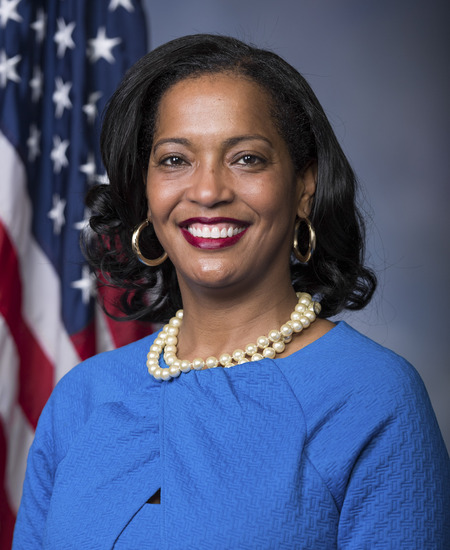
Rep. Jahana Hayes
Sponsored bills
Maddy summaryHRES 160 designates January 2025 as "National Mentoring Month" to highlight the positive impact of mentoring relationships on young people. The resolution emphasizes how mentoring improves academic performance, mental health, career readiness, and social skills - particularly for underserved youth - and addresses the "mentoring gap" where one in three young people lacks a supportive adult outside their family. It calls for expanding mentoring programs in schools, communities, and workplaces without creating new laws or funding. As a symbolic resolution, it aims to raise public awareness and encourage participation in existing mentoring initiatives.
Pay Our Coast Guard Parity Act of 2025 This bill provides continuing appropriations to the Coast Guard for pay and benefits when there is a Coast Guard-specific funding lapse. Under the bill, a Coast Guard-specific funding lapse occurs when (1) a bill providing appropriations for the Coast Guard for a fiscal year has not been enacted before the beginning of that fiscal year, and no joint resolution providing continuing appropriations for the Coast Guard is in effect; and (2) a bill providing appropriations for the Department of Defense (DOD) for the fiscal year has been enacted before the beginning of the fiscal year, or a joint resolution providing continuing appropriation for DOD is in effect. If a Coast Guard-specific funding lapse occurs, the bill provides appropriations to the Coast Guard for pay and allowances for military members of the Coast Guard who perform active service or inactive-duty training; pay and benefits for certain civilian employees and contract employees; the payment of a death gratuity; payments for travel related to funerals, the dignified transfer of remains, and unit memorial services; and the temporary continuation of the basic allowance for housing for dependents of members of the Coast Guard dying on active duty. The bill generally provides the appropriations to the Coast Guard until the earlier of the enactment of specified Coast Guard appropriations legislation, the termination of the availability of appropriations for DOD, or two weeks after the beginning of the Coast Guard-specific funding lapse.

Maddy summaryThe American Victims of Terrorism Compensation Act amends the Justice for United States Victims of State Sponsored Terrorism Act to increase funding for victims of terrorism. It directs the transfer of approximately $1.5 billion from the Binance Holdings Limited case, plus 50% of excess unobligated balances from Department of Justice and Treasury forfeiture funds, into the Victims Fund. The bill establishes deadlines for agencies to deposit funds (within 30 days of receipt or 15 days after enactment), requires annual reports on fund activity, and authorizes annual payments to eligible claimants starting in 2026. This legislation directly affects terrorism victims who receive compensation from the fund and federal agencies that handle forfeited assets from terrorism-related cases.
Maddy summaryHR 1505, the Public Safety Employer-Employee Cooperation Act, establishes federal standards for collective bargaining rights for public safety officers (including police, firefighters, and emergency medical personnel) in states that do not meet minimum requirements. The Federal Labor Relations Authority (FLRA) will determine after 180 days whether a state law "substantially provides" key rights, such as forming unions, negotiating wages/hours, and using binding arbitration to resolve disputes. If a state fails this assessment, federal bargaining rules apply within two years, but existing state laws with stronger protections remain valid. The bill explicitly respects state laws that exceed its standards and exempts small jurisdictions (under 5,000 population or 25 full-time employees).
Maddy summaryThis bill would require states to create a simplified process for out-of-state healthcare providers to join Medicaid and CHIP programs. Qualified providers (those already enrolled in Medicare or another state's program with low fraud risk) could enroll without excessive screening and would be approved for five years. It directly affects children under 21 enrolled in Medicaid or CHIP by expanding access to providers outside their state, particularly in underserved areas. The change applies to all states' Medicaid programs but takes effect three years after enactment.
Maddy summaryThis bill establishes a Veterans Affairs grant program to fund peer-to-peer mental health support for veterans. It provides up to $250,000 per grant to eligible organizations (like veteran nonprofits, service groups, or state agencies) to hire veterans as peer specialists who host nonclinical support groups and offer 24/7 mental health assistance. The program prohibits grant recipients from collecting or reporting veterans' personal information. It directly affects veterans seeking accessible, nonclinical mental health support through peer-led services.
Maddy summaryThis bill protects certain public safety workers - like police officers, firefighters, and emergency medical personnel - from job loss or punishment for expressing personal opinions about work-related issues. It allows covered employees to sue employers if they face adverse actions (like termination) for speaking out on topics such as working conditions, safety equipment, pay, policies, or even political/religious views. However, the protection does not cover speech made while on duty, threats of violence, discrimination, disclosure of confidential personal information, or calls to withhold essential services. The law explicitly states it doesn’t override existing civil rights laws like 42 U.S.C. 1983.
Maddy summaryHR 1410 expands access to mental health care for 9/11 responders and survivors by allowing licensed mental health providers (not just physicians) to conduct initial health evaluations and certifications under the World Trade Center Health Program. It adjusts the program’s funding formula to account for changing enrollment numbers by linking annual funding to the previous year’s enrollment ratio, and clarifies that deceased individuals are excluded from enrollment counts. The bill also extends the timeframe for adding new health conditions to the program’s list and requires a 2028 report assessing long-term funding needs through 2090. These changes aim to streamline eligibility, improve care access, and ensure sustainable funding for the program.
Maddy summaryThis bill authorizes a ceremonial gold medal to honor former President Jimmy Carter, recognizing his service as the 39th U.S. President and his post-presidential work. It directs the Treasury to strike a gold medal bearing his name and image, to be presented posthumously to the Carter Center in Atlanta (where he and his wife Rosalynn founded the organization). Bronze duplicates may be sold to cover costs, with proceeds going to the U.S. Mint fund. The bill does not create new laws or affect any policies, as it is purely a commemorative gesture.