

Maddy summaryThe New England Coastal Protection Act of 2025 prohibits the federal government from issuing new leases for oil and gas exploration, development, or production in offshore federal waters along the coasts of Maine, New Hampshire, Massachusetts, Rhode Island, and Connecticut. This bill directly affects the Department of the Interior (which manages offshore leasing) and any companies seeking to drill in these areas by blocking new lease permits. The key provision amends the Outer Continental Shelf Lands Act to explicitly ban the Secretary from granting such leases in the specified coastal region. As a result, the bill prevents new oil and gas drilling projects in these offshore waters, though it does not impact existing leases or activities.
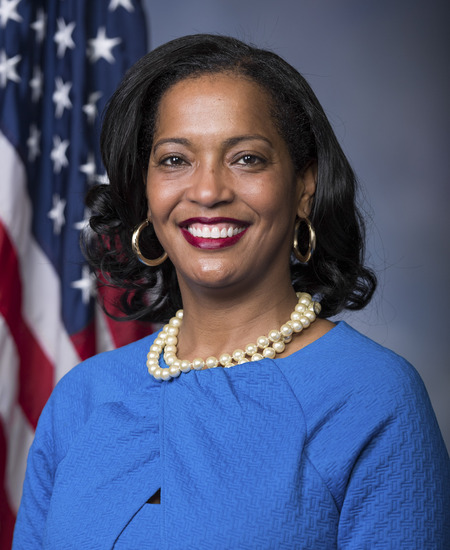
Rep. Jahana Hayes
Sponsored bills
Maddy summaryThe PROSPECT Act creates federal grants to provide free, high-quality infant and toddler child care for student parents attending community colleges and minority-serving institutions. It authorizes four types of grants: planning grants to assess child care needs, access grants to provide direct child care (with a goal of serving 500,000 children), impact grants to expand community child care capacity, and pipeline grants to develop child care worker training programs. The access grants require child care centers to provide nontraditional hours, support for dual language learners, and ensure staff wages are comparable to elementary educators. The bill aims to reduce barriers to education completion for student parents, who are nearly twice as likely to leave college before graduating compared to students without children. The legislation includes detailed reporting requirements on student persistence rates, child care access, and demographic data to track the program's impact.
Maddy summaryHR 2859, the Child Care Nutrition Enhancement Act of 2025, adds a 10-cent per meal reimbursement to the Child and Adult Care Food Program (CACFP) for meals served to children in licensed childcare settings. This change directly affects childcare providers, including family and group day care homes and centers participating in CACFP, starting after the bill's enactment. The bill amends existing law to require this additional payment for every meal and supplement served under the program. The increase applies to all qualifying meals served after the effective date, without altering existing reimbursement tiers or eligibility rules.
Maddy summaryHR 2818, the Early Childhood Nutrition Improvement Act, updates federal child care nutrition program rules to improve administration and reduce burdens. It requires annual eligibility reviews for for-profit child care centers (Section 2), overhauls how "serious deficiency" findings are handled (Section 3), and allows up to 3 meals per day for children in extended care (Section 4), including a study on third-meal reimbursement. The bill also creates an advisory committee (Section 6) to reduce paperwork for providers, parents, and states, focusing on streamlining applications, digital documentation, and eliminating duplicative State requirements. These changes directly affect child care centers, family day care homes, and state agencies administering the program.
Supplemental Oxygen Access Reform Act of 2025 or the SOAR Act of 2025 This bill establishes certain requirements with respect to the payment and provision of supplemental oxygen and related services under Medicare. For example, the bill provides for separate payments, indexed to inflation, of oxygen and related equipment, supplies, and services under Medicare (rather than under the competitive acquisition program). It also specifically covers services that are provided by respiratory therapists under Medicare and provides for an additional payment adjustment for these services. Additionally, the bill (1) requires the Centers for Medicare & Medicaid Services to develop an electronic template for providers to use when prescribing oxygen and related equipment, supplies, and services; and (2) establishes certain rights for beneficiaries receiving these items and services, such as the right to choose their suppliers and to receive clear communications and be informed about the services provided.
Maddy summaryHRES 317 is a non-binding resolution urging the U.S. government to lead global efforts to halt and reverse the nuclear arms race. It calls on the President to pursue negotiations with nuclear-armed states to reduce arsenals, end the U.S. policy allowing first use of nuclear weapons, eliminate immediate launch readiness, stop developing new weapons, and support communities affected by nuclear programs. The resolution emphasizes diplomatic action over military modernization to reduce nuclear risks and prevent catastrophic conflict.
Maddy summaryThe Adult Education WORKS Act establishes "college and career navigators" who provide personalized guidance to help individuals access education, job training, and workforce development services. These navigators help people identify career paths, connect to financial aid, and develop digital literacy and information literacy skills needed for success in education and employment. The bill requires state and local workforce boards to collaborate with adult education providers to promote these navigator positions and authorizes $135 million annually for library-based and community-based navigator programs. It updates definitions to include digital and information literacy skills as essential components of adult education. The bill directly affects adult education providers, workforce development systems, and individuals seeking to improve their job skills or educational opportunities.
Maddy summaryThe GOSAFE Act prohibits the sale, manufacture, transfer, and possession of gas-operated semi-automatic firearms and large capacity ammunition feeding devices (those holding more than 10 rounds). It defines gas-operated firearms as those that use gas from fired cartridges to cycle the action, requiring the Attorney General to publish a list of prohibited firearms within 180 days. The bill establishes a process for manufacturers to seek approval for new firearm designs before selling to civilians and creates a "Firearm Safety Trust Fund" to cover related costs. Certain firearms are exempt, including single-shot, muzzle-loading, and firearms with permanently fixed magazines holding 10 or fewer rounds. Violations could result in fines up to $5,000 or up to 12 months in prison.
Maddy summaryThe American Family Act (HR 2763) establishes a new refundable child tax credit that provides monthly payments to eligible families with children. It would pay $300 per month for each child under age 6 and $360 per month (120% of $300) for each child age 6 or older, with income limits of $150,000 for joint filers and $112,500 for other filers. The bill creates a "period of presumptive eligibility" to determine eligibility for monthly payments, allowing families to receive advance payments based on information from previous tax returns. This would directly affect millions of families with children who meet the income requirements, providing more consistent financial support throughout the year rather than an annual tax credit.
Maddy summaryHR 2799, the Closing the Bump Stock Loophole Act of 2025, prohibits the sale, possession, and modification of devices that increase the firing rate of semi-automatic firearms to mimic machine guns (commonly called "bump stocks"). It specifically bans manual, power-driven, or electronic devices designed to speed up firing, as well as modified firearms that achieve this effect. Owners of pre-existing modified firearms must register them within 120 days of the law's enactment, with exemptions for government entities and firearms already lawfully modified and registered before the bill passes. The bill does not restrict standard semi-automatic firearms or require registration of unmodified guns.