

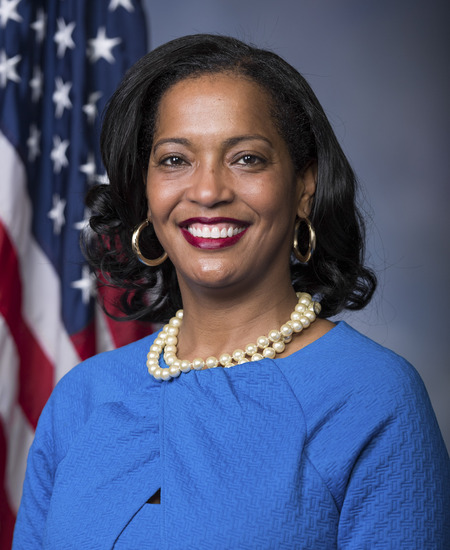
Photo of Jahana Hayes
D United States House · District 5 · Connecticut On the 2026 ballot

Rep. Jahana Hayes

Compare
Total votes
2,837
all sessions
Attendance
99%
24 missed
Near the chamber average
With party
97%
of cast votes
Near the chamber average
Bipartisan score
1%
crosses aisle rarely
Near the chamber average
Sponsored
2,277
bills & resolutions
Higher than 90% of chamber peers
Committees
6
assignments
2,277 bills and resolutions

Sponsored bills

Total
2,277
Primary
106
Co-sponsor
2,171
This page
2,277
matching current filters
Co-sponsor HRES 775
In committee · United States House · Co-sponsor
Supporting the designation of September 2025 as "National Ovarian Cancer Awareness Month".

Maddy summaryThis resolution (HRES 775) is a symbolic congressional statement supporting the designation of September 2025 as "National Ovarian Cancer Awareness Month." It does not create new laws or allocate funds; it solely expresses the House's endorsement of raising public awareness about ovarian cancer during that month. The resolution cites statistics on ovarian cancer mortality, disparities in care for Black women and underserved groups, and the lack of early detection methods to underscore the importance of awareness. It aligns with existing annual efforts by organizations like the Ovarian Cancer Research Alliance. The measure directly affects public awareness efforts but has no direct impact on policy or healthcare access.

In committee Sep 30, 2025 1 co-sponsor
Co-sponsor HR 5657
In committee · United States House · Co-sponsor
Fair Pay for Federal Contractors Act of 2025

Fair Pay for Federal Contractors Act of 2025 This bill provides back pay to employees of federal contractors who lost pay due to a lapse in appropriations (i.e., government shutdown) in FY2026. Specifically, the bill provides appropriations for federal agencies that are subject to a lapse in appropriations in FY2026 to adjust the price of contracts to compensate federal contractors for providing back pay to employees who were affected by the lapse in appropriations.  The agencies must adjust the price of any contract for which the contractor stopped, suspended, delayed, or interrupted all or part of the work under the contract due to the lapse in appropriations. The price adjustment must compensate the contractor for reasonable costs incurred to (1) compensate employees who were furloughed or laid off, were not working, or experienced a reduction of hours or compensation due to the lapse in appropriations; or (2) restore paid leave taken by employees during the lapse in appropriations if the contractor required or permitted employees to use paid leave as a result of the lapse in appropriations. The maximum amount of weekly compensation of an employee for which an adjustment may be made under this bill may not exceed the lesser of (1) the employee's actual weekly compensation, or (2) $1,442 (or a lesser amount pro-rated for an employee who works less than 40 hours per week). The bill also requires the Office of Federal Procurement Policy to submit a report to Congress on the adjustments made under this bill.

In committee Sep 30, 2025 1 co-sponsor
Co-sponsor HR 5671
In committee · United States House · Co-sponsor
Colorectal Cancer Payment Fairness Act

Maddy summaryThe Colorectal Cancer Payment Fairness Act eliminates out-of-pocket costs for Medicare beneficiaries receiving colorectal cancer screenings. It amends Medicare rules to remove coinsurance requirements, ensuring 100% coverage for these screenings starting in 2027 (replacing the previous 85% coverage through 2026). This directly affects Medicare beneficiaries, particularly seniors and older adults eligible for preventive care. The key mechanism is a straightforward policy change to the Medicare payment structure for these specific screenings, removing cost-sharing barriers to encourage early detection. The bill does not alter funding or create new programs, only adjusting existing coverage terms.

In committee Sep 30, 2025 1 co-sponsor
Co-sponsor HR 5660
In committee · United States House · Co-sponsor
Pay Our Military Act

Maddy summaryHR 5660, the Pay Our Military Act, ensures military personnel and support staff receive pay during a government funding gap in fiscal year 2026. It appropriates funds from the Treasury to cover pay and allowances for active-duty troops, reservists, Department of Defense civilian employees, and contractors supporting military operations, if Congress hasn’t passed regular funding by then. The funding remains available until either regular appropriations are enacted or January 1, 2027, whichever comes first. This is a temporary measure to prevent disruptions in military pay during budget negotiations.

In committee Sep 30, 2025 1 co-sponsor
Co-sponsor HR 5628
In committee · United States House · Co-sponsor
Pay Workers What They’ve Earned Act

Maddy summaryThis bill requires the federal government to reimburse certain workers and states for specific costs incurred during government shutdowns lasting 14+ days. Covered workers include federal employees, District of Columbia public employees, and federal contractors who faced furloughs, unpaid work, or unpaid leave due to funding lapses. It mandates reimbursement for direct shutdown-related expenses like loan payments or credit card fees (defined as "shutdown costs"), and requires states to be reimbursed within 90 days for covering federal programs during such shutdowns. Applications for reimbursement must be submitted within one year of the shutdown ending, with payments drawn from a new Treasury Reserve Fund established by the bill.

In committee Sep 30, 2025 1 co-sponsor
Co-sponsor HCONRES 52
In committee · United States House · Co-sponsor
Supporting the designation of the week of September 22 through September 28, 2025, as "National Falls Prevention Awareness Week" to raise awareness, and encourage the prevention, of falls among older adults.

Maddy summaryThis concurrent resolution designates the week of September 22-28, 2025, as "National Falls Prevention Awareness Week" to raise public awareness about falls among older adults (65+). It directly affects older adults and organizations working on fall prevention, such as healthcare providers and community groups. The resolution cites CDC data showing falls cause 41,000 annual deaths and $80 billion in medical costs, while encouraging existing evidence-based strategies like home safety modifications and balance exercises. It does not create new laws or funding but supports awareness efforts and collaboration among federal agencies, the Aging Network, and healthcare providers.

In committee Sep 26, 2025 1 co-sponsor
Co-sponsor HR 5604
In committee · United States House · Co-sponsor
National Guard Proper Use Act

Maddy summaryHR 5604, the National Guard Proper Use Act, prohibits military and National Guard personnel from being ordered to enforce federal immigration laws. It adds new sections to military law (Title 10 for active forces and Title 32 for the National Guard), explicitly stating members cannot be directed to perform duties related to immigration enforcement. This directly affects military commanders who might attempt to assign such tasks and ensures National Guard members remain focused on their core missions, not civilian immigration enforcement. The bill references the Posse Comitatus Act (18 U.S.C. §1385), a longstanding law that limits military involvement in domestic law enforcement. It clarifies existing legal boundaries without creating new programs or funding.

In committee Sep 26, 2025 1 co-sponsor
Co-sponsor HR 5599
In committee · United States House · Co-sponsor
To prohibit the removal of Federal employees during any lapse in discretionary appropriations, and for other purposes.

Maddy summaryThis bill prevents federal agencies from terminating employees during a government shutdown caused by a lapse in discretionary funding. It prohibits removals of civil service employees at any agency affected by a funding gap, and if an employee is wrongfully removed, they can return to their job with back pay once funding resumes. The law directly protects all federal employees covered by the civil service system during shutdowns. It applies automatically to any funding lapse, requiring automatic reinstatement without needing separate legal action.

In committee Sep 26, 2025 1 co-sponsor
Co-sponsor HR 5605
In committee · United States House · Co-sponsor
Medical Device Nonvisual Accessibility Act of 2025

Maddy summaryThis bill requires home medical devices like blood pressure monitors and sleep apnea machines to include nonvisual accessibility features (such as screen readers or audio feedback) so blind or low-vision users can operate them independently and safely. It sets a standard that devices must be as effective for these users as for sighted individuals, applying to Class II/III devices cleared under FDA's 510(k) process for home use. The FDA must issue proposed regulations within one year and final rules within two years of enactment, with manufacturers needing to comply one year after the final rule takes effect. Devices may qualify for waivers only if compliance would cause a "fundamental alteration" or "undue hardship" for the manufacturer, though the bill emphasizes accessibility can often be integrated without extra cost during design.

In committee Sep 26, 2025 1 co-sponsor
Co-sponsor HR 5556
In committee · United States House · Co-sponsor
Flight Refund Fairness Act

Maddy summaryThis bill requires airlines and ticket agents to issue refunds within 7 days for canceled or significantly delayed/changed flights. It directly affects travelers who experience flight disruptions and the airlines/ticket agents handling refunds. The key change replaces vague "prompt" refund language with a specific 7-day deadline after the ticket agent receives funds from the airline. This applies to all domestic and international flights covered under existing airline refund rules. The rule tightens existing requirements without creating new obligations.

In committee Sep 24, 2025 1 co-sponsor
Showing 241 to 250 of 2,277 bills
Previous 1 … 24 25 26 … 228 Next