

Closing Loopholes for Oil and other Sources of Emissions Act or the CLOSE Act This bill repeals exemptions from the Clean Air Act under which (1) emissions from oil and gas wells and pipeline facilities are excluded from aggregation with emissions from other similar units for purposes of determining major sources, and (2) the Environmental Protection Agency (EPA) excludes oil and gas production wells from being listed as area sources. Additionally, the bill requires the EPA to issue a final rule adding hydrogen sulfide to the list of hazardous air pollutants under the Clean Air Act and revising such list to include categories and subcategories of major sources and area sources of hydrogen sulfide, including oil and gas wells.
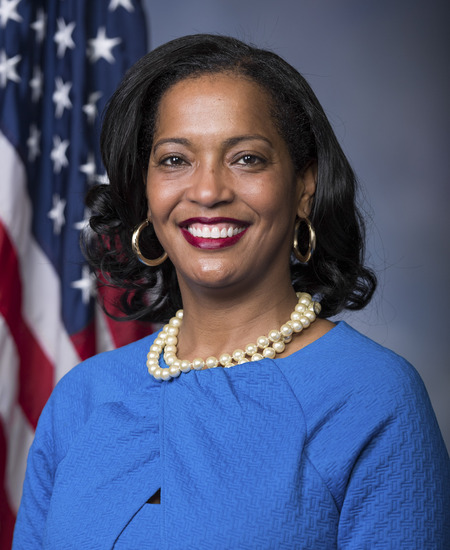
Rep. Jahana Hayes
Sponsored bills
Energy Innovation and Carbon Dividend Act of 2021 This bill imposes a fee on the carbon content of fuels, including crude oil, natural gas, coal, or any other product derived from those fuels that will be used so as to emit greenhouse gases into the atmosphere. The fee is imposed on the producers or importers of the fuels and is equal to the greenhouse gas content of the fuel multiplied by the carbon fee rate. The rate begins at $15 per metric ton of CO2-e in 2021, increases by $10 each year, and is subject to further adjustments based on the progress in meeting specified emissions reduction targets. The bill includes exemptions for fuels used for agricultural or nonemitting purposes, exemptions for fuels used by the Armed Forces, rebates for facilities that capture and sequester carbon dioxide, and border adjustment provisions that require certain fees or refunds for carbon-intensive products that are exported or imported. The fees must be deposited into a Carbon Dividend Trust Fund and used for administrative expenses and dividend payments to U.S. citizens or lawful residents. The fees must be decommissioned when emissions levels and monthly dividend payments fall below specified levels.
This joint resolution nullifies the rule finalized by the Social Security Administration on November 16, 2020, that outlines when its administrative appeals judges may hold hearings and issue decisions on individual cases. Currently, these judges serve an appellate function where they review, at the request of Social Security claimants, the decisions of the administrative law judges who issue decisions in individual cases.
Public Servants Protection and Fairness Act of 2021 This bill establishes an alternative formula to calculate Social Security retirement benefits for those who receive pensions for certain non-covered employment. (The existing formula is known as the windfall elimination provision.) The alternative formula adjusts an individual's total lifetime earnings based on the proportion of covered earnings (i.e., earnings subject to Social Security payroll taxes). It applies to individuals who (1) first become eligible for benefits after 2022, (2) have earnings from non-covered service performed after 1977, and (3) have less than 30 years of coverage (i.e., years in which a beneficiary is considered to have contributed a substantial amount into the Social Security trust funds). Beneficiaries receive the higher benefit amount as calculated under the alternative method or the existing formula. In addition, the bill provides rebates for certain beneficiaries currently impacted by the existing formula. The Social Security Administration must include non-covered earnings in Social Security account statements, and the Government Accountability Office must study the availability of certain information related to retirement plans maintained by state and local governments.
Ceasing Undeserved Relief Benefits for Debt Collectors Act for 2021 or the CURB Debt Collectors Act This bill makes debt collectors that have violated certain debt collection laws ineligible to receive loans under the Paycheck Protection Program established to support small business in response to COVID-19.
Automatic Voter Registration Act This bill provides for automatic voter registration of individuals through state motor vehicle authorities. Specifically, the bill requires each state motor vehicle authority, upon receiving specified identifying information regarding an individual who requests services from the authority, to transmit the identifying information to the appropriate state election official. The state election official must then notify the individual that the individual shall be automatically registered to vote in federal elections unless the individual declines to be registered to vote, does not meet voter registration eligibility requirements, or is already registered to vote. The bill provides an individual with a 21-calendar day period to opt out of automatic voter registration. A state may only use identifying information regarding an individual's citizenship status for determining whether the individual is eligible to vote in federal elections.
Supporting Accurate Views of Emergency Services Act of 2021 or the 911 SAVES Act This bill requires the Office of Management and Budget, by 30 days after the bill's enactment, to categorize public safety telecommunicators as a protective service occupation under the Standard Occupational Classification System.
Keep Your Home and Prevent Homelessness Act of 2021 This bill allows the Department of the Treasury to transfer Troubled Asset Relief Program funds to the Department of Housing and Urban Development's Housing Trust Fund. This fund provides grants to states to (1) increase and preserve the supply of rental housing for extremely low-income and very low-income families, including homeless families; and (2) increase homeownership for extremely low-income and very low-income families.
Jeanette Acosta Invest in Women's Health Act of 2021 This bill directs the Department of Health and Human Services to establish a series of programs to increase access to cancer screenings for women. These programs include demonstration projects to train certain health care providers to screen for breast and cervical cancer, and increase co-testing of human papillomavirus (HPV) and cervical cancer among populations that have disproportionate rates of cervical cancer.
Quit Because of COVID-19 Act This bill provides for Medicaid and Children's Health Insurance Program (CHIP) coverage of certain tobacco cessation services. Specifically, the bill provides for coverage, without cost-sharing, of diagnostic, therapy, and counseling services and pharmacotherapy, including prescription and nonprescription tobacco cessation agents, that are provided under medical supervision and in accordance with specified guidelines. It also applies a 100% Federal Medical Assistance Percentage (i.e., federal matching rate) for such items and services during the public health emergency relating to COVID-19 and for two years after the emergency period ends.