

Protecting our Students in Schools Act of 2021 This bill prohibits the use of corporal punishment in schools that receive federal funding. Specifically, the bill authorizes the Department of Education (ED) to take specified actions (e.g., withholding funds and issuing cease-and-desist orders) for schools that allow school personnel, law enforcement officers, or school security guards to subject students to corporal punishment. The bill also establishes enforcement provisions, including a private right of action for a student who has been subjected to corporal punishment. Each state educational agency (SEA) that receives federal funding must submit specified information to ED, including a school climate report that describes the SEA's policies and procedures related to exclusionary and aversive discipline practices in schools. Additionally, the bill authorizes ED to award three-year grants to SEAs and, through them, subgrants to local educational agencies to implement positive behavioral interventions and supports to address student behavior and reduce exclusionary and aversive discipline practices. ED must promulgate regulations as necessary to ensure compliance with the bill. The Department of Defense and the Department of the Interior must ensure that the schools they operate or fund also comply with these regulations.
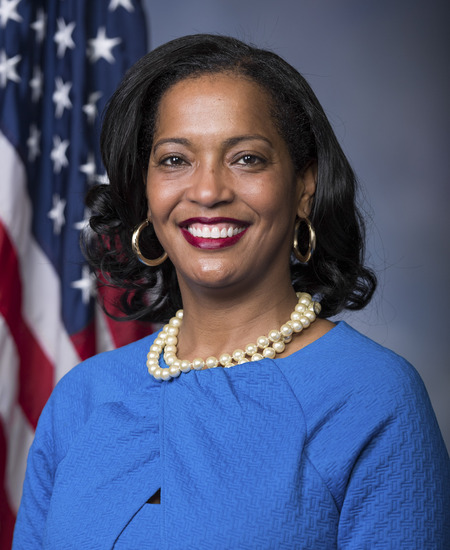
Rep. Jahana Hayes
Sponsored bills
Services and Trauma-informed Research of Outcomes in Neighborhoods Grants for Support for Children Act of 2021 or the STRONG Support for Children Act of 2021 This bill establishes two grant programs for governmental health departments to prevent and mitigate childhood trauma and adverse childhood experiences. For the first program, the Department of Health and Human Services (HHS) must award grants to health departments to use data analysis methods to identify interventions to prevent and mitigate childhood trauma. Grant activities include using data analysis to identify geographic areas with a high prevalence of adverse childhood experiences and to implement strategies to improve outcomes for infants, children, and adolescents. For the second program, HHS must award grants to local or tribal governments to establish or expand early childhood trauma-informed care coordination services, including by instituting risk and needs assessments to respond to adverse childhood experiences. For both grants, the bill prohibits the use of funds for certain purposes, such as using the data analysis methods to inform individual case decisions, including child removals, or increasing the presence of law enforcement. In addition, HHS must evaluate and report on these programs and make findings and recommendations publicly available on its website.
Educational Equity Challenge Grant Act of 2021 This bill establishes a program through which the Department of Education must award grants to eligible entities (e.g., state and local educational agencies) to address students' academic, social, emotional, mental, behavioral, and physical health needs related to the COVID-19 (i.e., coronavirus disease 2019) pandemic.
FAIR Leave Act or the Fair Access for Individuals to Receive Leave Act This bill repeals the limit on the aggregate number of workweeks of family and medical leave that spouses employed by the same employer may be entitled to during any 12-month period. The current limit is 12 aggregate workweeks.
Keep It in the Ground Act of 2021 This bill eliminates new fossil fuel production projects on federal public land and waters. Specifically, it prohibits the Bureau of Ocean Energy Management (BOEM) from issuing, renewing, reinstating, or extending any nonproducing lease, or issuing any authorization for the exploration or production of fossil fuel on the Outer Continental Shelf. BOEM must also cancel any lease issued in the Beaufort Sea, Cook Inlet, or Chukchi Sea (three of the five bodies of water that encompass the Alaska Outer Continental Shelf). Further, the Bureau of Land Management (BLM) may not issue, renew, reinstate, or extend any nonproducing lease for the exploration or production of any onshore fossil fuels on land subject to the Mineral Leasing Act. The bill provides for exceptions if there is an imminent national security threat that would be significantly reduced by granting an exception. In addition, BOEM and the BLM may allow a nonproducing lease to be renewed or extended if (1) the lease contract was signed before enactment of this bill, and (2) it is determined that giving effect to any provision of this bill is likely to lead to a judicial ruling that there was a material breach of the nonproducing lease contract.
Paycheck Fairness Act This bill addresses wage discrimination on the basis of sex, which is defined to include pregnancy, sexual orientation, gender identity, and sex characteristics. Specifically, it limits an employer's defense that a pay differential is based on a factor other than sex to only bona fide job-related factors in wage discrimination claims, enhances nonretaliation prohibitions, and makes it unlawful to require an employee to sign a contract or waiver prohibiting the employee from disclosing information about the employee's wages. The bill also increases civil penalties for violations of equal pay provisions. Additionally, the Equal Employment Opportunity Commission (EEOC) and the Office of Federal Contract Compliance Programs must train EEOC employees and other affected parties on wage discrimination. The bill directs the Department of Labor to (1) establish and carry out a grant program to provide training in negotiation skills related to compensation and equitable working conditions, (2) conduct studies to eliminate pay disparities between men and women, and (3) make available information on wage discrimination to assist the public in understanding and addressing such discrimination. The bill establishes the National Award for Pay Equity in the Workplace for an employer who has made a substantial effort to eliminate pay disparities between men and women. It also establishes the National Equal Pay Enforcement Task Force to address compliance, public education, and enforcement of equal pay laws. Finally, the bill requires the EEOC to issue regulations for collecting from employers compensation and other employment data according to the sex, race, and national origin of employees for use in enforcing laws prohibiting pay discrimination.
This bill directs the Federal Emergency Management Agency (FEMA) to establish a grant program to modify, upgrade, and construct fire and emergency medical services (EMS) department facilities. Grant recipients may use funds received to build, rebuild, or renovate fire and EMS department facilities; upgrade existing facilities to install exhaust emission control systems, install backup power systems, upgrade or replace environmental control systems (such as HVAC systems), remove or remediate mold, and construct or modify living quarters for use by male and female personnel; and upgrade fire and EMS stations or build new stations. The bill sets forth provisions regarding (1) grant fund allocations between career and volunteer fire and EMS departments, and (2) prevailing rate of wage and a requirement for using materials produced domestically for public contracts.
Community Broadband Mapping Act This bill authorizes the Department of Agriculture's Rural Utilities Service to award telecommunications grants to local governments, electric and telephone cooperatives, economic development and community groups, and small internet providers for collecting local broadband service information.
Rebuild Rural America Act of 2021 This bill directs the Department of Agriculture (USDA) to establish the Rural Innovation and Partnership Administration and the Rural Future Partnership Fund to provide five-year renewable rural partnership block grants to certified rural regions to implement locally-developed regional revitalization plans. For purposes of these grants, the following areas may constitute a rural region: a micropolitan statistical area (i.e., at least 10,000 but fewer than 50,000 people); a collection of rural census tracts or counties that fall outside of a micropolitan or metropolitan statistical area (i.e., 50,000 people or more) and that demonstrate evidence of economic, social, and cultural cooperation; or an Indian reservation. To be eligible to receive a grant, a rural region must be certified by its state (or in the case of an Indian reservation, approved by USDA) after having formed a rural partnership council made up of representatives from across different sectors. USDA must provide each rural partnership council with training, education, support, and advice to enhance the technical assistance, research, organizational, and other capacities of the council. The bill also establishes a Rural Future Corps to (1) help rural communities expand critical services such as child care, health, nutrition assistance, education, and job training; and (2) strengthen the capacity of local governments and economic and community development organizations.
This resolution expresses support for the designation of Portuguese National Heritage Month. The bill also esteems the integral role of the Portuguese-American community and the manifold heritage of Portugal in the economy, culture, and identity of the United States.