

Food and Nutrition Education in Schools Act of 202 1 This bill directs the Department of Agriculture (USDA) to establish a Food and Nutrition Education in Schools Pilot Program to award grants to local educational agencies for (1) projects that hire qualified, full-time food and nutrition educators to carry out programs in schools that have the goal of improving student health and nutrition; and (2) projects that fund school gardens or other evidence-based interventions relating to student health and nutrition, aligned with the latest school nutrition standards, to create hands-on learning opportunities for students. In awarding grants under the program, USDA must prioritize projects that serve schools or districts (1) in which not less than 40% of students qualify for free or reduced-price meals, or (2) that include neighborhoods with high rates of childhood obesity or other diet-related diseases. Additionally, it must give priority to projects that provide programming in summer months and those that are joint partnership projects.
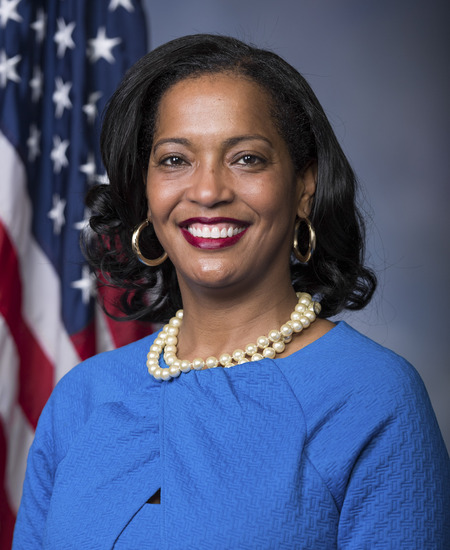
Rep. Jahana Hayes
Sponsored bills
Tenant Empowerment Act of 2021 This bill generally expands the rights of tenants in federally assisted housing. Specifically, the bill allows tenants to place rent in an escrow account in the event that a housing project is found to be in violation of certain housing standards; seek judicial enforcement of specified housing agreements; and access information related to a housing project, including the ownership, specified reports, and contracts. The bill also provides for continuing rental assistance payments for tenants if the property is in foreclosure.
PFAS Filthy Fifty Act This bill requires the Department of Defense (DOD) to complete testing for perfluoroalkyl and polyfluoroalkyl substances (PFAS) at all military installations, formerly used defense sites, and state-owned facilities of the National Guard in the United States. PFAS are man-made and may have adverse human health effects. Not later than 60 days following the detection of PFAS at a military installation, formerly used defense site, or state-owned facility of the National Guard, DOD must take removal actions to ensure that all individuals served by a drinking water source contaminated by PFAS have access to drinking water that meets the applicable standard, regardless of whether DOD is the drinking water purveyor. Additionally, DOD must complete all physical construction required for the remediation of PFAS at such sites not later than 10 years after the enactment of this bill. DOD must report to Congress identifying the status of remediation efforts at 50 specified sites, such as England Air Force Base, Louisiana. DOD must complete all physical construction required for the remediation of PFAS at the 50 specified sites not later than five years after the enactment of this bill.
Essential Caregivers Act of 2021 This bill requires skilled nursing facilities, nursing facilities, intermediate care facilities for the intellectually disabled, and nearby inpatient rehabilitation facilities to establish an essential caregivers program during a public health emergency. Under the program, facilities must allow each resident to select up to two essential caregivers to provide daily living assistance, emotional support, or companionship during the emergency. Facilities must afford such caregivers 12 hours of access to residents each day (or unlimited access for end-of-life care), and caregivers must agree to follow facility protocols for staff safety. Facilities may deny access to caregivers who violate protocols, subject to certain notification requirements; the Centers for Medicare & Medicaid Services must establish an appeals process relating to such decisions and may take specified enforcement actions against facilities that violate the bill's requirements.
Better Care Better Jobs Act This bill establishes programs and provides funds for state Medicaid programs to improve home- and community-based services (HCBS), such as home health care, personal care, case management, and rehabilitative services. Specifically, the bill provides funds for the Centers for Medicare & Medicaid Services to award planning grants, develop quality measures, and provide technical assistance to states regarding specified HCBS improvements, particularly with respect to access, utilization, and the associated workforce. The bill also increases the Federal Medical Assistance Percentage (i.e., federal matching rate) for HCBS in states that develop plans and meet specified benchmarks for improvements. The bill also makes permanent (1) the Money Follows the Person Rebalancing Demonstration Program (a grant program to help states increase the use of HCBS for long-term care and decrease the use of institutional care), and (2) certain provisions regarding Medicaid eligibility that protect against spousal impoverishment for recipients of HCBS.
Expanding Health Care Options for Early Retirees Act This bill establishes a Medicare buy-in option for certain qualifying first responders. Specifically, the bill allows first responders aged 50 to 64 to enroll in Medicare if they are retired or otherwise separated from service due to a disability. The Centers for Medicare & Medicaid Services (CMS) must determine enrollment periods and set premiums for the buy-in option established under the bill, in accordance with specified requirements. The CMS must also award grants to states and nonprofit organizations for outreach and enrollment activities relating to the buy-in option.
Therapeutic Fraud Prevention Act of 20 21 This bill prohibits commercial conversion therapy, which is a practice or treatment designed to change a person's sexual orientation or gender identity or otherwise change behaviors, thoughts, or expressions related to gender or sexual attraction. This prohibition does not apply to treatment that assists an individual undergoing a gender transition or facilitates identity exploration and development.
Insulin Access for All Act of 2021 This bill prohibits cost-sharing (e.g., copayments) under Medicaid and the Medicare prescription drug benefit for insulin and associated medical supplies.
This resolution honors the Radium Girls and recognizes their contribution to the development of workplace safety laws and standards. The Radium Girls were factory workers who contracted radiation poisoning from occupational exposure to radium.
This resolution recognizes the challenges posed by sickle cell trait and sickle cell disease and encourages relevant screening, research, and surveillance. Sickle cell disease is a group of inherited disorders that cause abnormally shaped red blood cells.