

Active Shooter Alert Act of 2022 This bill requires a designated officer of the Department of Justice to act as the national coordinator of an Active Shooter Alert Communications Network regarding an emergency involving an active shooter. The bill sets forth duties of the coordinator, including to work with state, tribal, and local governments to encourage coordination of various elements of the network. The coordinator must also encourage federal, state, local, and tribal government agencies to establish procedures for responding to active shooters. Finally, the bill requires the Government Accountability Office to study and report on state and local responses to active shooters and situations requiring the issuance of a public alert or warning.
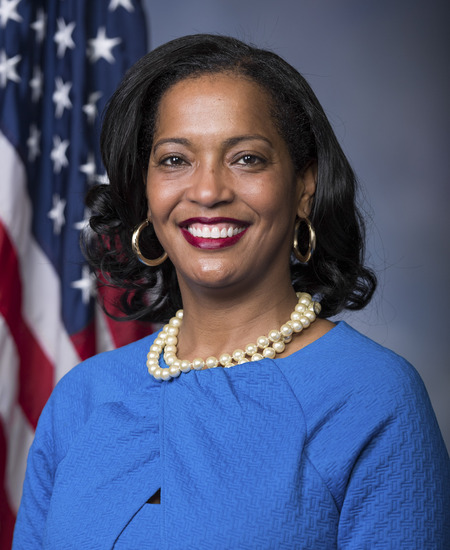
Rep. Jahana Hayes
Sponsored bills
Earning Experience Act of 2022 This bill requires the Department of Education to establish a pilot program that awards grants to institutions of higher education for establishing or expanding programs to provide students with work-based learning opportunities.
Opportunities for Success Act of 2022 This bill permanently reauthorizes the Federal Work-Study Program and otherwise revises the program, including by allocating program funds to institutions of higher education (IHEs) based on the amount of Pell Grant funds received by each IHE. The bill also establishes a pilot program that provides work-based learning opportunities for students who demonstrate exceptional financial need.
Educator Down Payment Assistance Act of 2022 This bill requires the Department of Education to award grants for assisting certain elementary and secondary school educators with the purchase of a first home (e.g., by providing direct down payment costs). Entities eligible for the grants include local governments, state housing finance agencies, and local educational agencies.
Strengthening and Improving Public Service Loan Forgiveness Act of 2022 This bill makes changes to the Public Service Loan Forgiveness (PSLF) program, including by (1) lowering the number of monthly payments required for loan forgiveness from 120 to 60; and (2) making permanent certain limited waivers, such as a waiver that allowed certain late or partial loan payments to count as qualifying payments for PSLF loan forgiveness.
LGBTQ I+ Data Inclusion Act This bill addresses federal data collection of voluntary, self-disclosed information on sexual orientation, gender identity, and variations in sex characteristics. Specifically, the bill requires federal agencies that collect information through a survey for statistical purposes that includes demographic data (where subjects self-report information or a proxy provides information about the subject or responds for all persons in a household) to review existing data sets to determine which data sets do not include information about sexual orientation, gender identity, and variations in sex characteristics. Such agencies must assess needed changes in survey methods related to asking questions on such matters. Agencies that publish reports relying on survey demographic data must include information on sexual orientation, gender identity, and variations in sex characteristics. Agencies may waive this publication requirement on a case-by-case basis if the confidentiality of the information cannot be maintained or if adding such information to the survey would impair the agency's ability to preserve the utility, accuracy, or objectivity of the survey while also generating relevant evidence about the LGBTQI+ community. The Government Accountability Office must report to Congress on the implementation of this bill's requirements by agencies.
This resolution expresses support for the designation of Journeyman Lineworkers Recognition Day. (A journeyman lineworker is a person who builds and maintains electrical power systems.)
Health Equity and Accountability Act of 2022 This bill directs the Department of Health and Human Services (HHS) and others to undertake efforts to reduce health disparities. For example, the bill (1) requires more detailed reporting of demographic and health disparities data, including related to public health emergencies; (2) directs certain components of HHS to support health workforce diversity; and (3) increases access to culturally and linguistically appropriate health care. The bill also modifies eligibility and other requirements for Medicare, Medicaid, private health insurance, nutrition assistance, and other programs to reduce health disparities among vulnerable populations. The bill includes specific provisions with respect to noncitizens; maternal, infant, and child health; mental and behavioral health; specified conditions that disproportionately affect racial and ethnic minority groups, such as certain cancers, HIV/AIDS, kidney disease, and diabetes; investments in communities facing health and other inequities; and nondiscrimination in the provision of services in federally supported health programs. Additionally, the bill (1) revises health information technology programs to address health disparities, and (2) supports health impact assessments and other efforts pertaining to environmental justice and social determinants of health (i.e., nonmedical factors that influence health outcomes, such as income and educational attainment). The bill also requires various studies and reports on issues related to health care and health disparities, including a report by the Government Accountability Office on health workforce diversity.
Emergency Grant Aid for College Students Act This bill directs the Department of Education to establish a grant program for institutions of higher education to provide emergency financial-aid grants to students.
My Body, My Data Act of 2022 This bill establishes protections, subject to certain limits, for personal reproductive or sexual health information. This includes information relating to past, present, or future surgeries or procedures, such as the termination of a pregnancy. Specifically, commercial entities, including individuals, nonprofits, and common carriers, may not collect, retain, use, or disclose personal reproductive or sexual health information except (1) with the express written consent of the individual to whom such information relates, or (2) as is strictly necessary to provide a requested product or service. Commercial entities also must provide individuals with access to, and a reasonable mechanism to delete, any of their reproductive or sexual health information upon request. Further, commercial entities must maintain and publish a privacy policy describing their practices with respect to such information. The bill's provisions do not apply to entities that are subject to certain existing health-related privacy regulations, such as the privacy regulations issued under the Health Insurance Portability and Accountability Act of 1996. Additionally, the provisions do not apply to the disclosure of personal reproductive or sexual health information for the publication of newsworthy information of legitimate public concern. The bill provides for enforcement by the Federal Trade Commission and by private civil actions.