Preventing Pretrial Gun Purchases Act This bill prohibits the sale or disposition of a firearm or ammunition to a person who is subject to a pretrial release order that prohibits the person from purchasing, possessing, or receiving firearms. It also establishes grants for states and Indian tribes to report information about pretrial release orders to the National Instant Criminal Background Check System.
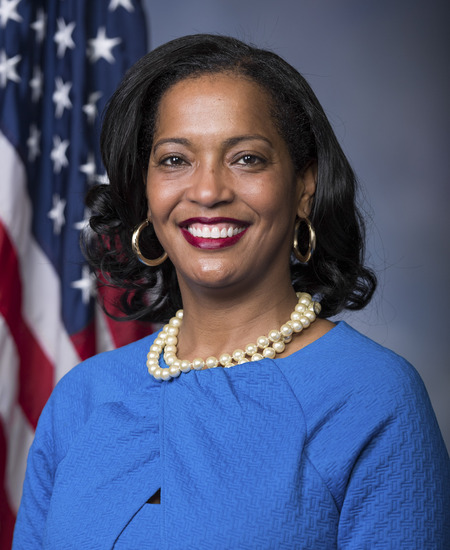
Rep. Jahana Hayes
Sponsored bills
Comprehensive Addiction Resources Emergency Act of 2021 This bill establishes programs, grants, and other activities to address substance use disorders. Specifically, the Department of Health and Human Services (HHS) must establish a program for purchasing and distributing opioid overdose reversal drugs for states and Indian tribes. HHS must also award grants for and otherwise support addressing substance use, particularly in states, tribes, territories, and localities with disproportionately high drug overdose rates; increasing access to preventive, medical, recovery, and related services; developing innovative models of delivering treatment and harm reduction services; and expanding the treatment capacity of Medicaid providers. In addition, HHS must issue model standards of care for treatment services and recovery residences and may award grants for training health care professionals. The bill also supports prevention and treatment services for workers, addiction and pain management research, and data collection on substance use disorders. Further, dispensers, distributors, and manufacturers of schedule II controlled substances (e.g., oxycodone), with the exception of opioid treatment programs, must certify that they maintain effective drug diversion controls. Violators are subject to specified civil and criminal penalties. Collected penalties shall be used for the grant programs and other substance use disorder activities established under the bill.
Repeal Existing Policies that Encourage and Allow Legal HIV Discrimination Act of 2022 or the REPEAL HIV Discrimination Act of 2022 This bill addresses federal and state laws, policies, and regulations that may burden people living with HIV/AIDS. Specifically, the bill directs the Department of Justice (DOJ), the Department of Health and Human Services (HHS), the Department of Defense (DOD), and the White House Office of National AIDS Policy to initiate a national review of federal (including military) and state laws, policies, regulations, and judicial precedents and decisions regarding criminal and related civil commitment cases involving people living with HIV/AIDS. DOJ must transmit to Congress and make publicly available the results of such review with related recommendations. The White House Office of National AIDS Policy must also develop and publicly release guidance to assist states with handling relevant cases. The office, DOJ, HHS, and DOD must transmit to the President and Congress any proposals necessary to implement adjustments to federal laws, policies, or regulations. This bill shall not be construed to discourage the prosecution of individuals who act with the intent to do harm to another individual by intentionally transmitting HIV.
Bringing an End to Harassment by Enhancing Accountability and Rejecting Discrimination in the Workplace Act or the BE HEARD in the Workplace Act This bill expands protections against discrimination and harassment in the workplace and raises the minimum wage for tipped employees. Specifically, the bill (1) makes it an unlawful employment practice to discriminate against an individual in the workplace based on sexual orientation, gender identity, pregnancy, childbirth, a medical condition related to pregnancy or childbirth, or a sex stereotype; and (2) provides a statutory definition for what constitutes workplace harassment. Further, these protections apply to all workplaces, regardless of size, and to all workers, including independent contractors, interns, volunteers, and trainees. The bill prohibits employers from entering into contracts or agreements with workers that contain certain nondisparagement or nondisclosure clauses and prohibits certain predispute arbitration agreements and postdispute agreements. It also establishes grant programs to (1) prevent and respond to workplace discrimination and harassment, (2) provide legal assistance for low-income workers, and (3) establish a system of legal advocacy in states to protect the rights of workers. The bill further provides employees the right to retain their tips and it increases, in specified annual increments, the minimum wage for tipped employees to match the federal minimum wage for nontipped employees. Additionally, the bill requires the Equal Employment Opportunity Commission to provide specified training and resource materials, establish and convene a harassment prevention task force, and establish an Office of Education and Outreach with regard to prohibited discrimination and harassment in employment. The bill also requires specified studies, reports, and research on prohibited workplace harassment.

Preventing Vigilante Stalking that Stops Women's Access to Healthcare and Abortion Rights Act of 2021 This bill increases the maximum prison term for a stalking offense, if the offense is committed with the intent to obtain health care information of an individual or to prevent the health care decisions of an individual.
No Bonuses in Bankruptcy Act of 2021 This bill prohibits debtors in bankruptcy proceedings from paying bonuses to certain individuals including insiders (such as relatives) and highly compensated employees.
Protect Peaceful Protests Act This bill prohibits the Department of Justice from designating Drug Enforcement Administration officers to perform law enforcement duties that do not relate to drug investigations. It also generally prohibits the U.S. Marshals Service from deputizing other law enforcement officers and the Department of Homeland Security from designating additional employees to protect federal property during a protest unless there is a request by a state, Indian tribe, territory, or the District of Columbia.
Lifting Immigrant Families Through Benefits Access Restoration Act of 2021 or the LIFT the BAR Act of 2021 This bill repeals certain limits on the eligibility of noncitizens who lawfully reside in the United States for federal means-tested programs, including Medicaid, the Children's Health Insurance Program (CHIP), programs funded through Temporary Assistance for Needy Families (TANF) grants, Supplemental Security Income (SSI), and certain nutrition and housing programs.
Preventing Vigilante Stalking that Stops Women's Access to Healthcare and Abortion Rights Act of 2021 This bill increases the maximum prison term for a domestic violence or stalking offense, if the offense is committed with the intent to obtain health care information of an individual or to prevent the health care decisions of an individual.
Frederick Douglass Trafficking Victims Prevention and Protection Reauthorization Act of 2021 This bill reauthorizes through FY2026 and revises programs and activities to support survivors of human trafficking and prevent such trafficking domestically and abroad. The bill expands and authorizes programs for survivors, including a program to prevent re-exploitation. It also extends through FY2026 a special assessment on certain persons convicted of a human trafficking offense, which funds programs for human-trafficking survivors. Additionally, the bill provides privacy and other protections for survivors, including specified financial protections and protections against retaliation for survivors who pursue civil claims against a perpetrator. The bill also allows courts to reduce sentences for certain individuals who commit human trafficking crimes as minors. To prevent trafficking domestically, federal departments must incorporate anti-trafficking efforts into contracting activities and personnel policies, and the bill supports private sector efforts to address human trafficking in its policies and services. Furthermore, the bill supports the identification, investigation, and prosecution of human trafficking crimes, with an expanded focus on forced labor. To prevent trafficking globally, the bill prohibits access to a trade program for developing countries and otherwise restricts development assistance for countries that fail to meet minimum standards for eliminating trafficking. It also changes the criteria for determining whether a country has met applicable standards. In addition, the bill authorizes sanctions on persons convicted of severe forms of trafficking and requires integration of counter-trafficking activities into foreign assistance programs. The bill also requires reporting by the Government Accountability Office, federal agencies, and states concerning human trafficking.