

Maddy summaryThe Energy Bills Relief Act aims to lower household energy costs and accelerate the development of low-cost, clean energy by modifying federal tax credits, expanding weatherization programs, and streamlining permitting processes. Key provisions include restoring tax incentives for renewable energy projects, increasing funding for low-income heating assistance, and requiring federal agencies to treat wind, solar, and storage projects with the same procedural fairness as oil and gas projects. The bill also establishes new incentives for upgrading the electricity grid, such as tax credits for transmission lines and grants for wildfire prevention measures, while creating mechanisms to ensure utilities serve public interests and protect consumers from price volatility.
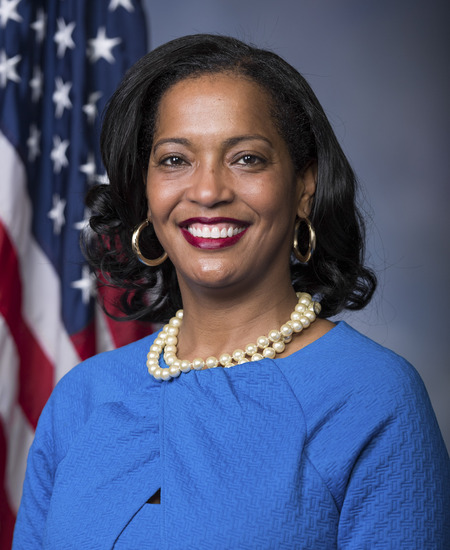
Rep. Jahana Hayes
Sponsored bills
Governing Unaccredited Representatives Defrauding VA Benefits Act or the GUARD VA Benefits Act This bill imposes fines on individuals for soliciting, contracting for, charging, or receiving any unauthorized fee or compensation with respect to the preparation, presentation, or prosecution of any claim for Department of Veterans Affairs benefits. The attempted commission of such offenses is also punishable by fine.
Maddy summaryThis bill expands the TRICARE program to cover wigs for service members with traction alopecia, a hair loss condition caused by tight hairstyles. It also adds traction alopecia to the list of covered conditions for wig provision and requires the Secretary of Defense to issue grooming standards and training materials by September 30, 2026. These regulations aim to inform military personnel about health risks associated with tightly gathered hairstyles, dyes, and chemical hair products. The changes directly affect active duty service members enrolled in TRICARE who experience hair loss from styling practices.
Maddy summaryThis bill, known as the Fair Wages for Home Care Workers Act, would change federal labor rules to require overtime pay and minimum wage protections for certain babysitters. It specifically targets casual babysitting work that is irregular or intermittent, while excluding trained medical professionals like nurses and home health aides from these changes. The law would also allow babysitters to perform up to 20% of their work time on unrelated household tasks without losing their protected status. These amendments would apply to workers covered by the Fair Labor Standards Act of 1938 who provide custodial care for infants or children in private homes.
Maddy summaryThis bill establishes the Addressing Teacher Shortages Act of 2026, which creates a federal grant program to help schools and districts prepare and retain educators in under-resourced and underserved communities. The program provides competitive grants to eligible entities for activities such as teaching residency programs, mentor teacher initiatives, Grow Your Own programs that recruit local community members, and 2+2 partnerships between community colleges and universities. Grant funds are specifically reserved to address shortages in rural areas, high-need subject areas like STEM and special education, and to diversify the teaching workforce. Recipients must provide matching funds and submit detailed reports on retention rates, licensure pass rates, and the percentage of teachers from underrepresented groups. The program authorizes funding from fiscal years 2027 through 2032 and includes provisions for planning grants for entities that have not previously received support.
Maddy summaryHRES 1107 is a House resolution urging the President to issue a proclamation flying the U.S. flag at half-staff to honor Rev. Jesse Jackson. The resolution recognizes his civil rights leadership, including founding the Rainbow PUSH Coalition and his presidential campaigns in 1984 and 1988, which advanced racial equality and economic justice. This symbolic gesture directly affects the President (as the one who would issue the proclamation) and the public, who would observe the flag at half-staff.
Maddy summaryHR 7827 restricts the Department of Defense from purchasing or selling military-style assault weapons and certain high-capacity ammunition (like .223 Remington) in commercial markets. It imposes strict requirements on dealers selling firearms or ammunition, including mandatory NICS background checks, limits on high-volume sales, security measures (like surveillance systems), and electronic recordkeeping for transactions. Dealers must also meet crime trace limits (fewer than 24 crime guns traced annually) and implement training on recognizing straw purchases and preventing illegal sales. Government-owned weapons plants must annually report commercial sales data to Congress, including customer locations and revenue.
Maddy summaryThis bill, the PrEP Access and Coverage Act of 2026, requires most health insurance plans to cover HIV prevention medication without charging patients any out-of-pocket costs. It directly affects people with private insurance, government health programs like Medicare and Medicaid, military health care, and the Indian Health Service. The law mandates that insurance companies cannot require pre-approval for these medications, cannot charge deductibles or copayments for them, and cannot deny or charge higher premiums for life, disability, or long-term care insurance based on someone taking HIV prevention medication. The bill also creates a new public education campaign to increase awareness about HIV prevention options and provides federal funding to states and community organizations to expand access to these services.
Maddy summaryThis bill requires hospitals receiving Medicare funding to create discharge plans for pregnant patients who are expected to leave the hospital before delivery, ensuring they have safe transportation and access to backup care if needed. The discharge plans must include clinical justification for early discharge, assessment of travel logistics, identification of alternative delivery facilities, and confirmation that patients understand the information in their primary language. Additionally, the bill expands rural maternal health training grants to include racial bias training, establishes performance milestones for grant recipients, and creates a new initiative to evaluate different training models for healthcare professionals. The legislation also mandates the development of a public dashboard tracking maternal health outcomes and federal investments in maternal health research.
Maddy summaryHRES 1106 is a non-binding House resolution honoring the life and legacy of Rev. Jesse Louis Jackson, Sr., a prominent civil rights leader and activist. The resolution recognizes his lifelong work in advancing equality through organizations like Operation PUSH, his leadership in the anti-apartheid movement, and his historic presidential campaigns in 1984 and 1988. It expresses condolences to his family and calls on all Americans to continue his legacy of promoting civil rights and unity. As a commemorative resolution, it does not create new laws or affect any policies.