

Maddy summaryHR 1263, the Transformation to Competitive Integrated Employment Act, aims to end the use of special certificates that allow employers to pay people with disabilities below minimum wage or customary rates for similar work. The bill requires employers currently using these certificates to transition to competitive integrated employment where individuals with disabilities receive at least minimum wage or the customary rate for similar work. It creates grant programs for states and specific employers to support this transition, with a timeline to phase out special certificates over four years. The act also establishes reporting requirements and technical assistance to help individuals with disabilities find and retain integrated employment.
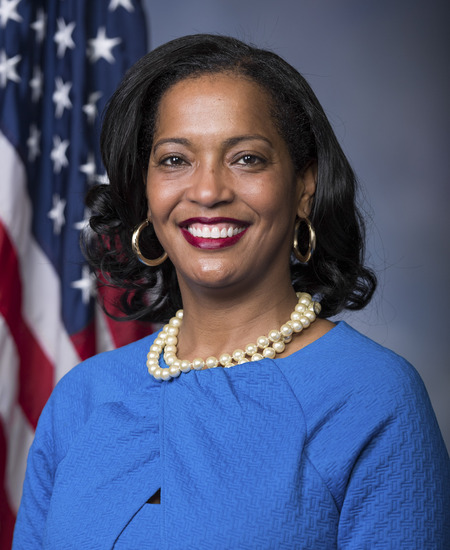
Rep. Jahana Hayes
Sponsored bills
Maddy summaryThe Richard L. Trumka Protecting the Right to Organize Act of 2023 strengthens workers' rights to organize unions by making it harder for employers to interfere with organizing efforts. Key provisions include changing the definition of "employee" to make it more difficult to classify workers as independent contractors, prohibiting employers from threatening to permanently replace striking workers, and requiring employers to provide voter lists for union elections. The bill also creates a new electronic voting system for union elections, strengthens whistleblower protections for workers reporting labor violations, and increases penalties for unfair labor practices. These changes directly affect workers seeking to form unions, employers who may interfere with organizing, and labor organizations. The bill aims to make it easier for workers to exercise their right to collective bargaining under the National Labor Relations Act.
Maddy summaryThis is a non-binding resolution expressing the House of Representatives' symbolic support for designating February 27-March 3, 2023, as "Public Schools Week." It does not create new laws, allocate funding, or directly affect any individuals or institutions. The resolution highlights the importance of public schools to democracy, equity, and student success through a series of supporting statements. As a procedural resolution, it has no legal effect beyond acknowledging the significance of public education.
Maddy summaryThe Justice for Black Farmers Act of 2023 addresses historical discrimination against Black farmers by the USDA through several key provisions. It establishes an Equity Commission to study discrimination and recommend solutions, creates an independent Civil Rights Oversight Board to review discrimination complaints, and provides land grants of up to 160 acres to eligible Black farmers at no cost. The bill also improves access to credit for socially disadvantaged farmers, requires the USDA to collect and publish data on racial disparities in its programs, and includes protections against discriminatory practices in the livestock industry. These measures aim to increase land ownership and economic opportunity for Black farmers while addressing systemic barriers they've faced for decades.
Maddy summaryThe COMPOST Act (HR 651) makes composting a recognized conservation practice under federal farm programs, directly affecting farmers, local governments, and community organizations. It creates a new $200 million annual grant and loan program (2024-2033) to fund projects like composting facility construction, food waste collection systems, and onsite composting programs. Priority is given to projects serving low-income communities, supporting minority-owned businesses, and using distributed infrastructure (e.g., home, farm, or community-scale composting). The bill requires projects to demonstrate waste processing capacity, high-quality compost production, and environmental justice considerations.
Maddy summaryHR 1124, the Federal Death Penalty Abolition Act of 2023, would eliminate the federal death penalty by repealing provisions in over 30 sections of U.S. Code that currently allow for capital punishment in various criminal offenses. The bill would affect anyone convicted of a federal crime that currently carries the death penalty, including murder during drug trafficking, terrorism, and other violent crimes. It would remove the death penalty as a sentencing option for these offenses and require resentencing for those already under a death sentence. The bill also makes related changes to military justice procedures that currently permit capital punishment.
Maddy summaryThe PREP Civics and Government Act (HR 1133) amends the National Foundation on the Arts and the Humanities Act of 1965 to explicitly include "civics and government" as a subject within the humanities. This change allows the National Foundation on the Arts and the Humanities to fund educational programs focused on civics and government through existing grant programs. The bill directly affects the Foundation’s funding priorities and organizations applying for humanities grants, such as schools, museums, and community groups offering civics education. It does not create new funding but expands eligibility for current humanities grants to cover civics and government content.
Maddy summaryThis resolution (HRES 99) is a non-binding statement supporting National Black HIV/AIDS Awareness Day, observed annually on February 7. It directly addresses the disproportionate impact of HIV/AIDS on Black communities in the U.S., citing data showing Black Americans face higher diagnosis rates, later care access, and greater mortality compared to other groups. The resolution encourages state/local governments and health agencies to promote HIV testing and awareness, supports the National HIV/AIDS Strategy, and advocates for culturally competent care and the "U=U" (Undetectable equals Untransmittable) messaging. It does not create new laws or allocate funding but urges recognition of existing disparities and community-led solutions.
Maddy summaryThis bill provides financial assistance to help low-income renters cover security deposits and moving costs. It directly affects families using housing choice vouchers (Section 8) and those receiving housing assistance through the HOME program. The law requires public housing agencies to use federal funds to pay for reasonable security deposits and moving expenses, and mandates that unused funds be returned to the agency for future use. It also directs the Department of Housing and Urban Development to study alternatives to traditional security deposits and report findings to Congress within 180 days.
Maddy summaryThis bill directs the Joint Committee of Congress on the Library to obtain a statue of Shirley Chisholm and place it permanently in the U.S. Capitol within two years of enactment. It authorizes the Architect of the Capitol to handle the agreement for the statue under the Committee's terms, with necessary funding approved as needed. The bill does not change laws or affect specific people or groups; it is a procedural measure to honor Shirley Chisholm, the first Black woman elected to Congress, through a permanent Capitol display.