

Maddy summary# Summary of the National Apprenticeship Act of 2023 This proposed legislation establishes a comprehensive framework to modernize and expand apprenticeship programs in the United States, creating a National Apprenticeship System designed to address current workforce needs and increase opportunities for underrepresented populations. ## Key Provisions ### System Framework - Establishes clear quality standards for apprenticeship, pre-apprenticeship, and youth apprenticeship programs - Requires programs to meet specific criteria including: - Minimum 2,000 hours of on-the-job learning (with flexibility for some occupations) - Structured related instruction (minimum 144 hours per year for time-based programs) - Progressive wage scales - Safety training and equipment - Equal opportunity for participation ### Program Types - **Apprenticeship Programs**: Time-based, competency-based, or hybrid models for full-time workers - **Pre-apprenticeship Programs**: Designed to prepare individuals without meeting minimum qualifications for apprenticeship - **Youth Apprenticeship Programs**: For high school students, integrating academic and work-based learning ### Diversity & Inclusion Requirements - Requires programs to actively recruit and support nontraditional apprenticeship populations: - Women, minorities, individuals with disabilities - Long-term unemployed - Individuals impacted by the criminal or juvenile justice system - Foster and former foster youth - Individuals with barriers to employment ### Registration & Oversight - Requires formal registration of programs with a registration agency - Mandates annual performance data collection and reporting - Establishes procedures for program review, technical assistance, and deregistration ### Grant Program (Title II) - Authorizes $4 billion over five years ($400M-$800M annually) for competitive grants - Funds will support: - Creation and expansion of apprenticeship programs in high-demand sectors - Encouraging employer participation, particularly with small- and medium-sized businesses - Supporting intermediaries (national and local) - Strengthening educational alignment with secondary and postsecondary systems ### Evaluation Requirements - Mandates independent evaluations of grant programs - Requires collection of disaggregated data by program type and demographic factors - Focuses on measuring outcomes including: - Program completion rates - Employment rates in related fields - Wage growth - Increased participation of underrepresented groups ### Conforming Amendments - Repeals outdated sections of the American Competitiveness and Workforce Improvement Act of 1998 - Amends the Immigration and Nationality Act to align with the new apprenticeship system This legislation represents a significant investment in workforce development, aiming to create a more inclusive, high-quality apprenticeship system that responds to 21st-century labor market needs while expanding opportunities for historically underrepresented groups.
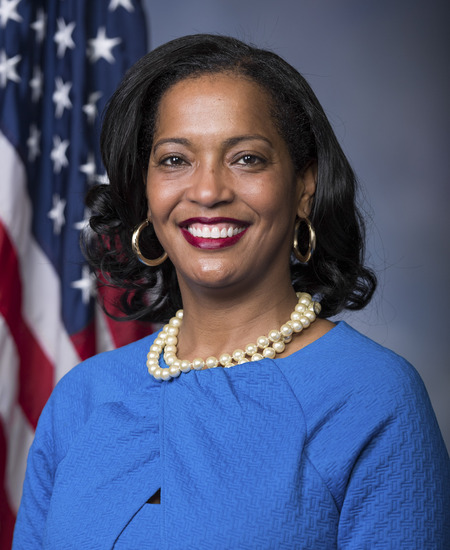
Rep. Jahana Hayes
Sponsored bills
Maddy summaryHR 2845, the Enhancing K-12 Cybersecurity Act, creates a centralized School Cybersecurity Information Exchange website managed by CISA to provide K-12 schools, school districts, and state education agencies with tailored cybersecurity resources, best practices, and funding opportunities. It establishes a voluntary registry for schools to report cyber incidents (like ransomware attacks) and requires CISA to publish annual, anonymized reports on incident trends. The bill also funds a K-12 Cybersecurity Technology Improvement Program to deploy protective tools, offer training, and prevent threats, with $10 million authorized annually for 2024-2025. This directly supports schools in strengthening digital security for students and staff, focusing on practical, accessible solutions rather than legislative changes.
Maddy summaryThe Young Americans Financial Literacy Act would create federal grants to fund centers of excellence that develop and deliver research-based financial education programs for young people aged 8-24. These programs would teach essential money management skills like budgeting, saving, debt management, and financial decision-making, with a focus on accessibility through digital and traditional methods. The bill authorizes $27.5 million to $55 million annually (through 2025) for these centers, prioritizing programs serving at-risk youth, families, and communities facing financial challenges. Centers must use evidence-based approaches, address unique needs (e.g., student loans, predatory lending), and report annually to Congress on their outcomes.
Maddy summaryHR 1788, the "Goldie’s Act," strengthens USDA enforcement of the Animal Welfare Act. It requires annual inspections of all regulated animal businesses (like dealers, research facilities, and exhibitors) and mandates immediate, humane confiscation of animals suffering due to violations, while prohibiting owners from destroying animals during this process. The bill increases civil penalties to $10,000 per violation, requires hearing panels including veterinarians, and mandates that penalties consider business size and violation severity. It also requires USDA to share violation records with local animal control within 24 hours.
Maddy summaryThe Water Affordability, Transparency, Equity, and Reliability Act of 2023 establishes a new trust fund funded by increasing the corporate tax rate from 21% to 24.5% to support water infrastructure and affordability programs. It allocates funds to clean water programs (42%), safe drinking water funding (42.5%), household water wells (1%), colonias assistance (0.5%), Indian health services (3%), and water operator job training (0.5%). The bill requires the EPA to conduct a study and submit a report on water affordability, discrimination in water services, public participation in regionalization, and data collection related to service disconnections. It includes specific provisions for colonias, household water wells, and job training programs for water system operators to improve water access and equity.
Maddy summaryThe Healthy H2O Act establishes a federal grant program to help rural households and facilities improve drinking water quality by covering costs for point-of-use or point-of-entry water treatment systems, filter replacements, and related services. It directly assists eligible end users in rural areas - including homeowners, renters, child-care facilities, and small residential property owners - who have tested water containing health contaminants like lead, arsenic, or PFAS, while prioritizing private well users and limiting assistance to households with income below 150% of the median nonmetropolitan household income. Grants can fund certified treatment systems, installation by qualified professionals, maintenance, and water quality testing, administered by the Department of Agriculture with $10 million annually from 2024-2028. The program requires annual reports to Congress on progress, barriers to safe water access, and trends in treatment technology use to inform future improvements.
Maddy summaryThis bill establishes a comprehensive framework to address environmental justice by requiring federal agencies to identify and address disproportionately adverse environmental and health effects on communities of color, low-income communities, and Tribal and Indigenous communities. It creates a White House Environmental Justice Interagency Council to coordinate federal efforts, mandates that agencies develop environmental justice strategies, and requires consideration of cumulative impacts in permitting decisions for pollution sources. The bill also establishes grant programs for environmental justice communities, creates training requirements for federal employees, and includes specific provisions for safer cosmetics and economic revitalization in fossil fuel-dependent communities. These provisions aim to ensure fair treatment and meaningful involvement of all people in environmental decision-making processes, directly affecting federal agencies and communities disproportionately burdened by environmental hazards.
Maddy summaryThe ACTION for National Service Act reorganizes the Corporation for National and Community Service into the AmeriCorps Administration, an Executive department, and establishes new programs to expand national service opportunities. It increases national service educational awards to twice the average in-state tuition for public 4-year colleges and raises living allowances for participants. The bill creates a Civilian Climate Corps focused on climate-related projects in disproportionately impacted communities and establishes a National Service Foundation to accept private donations. It also creates a new outreach program to notify individuals aged 17-30 about service opportunities, with a goal of reaching 1 million participants annually by 2033.
Maddy summaryThe Community Broadband Act of 2023 removes state-level legal barriers that prevent local governments, cooperatives, or public-private partnerships from building or operating broadband networks. It prohibits states from banning or effectively blocking these entities from providing advanced internet services to residents or businesses. The bill requires public entities to treat all broadband providers fairly under local rules, without favoring their own services or affiliated companies. It specifically defines "public providers" (like cities or counties) and "cooperatively organized providers" (like member-owned co-ops) to clarify who this law protects. The law does not fund new networks but ensures existing state laws cannot block community-led broadband projects.
Maddy summaryHRES 313 is a simple House resolution commending the Quinnipiac University men's hockey team for winning the 2023 NCAA Division I National Championship - their first national title. It specifically recognizes their 3-2 victory over Minnesota in the championship game and highlights key achievements like Jacob Quillan being named Most Outstanding Player. The resolution formally congratulates the team, fans, students, and faculty, and directs the House Clerk to send a copy to Quinnipiac University President Dr. Judy Olian and head coach Rand Pecknold. As a ceremonial resolution with no policy changes, it serves solely to honor the team's accomplishment.