

Maddy summaryHR 3056, the Research Advancing to Market Production for Innovators Act, aims to improve the commercialization of technologies developed by small businesses through the SBIR and STTR programs. The bill requires federal agencies to consider commercialization potential in peer reviews, designate Technology Commercialization Officials to assist small business awardees, and establish annual commercialization impact assessments measuring outcomes like product sales, outside investment, and patent activity. It also creates a prioritized patent examination program to help small businesses protect intellectual property more efficiently without additional fees. These changes apply to all federal agencies administering SBIR and STTR programs and directly affect small businesses receiving these awards.
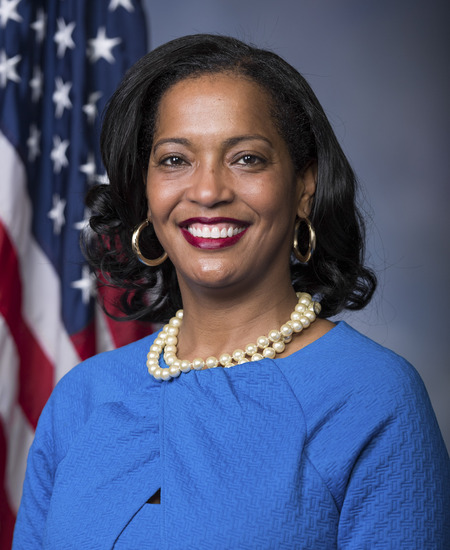
Rep. Jahana Hayes
Sponsored bills
Original Fair Housing Resolution of 2023 This resolution expresses support for the goals and values of the 55th anniversary of the Fair Housing Act and for efforts to strengthen housing protections.
Maddy summary# Summary of EDUCATORS for America Act Provisions This comprehensive legislation makes significant changes to educator preparation, certification, and support systems, with a strong focus on loan forgiveness and retention of educators in high-need settings. ## Key Provisions: 1. **Enhanced Loan Forgiveness Programs**: - Creates new "Educator Loan Forgiveness Programs" under sections 428J and 460 of the Higher Education Act - Provides 100% loan forgiveness for educators who complete 5 years of qualifying service in high-need schools or early childhood education programs - Offers monthly loan forgiveness/cancellation during the service period (in addition to annual forgiveness) 2. **Expanded Eligibility**: - Defines "high need school" as schools where: * Over 30% of students meet poverty measures * School is identified for comprehensive support * School is Bureau of Indian Education funded * School is operated by Tribal educational agencies - Includes Tribal early childhood programs, Native Hawaiian education systems, and Bureau of Indian Education programs as eligible settings - Special rule for educators providing instruction in Native American languages 3. **"Qualifying Educator" Definition**: - Includes elementary/secondary teachers (with full certification) - Includes school leaders (with full certification) - Includes early childhood educators and program directors - Includes educators working in Native American language instruction regardless of certification status 4. **New Support Programs**: - Centers of Excellence for teacher preparation at institutions serving underrepresented populations - Recruitment and completion grants for underrepresented students in education - Resiliency grants for technology integration and educator workforce partnerships - Doctoral fellowships to diversify faculty in high-need education areas 5. **Implementation Details**: - Monthly loan credit program for eligible educators in income-driven repayment plans - Allows counting of partial service years under specific conditions - Prevents double benefits with other service programs - Allows for promotions within qualifying schools without losing eligibility This legislation aims to create a more diverse, stable, and well-prepared educator workforce by reducing financial barriers to entering and remaining in the education profession, particularly in high-need schools and early childhood education settings.
Maddy summaryThe Returning Home Act (HR 2994) establishes a new federal grant program to provide rental assistance and housing support for individuals recently released from incarceration. It directly affects people leaving prisons, jails, juvenile facilities, or halfway houses who are at risk of homelessness or housing insecurity within 365 days of release. The program funds 24 months of rental assistance (60% minimum), housing counseling, case management, landlord incentives, and other supportive services like pre-release planning and mental health referrals. It authorizes $100 million annually for these services and prohibits funding for law enforcement entities.
Maddy summaryThe Protecting America's Workers Act expands workplace safety protections to public employees, including those working for state and local governments who were previously excluded from some OSHA protections. It strengthens whistleblower protections by prohibiting retaliation against employees who report safety concerns, refuse to perform dangerous tasks, or report work-related injuries. The bill requires employers to promptly report work-related deaths and hospitalizations, prohibits policies that discourage injury reporting, and mandates posting of employee safety rights information. It also increases penalties for safety violations and improves access to information for victims and families during workplace investigations. These changes apply to all employers covered by OSHA, with specific implementation timelines for state and local government workplaces.
Maddy summaryThis bill protects living organ donors from insurance discrimination by prohibiting life, disability, and long-term care insurers from denying coverage, raising premiums, or altering policy terms solely because someone donated an organ while alive. It also updates the Family and Medical Leave Act to include recovery from organ donation surgery as a qualifying health condition, allowing donors to take protected leave for this purpose. Additionally, the bill requires the Health and Human Services Secretary to update public educational materials about living donation benefits, risks, and insurance protections within six months of enactment. These changes directly affect living organ donors, insurers, employers, and healthcare systems by ensuring fair access to insurance and workplace leave.
Maddy summaryHR 2955, the Stop Institutional Child Abuse Act, establishes a Federal Work Group to improve data collection and best practices for youth in residential programs (like therapeutic schools, treatment centers, and group homes). The Work Group, composed of federal agency representatives and diverse stakeholders, must develop national data standards, create risk assessment tools, and issue biennial reports with recommendations to enhance safety, reduce restraints, and expand community-based alternatives. It directly affects youth with mental health, substance use, or disability needs placed in these facilities, as well as agencies overseeing them. The bill also mandates a National Academies study to examine funding, oversight, and barriers to community care. These mechanisms aim to standardize data tracking and promote less restrictive, trauma-informed care for youth in residential programs.
Maddy summaryHR 2907, the "Let Doctors Provide Reproductive Health Care Act," prohibits states from restricting or penalizing health care providers (including doctors, nurses, and pharmacists) who offer reproductive health care services - such as abortion, contraception, or in vitro fertilization - that are legal in the state where the care is provided. The bill allows providers, patients, or the federal government to sue states or officials enforcing such restrictions, with courts able to block those laws and award legal fees. It also allocates $40 million for legal defense grants to help providers facing lawsuits and $40 million for security grants to protect clinics and patients. The law directly affects reproductive health care providers, their staff, patients, and insurers, ensuring they cannot be denied services, insurance, or face disciplinary action for providing legally permitted care.
Maddy summaryThe Kids PRIVACY Act strengthens privacy protections for children under 13 and teenagers aged 12-18 online. It requires digital services that collect data from these age groups to obtain verifiable consent, limit data collection to what's necessary, and prevent targeted advertising based on their information. The bill establishes new requirements for transparency (including clear privacy policies), data minimization, security measures, and privacy impact assessments. It also creates a dedicated Youth Privacy and Marketing Division at the Federal Trade Commission to enforce these rules and repeals existing safe harbor provisions that previously protected operators from liability.
Maddy summaryHRES 334 is a symbolic resolution recognizing "Community College Month" to celebrate over 1,000 community colleges across the United States. It highlights how these institutions support accessible higher education, workforce training, and economic prosperity - serving 10.2 million students annually while charging affordable tuition (averaging $3,860 for in-district students). The resolution does not create new laws or requirements but formally acknowledges community colleges' role in strengthening local communities and the national economy. This acknowledgment applies broadly to all community colleges and their students, without imposing any obligations.