

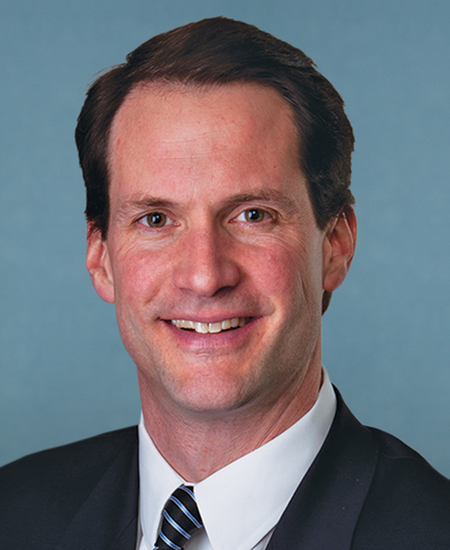
Photo of James A. Himes
D United States House · District 4 · Connecticut On the 2026 ballot

Rep. James A. Himes

Compare
Total votes
2,837
all sessions
Attendance
99%
30 missed
Higher than 75% of chamber peers
With party
96%
of cast votes
Near the chamber average
Bipartisan score
2%
crosses aisle rarely
Near the chamber average
Sponsored
734
bills & resolutions
Lower than 79% of chamber peers
Committees
2
assignments
734 bills and resolutions

Sponsored bills

Total
734
Primary
22
Co-sponsor
712
This page
734
matching current filters
Co-sponsor HRES 481
In committee · United States House · Co-sponsor
Expressing the sense of the House of Representatives that BridgeUSA exchange programs are vital to the economy and national interests of the United States, and that Congress should prioritize robust support to ensure equitable opportunities for Americans and people from other countries.

This resolution states that BridgeUSA programs are vital to the economy and to U.S. national interests. The resolution also states that U.S. embassies and consulates should prioritize processing J-1 visas for such programs. (BridgeUSA is the name for what was formerly known as the Exchange Visitor Program. Participants from other countries come to the United States to participate in various exchange programs, such as exchange programs for professors, trainees, interns, and au pairs.)

In committee Jun 7, 2023 1 co-sponsor
Co-sponsor HR 3899
In committee · United States House · Co-sponsor
American Family Act

Maddy summaryThe American Family Act establishes a monthly child tax credit of $250 per month for each child under age 6 and $300 per month for each child aged 6-18, with income limits of $150,000 for joint filers and $112,500 for other filers. The credit is refundable, meaning it can be paid even if the taxpayer owes no income tax, and will be adjusted annually for inflation. The bill includes detailed rules for determining eligibility, including requirements that the child resides with the taxpayer for more than half the month and provisions to prevent fraud through recapture of improperly received payments. The credit will be paid monthly in advance rather than as a single annual payment, with specific mechanisms for calculating and distributing the payments.

In committee Jun 7, 2023 1 co-sponsor
Primary HR 2812
Passed · United States House · Lead sponsor
Middle Market IPO Cost Act

Maddy summaryHR 2812, the Middle Market IPO Cost Act, requires the Securities and Exchange Commission (SEC) to study the costs small and medium-sized companies face when conducting initial public offerings (IPOs). The study will examine direct fees paid to underwriters and advisors, compliance expenses, and how these costs compare to alternative financing options. It will also analyze impacts on capital formation and retail investor access to shares of these companies, tracking trends in IPO volumes, underwriting fees, and market participation over time. The SEC must submit a detailed report to Congress within 360 days of the bill's enactment, outlining findings and potential recommendations.

Passed Jun 6, 2023 0 co-sponsors
Co-sponsor HR 698
In committee · United States House · Co-sponsor
Assault Weapons Ban of 2023

Maddy summaryHR 698, the Assault Weapons Ban of 2023, prohibits the sale, manufacture, transfer, and possession of specific firearms and ammunition devices commonly referred to as "assault weapons" and "large capacity magazines" in interstate commerce. The bill defines "semiautomatic assault weapons" to include rifles like AR-15s and AK-47s, as well as firearms with specific features such as folding stocks, pistol grips, threaded barrels, and detachable magazines holding more than 15 rounds. It exempts law enforcement, military, antique firearms, and weapons already lawfully owned before the law's enactment (known as "grandfathered" weapons). The bill also requires new identification markings on these weapons and large capacity magazines, and adds background check requirements for transfers of grandfathered weapons.

In committee Jun 5, 2023 1 co-sponsor
Co-sponsor HR 3792
In committee · United States House · Co-sponsor
U.S.-Israel Partnership and Abraham Accords Enhancement Act of 2023

Maddy summaryHR 3792 extends U.S. security funding for Israel through 2028 (Section 3) and expands energy cooperation to include advanced nuclear technologies and carbon capture (Section 5). It requires annual reports on regional security partnerships involving Israel (Section 6) and ensures countries in the Abraham Accords can access U.S. development programs (Section 8). The bill also mandates reports on diplomatic efforts against ICC investigations targeting the U.S. and Israel (Section 10) and encourages people-to-people programs to strengthen the Abraham Accords (Sections 7, 9). These provisions directly affect Israel’s diplomatic engagement, security partnerships, and economic cooperation in the Middle East.

In committee Jun 1, 2023 1 co-sponsor
Co-sponsor HR 2792
Passed · United States House · Co-sponsor
Small Entity Update Act

Maddy summaryHR 2792, the Small Entity Update Act, requires the Securities and Exchange Commission (SEC) to periodically review and update its definition of "small entity" for regulatory purposes. The bill mandates that the SEC, working with advisory committees, conduct a study every five years to assess whether the current definition aligns with existing rules, reflects market changes, and ensures a meaningful number of entities qualify as "small." After each study, the SEC must submit a report to Congress with specific recommendations for updating the definition, followed by a proposed rule within 180 days and a final rule 180 days after that. This process directly affects SEC-regulated entities (like small businesses and organizations in capital markets) by potentially expanding their eligibility for certain regulatory exemptions.

Passed May 31, 2023 1 co-sponsor
Co-sponsor HRES 439
In committee · United States House · Co-sponsor
Expressing the sense of the House of Representatives that Congress should take all appropriate measures to ensure that the United States Postal Service remains an independent establishment of the Federal Government and is not subject to privatization.

Maddy summaryHRES 439 is a non-binding resolution expressing the House of Representatives' support for keeping the U.S. Postal Service (USPS) as an independent federal agency, not subject to privatization. It highlights USPS's constitutional role, self-sustaining nature (relying on service revenue, not taxpayer funds), and its importance to rural communities, e-commerce, and over 600,000 employees. The resolution urges Congress to take action to preserve USPS's independence, emphasizing that privatization could raise prices, reduce services, and harm the nation's mail infrastructure. As a procedural resolution, it does not change law but formally states the House's position.

In committee May 23, 2023 1 co-sponsor
Co-sponsor HR 3031
In committee · United States House · Co-sponsor
America's Red Rock Wilderness Act

Maddy summaryThis bill would designate approximately 1.7 million acres of public land in Utah's Colorado Plateau and Great Basin regions as wilderness areas, protecting them from development while preserving traditional uses by Indigenous communities. It establishes specific wilderness areas across Utah's red rock canyons, including the Great Basin Wilderness Areas, Grand Staircase-Escalante Wilderness Areas, and others, with detailed acreage for each designated zone. The bill includes administrative provisions for managing these areas, such as maintaining existing livestock grazing rights, setting road setbacks to protect wilderness character, and reserving water rights for the wilderness areas. This legislation directly affects how the Bureau of Land Management administers public lands in Utah and defines the boundaries for public use of these designated wilderness areas.

In committee May 22, 2023 1 co-sponsor
Co-sponsor HR 3503
In committee · United States House · Co-sponsor
NIH Clinical Trial Diversity Act of 2023

Maddy summaryThis bill requires sponsors of NIH-funded or NIH-approved clinical trials (for drugs, devices, biological products, or behavioral interventions) to set specific, measurable goals for recruiting participants reflecting race, ethnicity, age, and sex - either based on disease prevalence or the U.S. population. Key mechanisms include mandating detailed plans for achieving these goals, annual reporting of demographic data (without personally identifiable information), and strategies to reduce participation barriers like virtual visits or flexible scheduling. It also requires training for researchers on diversity and health inequities, and establishes a remediation process if goals aren’t met. The law aims to improve representation in clinical trials to ensure medical research better serves all patient groups.

In committee May 19, 2023 1 co-sponsor
Co-sponsor HR 3305
In committee · United States House · Co-sponsor
Black Maternal Health Momnibus Act

Maddy summary# Comprehensive Summary: Maternal Health and Vaccination Legislation This proposed legislation establishes a comprehensive framework to improve maternal health outcomes across multiple dimensions, with a strong focus on equity and addressing systemic disparities. The bill is organized into 13 titles covering various aspects of maternal health care. ## Key Focus Areas 1. **Maternal Health Equity**: The legislation emphasizes reducing racial and ethnic disparities in maternal health outcomes, with specific provisions targeting communities of color and underserved populations. 2. **Incarcerated Mothers**: Includes provisions to end shackling of pregnant individuals in correctional facilities and establishes programs for maternal health care in prisons and jails. 3. **Technology and Telehealth**: Creates grant programs for telehealth models, technology-enabled collaborative learning, and digital tools to improve access to maternal care. 4. **Climate Change Impact**: Addresses how climate change affects maternal and infant health, with a focus on vulnerable populations. 5. **Public Health Emergencies**: Establishes protocols for maternal care during public health crises like pandemics. 6. **Vaccinations**: Expands maternal vaccination awareness and equity campaigns. ## Major Provisions **Maternal Vaccination Campaign (Title XIII)**: - Expands awareness campaigns to specifically target pregnant and postpartum individuals - Allocates $17 million annually (2024-2028) for vaccination outreach - Includes specific efforts to increase vaccination rates among racial/ethnic minority groups **Technology and Telehealth (Titles IX)**: - $6 million annually for technology-enabled collaborative learning models - $6 million annually for digital tools to promote equity in maternal health - Creates a demonstration project for alternative payment models in maternal care **Climate Change and Maternal Health (Title XII)**: - $100 million for a grant program to protect vulnerable mothers and babies from climate change risks - $5 million for education and training at health profession schools - Establishes a National Institutes of Health Consortium on Birth and Climate Change Research **Incarcerated Mothers (Title VIII)**: - Requires 25% grant reduction for states that don't restrict restraints on pregnant incarcerated individuals - Establishes model programs in Bureau of Prisons facilities for pregnant and postpartum incarcerated individuals - $10 million annually for State and local prison and jail programs **Public Health Emergency Response (Title XI)**: - $100 million for data collection on maternal health during public health emergencies - $30 million for expanding maternal mortality reviews - $45 million for Pregnancy Risk Assessment Monitoring System (PRAMS) - $15 million for research on public health emergencies' impact on maternal health ## Cross-Cutting Themes - **Equity Focus**: Nearly every provision includes specific measures to address racial and ethnic disparities - **Data Collection**: Strong emphasis on collecting and analyzing demographic data - **Community Involvement**: Requires input from community-based organizations and affected populations - **Interagency Coordination**: Mandates collaboration between multiple federal agencies - **Long-Term Investment**: All funding is allocated for 5-year periods (2024-2028) The legislation represents a comprehensive, multi-faceted approach to improving maternal health outcomes in the United States, with particular attention to vulnerable populations and systemic barriers that contribute to poor maternal health outcomes.

In committee May 19, 2023 1 co-sponsor
Showing 341 to 350 of 734 bills
Previous 1 … 34 35 36 … 74 Next