

Maddy summaryThis bill seeks to block a specific rule issued by the Department of Education that affects the William D. Ford Federal Direct Loan Program. If passed, it would prevent the rule from taking effect, meaning the proposed changes to federal student loans would not be implemented. The measure uses a legislative process known as a joint resolution of disapproval to override agency regulations. It directly impacts students, families, and institutions that rely on federal student loans by stopping the Department of Education from enforcing the new policy.
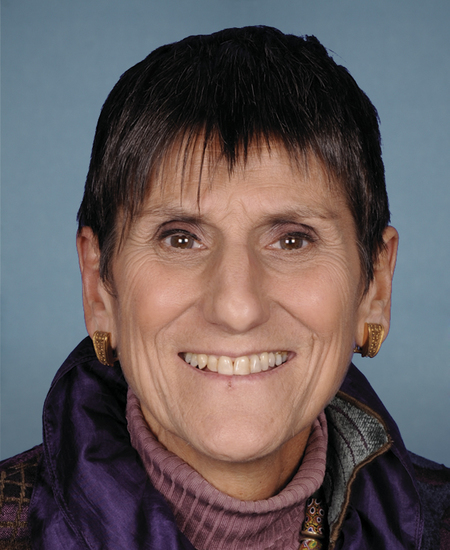
Rep. Rosa L. DeLauro
Sponsored bills
Maddy summaryThe Interstate Ferry Fairness Act allows privately owned ferries and ferry terminals operating between two adjoining states to receive federal funding for construction and purchase. Under this legislation, private ferry operators can apply for federal assistance if the Secretary of Transportation determines the project provides substantial public benefits or meets surface transportation needs. The bill also permits privately owned ferries to charge fares that cover operational costs plus a reasonable rate of return approved by the Secretary. These changes expand eligibility for the Ferry Boat Program beyond publicly owned vessels, while maintaining oversight on fare structures and fund usage.
Maddy summaryThe HELP Act of 2026 creates a federal database to track evictions from housing units receiving federal assistance, requiring landlords and local agencies to report detailed information about tenants facing eviction proceedings. The bill establishes a grant program to provide free legal assistance to low-income tenants at risk of eviction, prioritizing organizations with experience serving vulnerable populations and ensuring rural areas receive proportional support. Additionally, the act modifies the Fair Credit Reporting Act to include eviction records in consumer reports and requires landlords to provide tenants with written information about their eviction rights and available local resources. These measures aim to improve data collection on housing instability, increase access to legal representation for tenants, and enhance tenant awareness of their rights under federal and state laws.
Maddy summaryThis concurrent resolution formally recognizes the ongoing disparity between wages paid to men and women in the United States and reaffirms Congress's commitment to supporting equal pay. It highlights statistical data showing that women earn approximately 81 cents for every dollar earned by men, with significant variations across racial and ethnic groups, and notes that the gender wage gap has widened over the past two years. The document also identifies contributing factors such as occupational segregation, lack of family-friendly workplace policies, and workplace harassment, while emphasizing the economic impact on women's retirement security and family incomes.
Maddy summaryThis concurrent resolution formally recognizes Congress's duty to protect the rights and economic security of working women, who make up nearly half of the U.S. workforce. The document highlights concerns about wage gaps, workplace discrimination, and recent policy changes that have weakened protections for women, particularly women of color. It calls for Congress to support equal pay, workplace safety, access to healthcare, paid leave, and the right to unionize, while also condemning actions that undermine civil rights enforcement and workplace protections. The resolution serves as a statement of principle rather than a law that creates new legal requirements.
Maddy summaryHRES 1096 is a procedural resolution that sets rules for the House to consider H.R. 4213, the bill funding the Department of Homeland Security for fiscal year 2026. It waives objections to the funding bill, specifies that H.R. 7481 would serve as the amendment substitute, and limits debate to one hour equally divided between the Appropriations Committee chairs. This resolution directly affects the House legislative process by streamlining how H.R. 4213 is debated and voted on, without changing the actual funding amounts or policies. It does not alter the substance of the DHS appropriations bill but governs its procedural handling.
Governing Unaccredited Representatives Defrauding VA Benefits Act or the GUARD VA Benefits Act This bill imposes fines on individuals for soliciting, contracting for, charging, or receiving any unauthorized fee or compensation with respect to the preparation, presentation, or prosecution of any claim for Department of Veterans Affairs benefits. The attempted commission of such offenses is also punishable by fine.
Maddy summaryThis bill establishes a new excise tax on crude oil extracted or imported by large oil companies and uses the revenue to provide rebates to eligible consumers. The tax would be imposed on companies that extract or import over 300,000 barrels of crude oil per day, at a rate of 50% of the difference between the current Brent crude oil price and a 2025 baseline price, adjusted for inflation. All revenue from this tax would be deposited into a new "Protect Consumers from Gas Hikes Fund." This fund would then be used to provide refundable tax credits, or rebates, to eligible individuals, with the rebate amount determined by the Secretary based on fund revenues and the number of eligible individuals. These rebates would be phased out for individuals with adjusted gross incomes exceeding certain thresholds, such as $150,000 for joint filers.
Maddy summaryThis bill, known as the Fair Wages for Home Care Workers Act, would change federal labor rules to require overtime pay and minimum wage protections for certain babysitters. It specifically targets casual babysitting work that is irregular or intermittent, while excluding trained medical professionals like nurses and home health aides from these changes. The law would also allow babysitters to perform up to 20% of their work time on unrelated household tasks without losing their protected status. These amendments would apply to workers covered by the Fair Labor Standards Act of 1938 who provide custodial care for infants or children in private homes.
Maddy summaryThis bill, titled the Take Back Our Hospitals Act of 2026, would prohibit Medicare from paying hospitals or skilled nursing facilities owned or controlled by private equity funds, real estate investment trusts, or corporations owned by those funds. The law defines control as owning 10 percent or more of voting securities or having the power to direct management and policies through contracts or other means. Facilities currently owned by these firms would have a three-year transition period before the prohibition takes full effect. The bill also establishes joint and several liability, meaning the owning firm would be responsible for any penalties if the facility violates the rule, and provides for notice, hearings, and judicial review for affected facilities.