

Maddy summaryThis bill amends the Higher Education Act to establish a new "American Civics Education Program" that provides competitive grants to colleges and universities. It requires funded programs to focus on four key areas: American political thought and history, free institutions, the global impact of U.S. representative democracy, and how citizens participate in civic life. Grants must support teacher training for K-12 educators, develop academic programs/centers, create open educational resources, and share materials with schools and communities. The bill explicitly prohibits the government from mandating a specific curriculum.
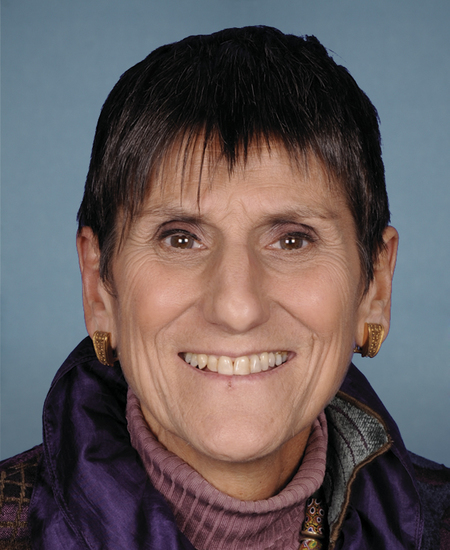
Rep. Rosa L. DeLauro
Sponsored bills
Maddy summaryThis bill allows individuals to deduct auto insurance payments for household members from their income when applying for federal or state assistance programs like SNAP or Medicaid. It directly affects people seeking benefits by reducing their calculated income, potentially making them eligible for more aid. The deduction applies to payments made for passenger vehicles registered under state law, covering all household members. This change modifies how income is calculated for eligibility, without altering the benefits themselves.
Maddy summaryThe Corner Post Reversal Act amends federal law to establish a six-year deadline for filing lawsuits challenging federal agency actions. It requires that any legal challenge to an agency decision must be initiated within six years of the agency's final action, unless another law specifies a different timeframe. This change directly affects individuals, organizations, or entities seeking to contest agency decisions in court by limiting the window for legal action. The bill does not alter substantive policies but modifies procedural rules governing judicial review of agency actions.
Maddy summaryHRES 1349 is a symbolic House resolution recognizing the success of the Food for Peace Act, which provides U.S. humanitarian food aid to global populations facing hunger. It does not create new policy or funding but formally acknowledges the program’s impact - such as reaching 53 million people with emergency aid in 2022 - and highlights global hunger statistics (e.g., 783 million people hungry in 2022). The resolution urges continued U.S. funding prioritization for the program but has no binding effect or direct policy changes. It directly affects no new groups, as it solely expresses congressional support for an existing aid program.
Maddy summaryThis bill extends existing federal grant programs focused on the Long Island Sound through 2028. It updates the funding periods for two key programs: the "Long Island Sound Grants" (under the Clean Water Act) and the "Long Island Sound Stewardship Grants" (under the 2006 Stewardship Act), changing their authorization from 2019-2023 to 2024-2028. The bill does not create new programs or change funding levels - it simply continues current grant mechanisms for five more years. These grants support state and local projects aimed at improving water quality and ecosystem health in the Long Island Sound region.
Maddy summaryHRES 1332 is a symbolic resolution recognizing June as LGBTQIA+ Pride Month. It encourages the celebration of Pride Month to honor the historical struggles and achievements of LGBTQIA+ people in the United States, while acknowledging the ongoing challenges they face. This resolution does not create new laws or policies, but serves as a formal recognition of LGBTQIA+ rights as human rights and highlights their integral role in American history. The resolution was introduced by multiple members of Congress and passed by the House of Representatives.
Maddy summaryThe CHARTER Act prohibits charter schools receiving federal education funds under the Elementary and Secondary Education Act (ESEA) or Individuals with Disabilities Education Act (IDEA) from contracting with for-profit entities to manage school operations - including curriculum, budgets, or staff decisions. It directly affects public charter schools and their charter management organizations that receive these federal funds. The bill allows contracts with for-profits for specific services like food, payroll, or facilities maintenance but bans profit-driven management arrangements. The law takes effect 3 years after enactment and applies only to new or renewed contracts after that date, closing a loophole identified in a 2006 court case where for-profit schools reorganized as nonprofits to retain federal funding.
Maddy summaryThis bill creates a federal framework for "extreme risk protection orders" (ERPOs) that temporarily remove firearms from individuals who pose a risk of harming themselves or others. Family members or law enforcement officers can petition a federal court for a temporary order (up to 14 days) based on probable cause, followed by a hearing within 72 hours to determine if a longer-term order (up to 180 days) is warranted. The bill requires clear and convincing evidence of risk at the hearing and mandates respondents to surrender firearms to law enforcement within 48 hours. It also includes provisions for reporting, training law enforcement on ERPOs, and a federal grant program to support state ERPO implementation, without preempting state laws.
Maddy summaryHRES 901 is a U.S. House resolution expressing support for democracy and human rights in Pakistan. It calls on the U.S. President and Secretary of State to collaborate with Pakistan to uphold democratic processes, human rights, and the rule of law. The resolution urges Pakistan to protect freedoms of speech, assembly, and press, and to avoid arbitrary detention or suppression of political participation. It also condemns efforts to undermine Pakistan's electoral or judicial systems, including harassment of citizens during protests or interference with elections.
Maddy summaryHR 8830, the High Court Gift Ban Act, sets strict limits on gifts federal judges may accept. It prohibits judges from receiving gifts valued over $50 from a single source in a year, unless the total from that source stays under $100 annually. Key exceptions include gifts paid for by the judge, gifts from relatives, honorary degrees from educational institutions, and public opportunities available to all federal employees. The bill also outlines enforcement mechanisms, requiring the Judicial Conference to refer violations to the Attorney General for civil or criminal penalties. This directly affects all federal judges, including Supreme Court justices and lower court judges, by restricting gifts from sources that may have business before them.