

Maddy summaryHR 6114 prohibits using federal funds from previous appropriations to the Department of Health and Human Services for any activity that automatically enrolls Medicare beneficiaries in Medicare Advantage (MA) plans without their active choice. Specifically, it blocks the use of these funds to implement a system where individuals who fail to select a plan are deemed enrolled in MA by default. This directly affects Medicare beneficiaries who might otherwise be automatically enrolled in MA plans without actively choosing them. The bill’s key mechanism is a funding restriction that prevents HHS from using appropriated money to operate this default enrollment process under Medicare Part C. The policy change ensures beneficiaries must actively elect an MA plan to enroll, rather than being enrolled automatically.
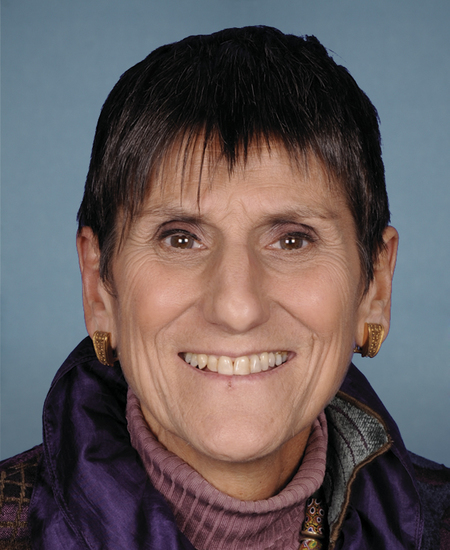
Rep. Rosa L. DeLauro
Sponsored bills
Maddy summaryThis bill requires Medicare Advantage plans to have average monthly payments from the government that don't exceed the average cost of original Medicare (Parts A and B) for the same year. If a plan's payments exceed this cost, the government cannot allow new enrollments or re-enrollments in that plan for the following year. It directly affects Medicare Advantage plans and their enrollees, creating a financial check on plan pricing. An exception applies to specialized Medicare Advantage plans designed for individuals with specific health needs. The provision takes effect one year after the bill's enactment.
Maddy summaryThis bill (HR 6115) requires the U.S. Department of Health and Human Services to create and maintain a website for Medicare beneficiaries. The website would allow current and prospective Medicare users to search for healthcare providers participating in either Medicare Advantage (MA) plans or traditional Medicare (Parts A and B). Key features include searching for providers by name or location and identifying which providers are in each plan's network. The website must be operational within one year of the bill's enactment. This directly affects millions of Medicare beneficiaries seeking clear information about provider availability.
Maddy summaryHR 6056, the International Human Rights Defense Act of 2025, establishes a permanent Special Envoy at the State Department to lead U.S. foreign policy efforts addressing discrimination and violence against LGBTQI+ people globally. The bill requires the U.S. government to develop and update a biannual global strategy to prevent criminalization and violence against LGBTQI+ individuals, mandate detailed reporting on such abuses in annual country reports, and ensure all U.S. foreign assistance programs include inclusive nondiscrimination policies. This legislation directly affects U.S. foreign policy implementation, federal agencies receiving funding, and LGBTQI+ communities facing persecution worldwide. The bill aims to coordinate U.S. government efforts across departments and with international partners to advance LGBTQI+ rights globally through concrete policy mechanisms.
Maddy summaryHR 5799, the FALCON Act of 2025, requires federal agencies, contractors, and grant recipients to comply with Inspector General (IG) requests for information or access within 60 days. It mandates that covered entities (including agency staff, contractors, and grantees) must respond to IG requests or face potential disciplinary actions like suspension, removal, or contract penalties. The bill also requires IGs to notify Congress and agency heads within 30 days if an entity fails to comply, detailing the non-compliant party's role and the request's subject. This applies to all covered agencies as defined in the bill, aiming to strengthen oversight by ensuring timely cooperation with IG investigations.
Maddy summaryThis resolution (HRES 813) is a non-binding symbolic measure urging the American public to observe October 2025 as Italian and Italian American Heritage Month. It recognizes the historical contributions of Italian and Italian American people to the U.S. in fields like science, arts, and public service, and encourages communities to celebrate their cultural heritage through events. The resolution does not create new laws or requirements, but formally acknowledges their impact on American society. It was introduced by multiple House members and referred to the Committee on Oversight and Government Reform.
Maddy summaryHCONRES 56 is a symbolic congressional resolution recognizing the persistent wage gap faced by Latina women in the U.S. It specifically highlights that, as of 2024, Latina workers earn just 58 cents for every dollar paid to White, non-Hispanic men working full-time year-round. The resolution designates October 8, 2025, as "Latina Equal Pay Day" to raise awareness about this disparity, which affects over 14 million Hispanic women in the labor force. It does not create new laws or policies but formally acknowledges the economic impact of this gap on Latina families and the broader economy.
Maddy summaryHR 5705 requires the federal government to reimburse state agencies for funds they use to maintain participation in the WIC program during a government shutdown. It directly affects states that cover WIC costs using their own money when federal funding lapses. The bill establishes a process where states can seek reimbursement from the federal government after the shutdown ends. This ensures states aren’t burdened with costs for a federal funding gap that impacts nutrition assistance for women, infants, and children.
Maddy summaryThis resolution (HRES 775) is a symbolic congressional statement supporting the designation of September 2025 as "National Ovarian Cancer Awareness Month." It does not create new laws or allocate funds; it solely expresses the House's endorsement of raising public awareness about ovarian cancer during that month. The resolution cites statistics on ovarian cancer mortality, disparities in care for Black women and underserved groups, and the lack of early detection methods to underscore the importance of awareness. It aligns with existing annual efforts by organizations like the Ovarian Cancer Research Alliance. The measure directly affects public awareness efforts but has no direct impact on policy or healthcare access.
Maddy summaryThis bill allows individuals applying for government benefits to deduct certain insurance costs from their reported income when determining eligibility. It covers auto insurance for vehicle owners, home/renter insurance, and flood insurance for primary residences. These deductions apply to both federal programs (like SNAP or Medicaid) and state/local programs receiving federal funding. The change directly affects people seeking assistance by reducing their counted income for benefit calculations.