

School Shooting Safety and Preparedness Act This bill requires the Department of Education (ED) to publish an annual report on indicators of school crime and safety. The report must collect specified information, including the number of school shootings that have taken place nationwide and the number of those that were mass shootings; the number of people killed or injured in each school shooting; the age, gender, race, ethnicity, and nationality of each victim; the motivation of the shooter; how the shooting was stopped; the number and type of firearms and ammunition used in each shooting; and the response time of law enforcement. ED must direct the National Center for Education Statistics to collect and publish specified data on school shootings. The center must collect information on the existence or absence of specified measures at the time of the shooting, including physical and other types of security measures, a communication plan with local law enforcement, a response plan that includes coordination with local agencies, an active shooter response plan, and a trauma response plan.
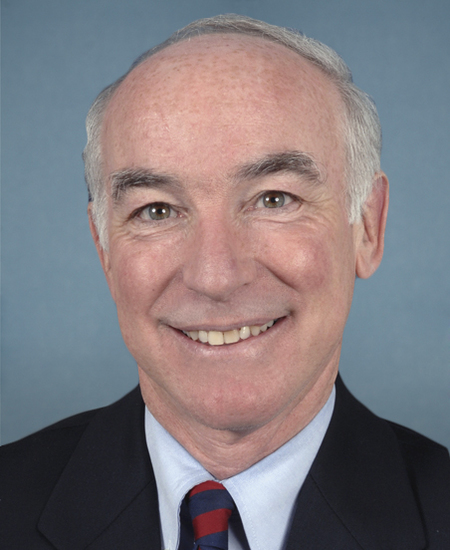
Rep. Joe Courtney
Sponsored bills
United States Innovation and Competition Act of 2021 This bill addresses U.S. technology and communications, foreign relations and national security, domestic manufacturing, education, trade, and other matters. Among other provisions, the bill provides funding for FY2022-FY2026 to support U.S. semiconductor manufacturing, research and development, and supply chain security; provides funding for wireless supply chain innovation; establishes a Directorate for Technology and Innovation in the National Science Foundation; extends through 2025 the authority of the National Aeronautics and Space Administration (NASA) to lease its non-excess real property and related personal property; authorizes various programs and policies related to space exploration; authorizes various international affairs programs and activities, including foreign assistance for the Indo-Pacific region; requires federal infrastructure programs to provide for the use of materials produced in the United States; imposes sanctions on China for cybersecurity and human rights abuses; requires the Department of Health and Human Services to consider national security risks associated with sensitive genetic information; includes initiatives related to elementary and secondary education, including those to increase computer science education; contains provisions related to higher education, including those reauthorizing through FY2027 international education programs and addressing China's influence on institutions of higher education; modifies and expands the schedule for graduated merger filing fees; prohibits federal funding for the Wuhan Institute of Virology; requires the U.S. Trade Representative to take certain actions related to digital trade and censorship practices; and extends through 2027 the Generalized System of Preferences.
Highlands Conservation Reauthorization Act of 2022 This bill extends through FY2029 the Highlands Conservation Act, which provides for land conservation in Highlands states (i.e., Connecticut, New Jersey, New York, and Pennsylvania). The bill authorizes the Fish and Wildlife Service to add a municipality to the Highlands region upon the request of a Highlands state, with the concurrence of the municipality. The bill revises the way in which land is identified for conservation to require using the best available science and geographic information systems. The bill allows political subdivisions of states to enter into agreements with the Department of the Interior for land conservation projects. A Highland state that receives funds for a land conservation partnership project may not use more than 5% of the funds to administer that project. The bill extends through FY2029 Forest Service and other Department of Agriculture programs to conserve land and natural resources in the Highlands region. With respect to an appraisal related to a land acquisition carried out under this bill, a Highlands state shall use an appraisal methodology approved by the Department of the Interior.
Housatonic Wild and Scenic River Act of 2022 This bill designates specified segments of the Housatonic River in Connecticut as components of the National Wild and Scenic Rivers System. The designation of the river segments must not impact or alter the existing terms of permitting, licensing, or operation of the Falls Village Hydroelectric Generating Station located in Falls Village, Connecticut, or the Bulls Bridge Hydroelectric Generating Station located in New Milford, Connecticut. The designation of the river segments must also not preclude the Federal Energy Regulatory Commission from licensing, relicensing, or otherwise authorizing the operation or continued operation of those facilities. The authority of the Department of the Interior to acquire lands for the river segments shall be limited to acquisition by donation or acquisition with the consent of the owner, and subject to the additional criteria set forth in the Housatonic River Management Plan. No land or interest in land may be acquired for the river segments by condemnation.
Student Loan Borrower Relief Act This bill revises income-driven repayment plans for federal student loans, including by reducing from 25 years to 15 years the maximum repayment period under these plans. Additionally, the bill makes changes to the Public Service Loan Forgiveness program, including by cancelling a portion of a borrower's student loans after every 12 months of eligible public service employment.
Ending Importation of Russian Oil Act This bill prohibits the importation of energy products from Russia. Specifically, the bill prohibits the importation of Russian products that are classified under chapter 27 of the Harmonized Tariff Schedule (which includes mineral fuels, mineral oils and products of their distillation, bituminous substances, and mineral waxes). The President may terminate this prohibition, subject to congressional disapproval, if the President certifies that Russia (1) has reached an agreement to withdraw Russian forces and cease military hostilities in Ukraine, (2) poses no immediate military threat of aggression to any North Atlantic Treaty Organization member, and (3) recognizes the right of the Ukrainian people to independently and freely choose their own government.
This resolution supports the designation of Venture Smith Freedom Day to recognize the 257th anniversary of Venture Smith purchasing his freedom from slavery.
Maddy summaryHR 7477, the CERTS Tax Exemption Act, ensures that grants provided under the Coronavirus Economic Relief for Transportation Services Act are tax-free for eligible transportation service providers. The bill directly affects companies and organizations providing transportation services that receive these specific federal grants. Key provisions state that grant amounts cannot be counted as taxable income, deductions related to grant-funded costs cannot be denied, and tax attributes (like basis increases) must be treated as tax-free for partnerships and S corporations. This change simplifies tax treatment for recipients by preventing unintended tax liabilities on relief funds.
Public Service Loan Forgiveness Payment Completion Fairness Act or the PSLF Payment Completion Fairness Act This bill removes the requirement that a borrower must be employed in a public service job at the time of loan forgiveness under the Public Service Loan Forgiveness (PSLF) program. Under the current PSLF program, the Department of Education must cancel the balance of interest and principal due on a borrower's Federal Direct Loans after the borrower makes 120 monthly loan payments while employed in a public service job and, at the time of loan forgiveness, the borrower is employed in a public service job. This bill removes the requirement that the borrower must be working in a public service job at the time of loan forgiveness.
Postal Service Reform Act of 202 2 This bill addresses the finances and operations of the U.S. Postal Service (USPS). The bill requires the Office of Personnel Management (OPM) to establish the Postal Service Health Benefits Program within the Federal Employees Health Benefits Program under which OPM may contract with carriers to offer health benefits plans for USPS employees and retirees. The bill provides for coordinated enrollment of retirees under this program and Medicare. The bill repeals the requirement that the USPS annually prepay future retirement health benefits. Additionally, the USPS may establish a program to enter into agreements with an agency of any state government, local government, or tribal government, and with other government agencies, to provide certain nonpostal products and services that reasonably contribute to the costs of the USPS and meet other specified criteria. The USPS must develop and maintain a publicly available dashboard to track service performance and must report regularly on its operations and financial condition. The Postal Regulatory Commission must annually submit to the USPS a budget of its expenses. It must also conduct a study to identify the causes and effects of postal inefficiencies relating to flats (e.g., large envelopes). The USPS Office of Inspector General shall perform oversight of the Postal Regulatory Commission.