Right to Read Act of 2022 This bill expands access to school libraries and literacy skills support for elementary and secondary school students, including by authorizing comprehensive literacy state development grants and increasing the number of state-certified school librarians in high-need schools.
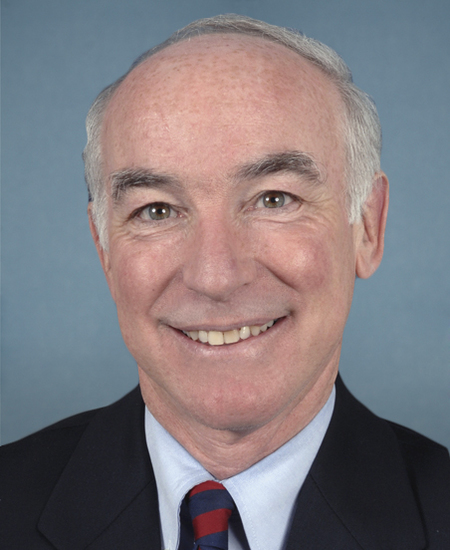
Rep. Joe Courtney
Sponsored bills
Home Heating Oil Price Reduction Act This bill increases the cap on the number of barrels of petroleum distillate that may be stored in the Northeast Home Heating Oil Reserve from 2 million to 4 million. It also restricts sales or exports from that reserve to (1) China, Iran, North Korea, Russia, and any other country subject to U.S. sanctions; and (2) entities owned, controlled, or affiliated with any of those countries.
Social Security Fairness Act of 2021 This bill repeals provisions that reduce Social Security benefits for individuals who receive other benefits, such as a pension from a state or local government. The bill eliminates the government pension offset , which in various instances reduces Social Security benefits for spouses, widows, and widowers who also receive government pensions of their own. The bill also eliminates the windfall elimination provision , which in some instances reduces Social Security benefits for individuals who also receive a pension or disability benefit from an employer that did not withhold Social Security taxes. These changes are effective for benefits payable after December 2021.
Peace Corps Reauthorization Act of 2022 This bill reauthorizes through FY2024 and modifies operations of the Peace Corps. Changes include increasing the readjustment allowance paid to volunteers when their service terminates and providing statutory authority for an executive order that grants returned volunteers noncompetitive eligibility for federal civil-service positions. Additionally, the bill entitles returned volunteers to sixty days of health care benefits. The Peace Corps must also provide volunteers with information about enrolling in U.S. health plans before service termination and mental health care during and after service. The bill also includes provisions to address involuntary termination of Peace Corps service in emergencies, including by expediting re-enrollment of involuntarily terminated volunteers. The Peace Corps must also adequately insure volunteers' safety and must coordinate with the Department of State to periodically update agreements concerning the security of Peace Corps volunteers and staff abroad. The bill also authorizes Peace Corps to recruit domestically based volunteers to serve in the United States at the request of another agency or to provide services in a host country virtually, modifies the Peace Corps National Advisory Council's membership and functions, expands whistleblower protections for volunteers, increases the rate of pay that applies to a volunteer's workers compensation claim, requires Peace Corps to implement a zero tolerance drug use policy regarding volunteer involvement with illegal drugs, and emphasizes the use of the internet in Peace Corps programs. Furthermore, the bill requires reporting, including on the provision of mental health services to volunteers.
Improving Seniors' Timely Access to Care Act of 2022 This bill establishes several requirements and standards relating to prior authorization processes under Medicare Advantage (MA) plans. Specifically, MA plans must (1) establish an electronic prior authorization program that meets specified standards, including the ability to provide real-time decisions in response to requests for items and services that are routinely approved; (2) annually publish specified prior authorization information, including the percentage of requests approved and the average response time; and (3) meet other standards, as set by the Centers for Medicare & Medicaid Services, relating to the quality and timeliness of prior authorization determinations.
Access to Inpatient Rehabilitation Therapy Act of 2022 This bill allows, for purposes of Medicare payment, an intensive rehabilitation therapy program to include other skilled therapeutic modalities besides physical therapy, occupational therapy, speech language pathology services, or orthotic and prosthetic services, as recommended by the treating physician after the patient is admitted. The bill applies after December 31, 2022, or the last day of the COVID-19 public health emergency, whichever is earlier.
Keep Kids Fed Act of 2022 This bill provides funding for and makes changes to school meal programs and the Child and Adult Care Food Program (CACFP). It also rescinds certain funds provided under the American Rescue Plan Act of 2021; the Consolidated Appropriations Act, 2021; and the Coronavirus Aid, Relief, and Economic Security Act (CARES Act). Specifically, the bill increases the reimbursement rate for school lunches by 40 cents and for school breakfasts by 15 cents for the school year beginning in July 2022. Further, the bill changes income eligibility for school meal programs for the school year beginning in July 2022. The bill extends the authority of the Department of Agriculture (USDA) to waive certain requirements for the school meal programs and the CACFP to address COVID-19, including by extending authority through September 30, 2022, for USDA to grant waivers related to summer food service programs. The bill authorizes USDA to establish a nationwide waiver of statutory and regulatory requirements under child nutrition programs for the 2022-2023 school year. Additionally, the bill increase the reimbursement rate for meals and snacks under the CACFP by 10 cents for the school year beginning in July 2022. Further, the bill increases the reimbursement of tier II family or group day care homes to tier I amounts for the 2022-2023 school year. The bill rescinds certain funding provided to USDA, the Department of Education, and the Small Business Administration.
Harriet Tubman Bicentennial Commemorative Coin Act This bill directs the Department of the Treasury to mint and issue 50,000 $5 gold coins, 400,000 $1 silver coins, and 750,000 half-dollar clad coins emblematic of the legacy of Harriet Tubman as an abolitionist. The Secretary may issue coins under this bill only during the period of January 1, 2024, through December 31, 2024. All surcharges received by Treasury from the sale of such coins must be paid equally to the National Underground Railroad Freedom Center in Cincinnati, Ohio, and The Harriet Tubman Home, Inc. in Auburn, New York, for the purpose of accomplishing and advancing their missions.
Assault Weapons Ban of 2022 This bill makes it a crime to knowingly import, sell, manufacture, transfer, or possess a semiautomatic assault weapon (SAW) or large capacity ammunition feeding device (LCAFD). The prohibition does not apply to a firearm that is (1) manually operated by bolt, pump, lever, or slide action, except for certain shotguns; (2) permanently inoperable; (3) an antique; (4) only capable of firing rimfire ammunition; or (5) a rifle or shotgun specifically identified by make and model. The bill also exempts from the prohibition the following, with respect to a SAW or LCAFD: importation, sale, manufacture, transfer, or possession related to certain law enforcement efforts, or authorized tests or experiments; importation, sale, transfer, or possession related to securing nuclear materials; and possession by a retired law enforcement officer. The bill permits continued possession, sale, or transfer of a grandfathered SAW, which must be securely stored. A licensed gun dealer must conduct a background check prior to the sale or transfer of a grandfathered SAW between private parties. The bill permits continued possession of, but prohibits sale or transfer of, a grandfathered LCAFD. Newly manufactured LCAFDs must display serial number identification. Newly manufactured SAWs and LCAFDs must display the date of manufacture. The bill also allows a state or local government to use Edward Byrne Memorial Justice Assistance Grant Program funds to compensate individuals who surrender a SAW or LCAFD under a buy-back program.

Young Farmer Success Act This bill makes certain farmers or ranchers eligible for student loan forgiveness under the Public Service Loan Forgiveness (PSLF) program. Under the PSLF program, the Department of Education must cancel the balance of interest and principal due on a borrower's Federal Direct Loans after the borrower makes 120 monthly loan payments while employed in a public service job. This bill broadens the definition of public service job to include a full-time job engaged in farm work as an employee or manager of a qualified farm or ranch.