

Maddy summaryThe Neighborhood Homes Investment Act creates a new tax credit for developers who rehabilitate or build affordable homes in distressed communities. The credit is calculated based on the difference between rehabilitation costs and the sale price, with homes required to be sold at affordable prices to qualified homeowners with incomes up to 140% of the local median family income. The bill targets specific "qualified census tracts" defined by high poverty rates, low homeownership, and below-average home values. Developers must ensure homes are sold to qualified homeowners who use them as primary residences for at least five years, with additional safeguards to prevent program abuse and ensure fair housing practices.
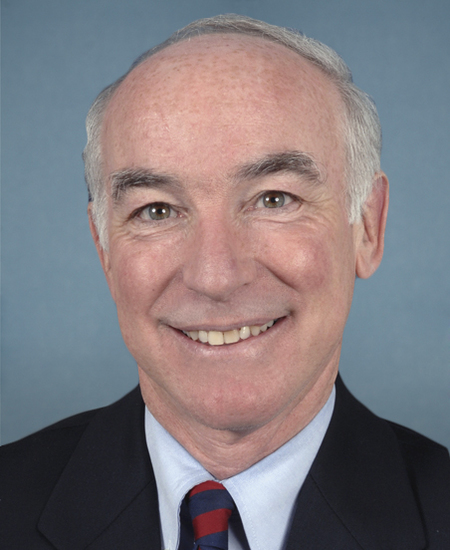
Rep. Joe Courtney
Sponsored bills
Iceland Commercial and Economic Leadership for Arctic and National Development Act or the ICELAND Act This bill establishes that a national of Iceland shall be eligible for an E visa (for an investor or trader who is a national of a foreign country with a treaty of commerce and navigation with the United States) if Iceland provides a similar nonimmigrant status to U.S. nationals.
Maddy summaryHR 3850, the Pride In Mental Health Act of 2023, establishes a federal grant program to improve mental health and substance abuse services for LGBTQ+ youth (including nonbinary, intersex, and Two Spirit individuals). The bill directs the Health and Human Services Secretary to fund eligible organizations to provide trauma-informed care, cultural competency training for caregivers, school bullying prevention guidelines, and family support resources. It explicitly prohibits grant funds from being used for conversion therapy or advertising related to such therapy. The bill also requires data collection on LGBTQ+ youth mental health and a federal survey to measure psychological distress.
Maddy summaryThis bill directs the Secretary of Defense to add the names of 74 crew members lost when the USS Frank E. Evans sank in 1969 to the Vietnam Veterans Memorial Wall within one year of the bill's enactment. It requires consultation with other agencies to address space limitations for name placement and explicitly exempts this addition from standard commemorative memorial rules under the Commemorative Works Act. The measure directly honors the deceased crew members and affects how their names are displayed on a national memorial.
Maddy summaryThe American Family Act establishes a monthly child tax credit of $250 per month for each child under age 6 and $300 per month for each child aged 6-18, with income limits of $150,000 for joint filers and $112,500 for other filers. The credit is refundable, meaning it can be paid even if the taxpayer owes no income tax, and will be adjusted annually for inflation. The bill includes detailed rules for determining eligibility, including requirements that the child resides with the taxpayer for more than half the month and provisions to prevent fraud through recapture of improperly received payments. The credit will be paid monthly in advance rather than as a single annual payment, with specific mechanisms for calculating and distributing the payments.
Maddy summaryHR 3873 establishes "Ocean Innovation Clusters" in coastal and Great Lakes regions to foster collaboration among businesses, academic institutions, and government entities for sustainable ocean-related industries (the "Blue Economy"). The bill designates at least seven clusters, prioritizing those serving diverse, underserved communities and promoting economic resilience in areas like fishing, tourism, and renewable energy. It authorizes $50 million annually (2024-2029) for grants to support cluster operations and build physical collaboration centers focused on workforce development, sustainable seafood supply chains, and ocean energy innovation. These clusters aim to create jobs and support small businesses through shared resources, partnerships, and targeted economic growth initiatives.
Maddy summaryHR 698, the Assault Weapons Ban of 2023, prohibits the sale, manufacture, transfer, and possession of specific firearms and ammunition devices commonly referred to as "assault weapons" and "large capacity magazines" in interstate commerce. The bill defines "semiautomatic assault weapons" to include rifles like AR-15s and AK-47s, as well as firearms with specific features such as folding stocks, pistol grips, threaded barrels, and detachable magazines holding more than 15 rounds. It exempts law enforcement, military, antique firearms, and weapons already lawfully owned before the law's enactment (known as "grandfathered" weapons). The bill also requires new identification markings on these weapons and large capacity magazines, and adds background check requirements for transfers of grandfathered weapons.
Maddy summaryHR 3752, the Parity Enforcement Act of 2023, strengthens enforcement of mental health and substance use disorder parity requirements in health insurance. It amends ERISA to expand civil penalties for group health plans and insurance issuers that fail to meet parity standards, specifically adding "parity in mental health and substance use disorder benefits" to existing violation categories. The bill clarifies that plan administrators and issuers can be held accountable for violations under Section 712 of the law, and adjusts enforcement procedures to ensure parity violations are addressed separately. These changes apply to health plans for years starting one year after the bill's enactment.
Maddy summaryThis bill authorizes a 5-year study by the National Institutes of Health (NIH) to examine programs that reduce stress and improve well-being for K-12 teachers. The study will analyze specific approaches like workplace wellness programs, mentoring initiatives, organizational changes (e.g., principal training), and mindfulness practices, all aimed at addressing stress sources such as low autonomy and high turnover. It requires NIH to report findings and recommendations to Congress within one year after the study ends, with the report made publicly available. The bill does not provide new funding; it directs NIH to use existing resources to carry out the study, which will indirectly affect teachers and school districts by potentially informing future policies to retain educators.
Maddy summaryThe Student Mental Health Rights Act (HR 3726) requires the U.S. Department of Education to study mental health disabilities and substance use disorders at colleges and universities. Within 120 days, it mandates a voluntary student survey on these conditions, followed by a comprehensive study within one year analyzing prevalence, college policies for students on leave, and best practices for support. The Department will then issue guidance to colleges on complying with existing disability laws (like the Americans with Disabilities Act) regarding accommodations for students with mental health needs. This aims to prevent discriminatory practices that might force students to leave campus or face barriers to returning.