

Maddy summaryThe DISCLOSE Act of 2023 would increase transparency in political spending by requiring organizations making campaign-related disbursements over $10,000 to disclose the names and addresses of their major donors, including the top five funders for political communications. It would close loopholes allowing foreign nationals to secretly fund election activities through corporations or other entities by expanding the definition of prohibited foreign contributions. The bill would mandate "stand by every ad" disclosure requirements for political communications across all media, including audio, video, and internet ads, requiring clear identification of funders. It would also require reporting of disbursements related to Federal judicial nominations, which currently aren't subject to disclosure requirements. These provisions would apply to corporations, labor organizations, and certain nonprofits that engage in political activity.
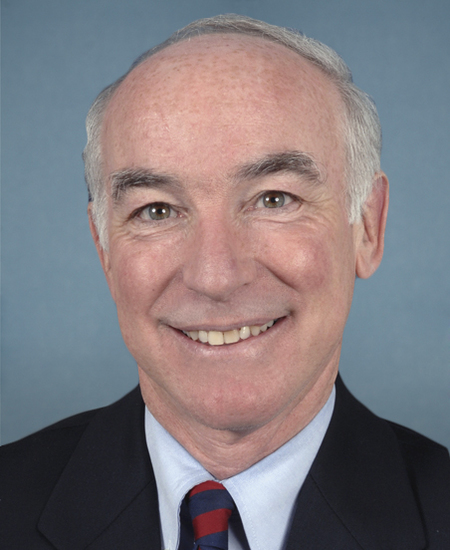
Rep. Joe Courtney
Sponsored bills
Maddy summaryThe IDEA Full Funding Act (HR 4519) mandates specific annual increases in federal funding for special education programs under the Individuals with Disabilities Education Act (IDEA). It requires Congress to appropriate increasing amounts each fiscal year - from $5.87 billion for 2024 up to $55.53 billion for 2033 - to reach 40% of the national average per-pupil expenditure for public schools by 2033. This directly affects all public school districts serving students with disabilities, as federal IDEA funding supports their special education services. The bill sets fixed dollar amounts or percentage targets (whichever is greater) for each fiscal year, aiming to gradually close the long-standing gap between promised and actual federal funding. It does not alter eligibility for services but mandates higher, phased funding levels to meet the 40% target.
Maddy summaryHR 4340, the Therapeutic Fraud Prevention Act of 2023, prohibits paid providers from offering conversion therapy - defined as any commercial service attempting to change a person's sexual orientation or gender identity - and bans advertising that claims such therapy is effective or harmless. It directly affects therapists, counselors, or organizations offering paid conversion therapy services, including those advertising such services. Key provisions make it unlawful to provide, advertise, or facilitate paid conversion therapy, with enforcement led by the Federal Trade Commission (FTC) under consumer protection laws and allowing states to pursue civil actions. The bill explicitly excludes supportive care for gender transition or identity exploration from its definition of prohibited therapy.
This resolution expresses support for (1) equal rights and protections for all people, regardless of actual or perceived sexual orientation, gender identity, or sex characteristics; and (2) the designation of LGBTQI+ Equality Day to commemorate Supreme Court decisions handed down on June 26 in 2003, 2013, and 2015. The resolution also acknowledges the need for further legislation to ensure that people in the United States are free from all forms of discrimination on the basis of actual or perceived sexual orientation, gender identity, or sex characteristics.
Healthcare Equality and Rights for Our Heroes Act or the HERO Act This bill allows claims to be brought against the United States for damages relating to the personal injury or death of a member of the Armed Forces arising out of a negligent or wrongful act or omission in providing medical, dental, or related health care functions at a military medical treatment facility. However, the bill does not apply to care provided at a medical treatment location deployed in an area of armed combat.
Maddy summaryThe PRIDE Act of 2023 amends the Internal Revenue Code to replace gender-specific terms like "husband and wife" with gender-neutral language such as "married couple" or "spouses" across numerous tax code sections. This bill affects all legally married couples who file federal tax returns by updating language in over 30 sections of the tax code related to filing status, deductions, credits, and other tax matters. The bill is a language update that makes the tax code more inclusive without changing existing tax treatment for married couples. It does not alter tax rates, benefits, or policies, but ensures all provisions apply equally regardless of gender.
Maddy summaryHR 3698, the Feed Hungry Veterans Act of 2023, amends the Food and Nutrition Act of 2008 to expand eligibility for SNAP (Supplemental Nutrition Assistance Program) benefits to more veterans. It adds four new categories of veterans who can qualify: those with a "catastrophically disabled" status under military disability law, veterans under 65 receiving a pension under specific veteran benefits law, and those meeting existing high-disability rating thresholds. This change directly affects veterans who previously did not meet the program’s eligibility criteria but now qualify under these expanded definitions. The bill takes effect on October 1, 2023, making these eligibility changes operational for SNAP enrollment.
Maddy summaryThe SAFE Act of 2023 extends a 2018 law that prohibits slaughtering animals for human consumption to include horses, donkeys, and other equine animals, such as ponies. It amends Section 12515 of the Agriculture Improvement Act of 2018 by updating the language to replace "dog or cat" with "dog, cat, or equine" in both the section title and the main prohibition. This change directly affects the livestock industry and slaughter facilities by banning the processing of equines for food. The bill modifies existing law without adding new enforcement mechanisms, closing a gap in animal protection.
Maddy summaryHJRES 76 proposes renaming the Robert E. Lee Memorial in Arlington National Cemetery to the "Arlington House National Historic Site." This procedural bill would replace all official references to the memorial with the new name and repeal two prior resolutions (1955 and 1972) that established the memorial. The change affects how the site is identified in federal laws, documents, and records but does not alter its management or historical significance. The bill focuses solely on the official designation, not on policy changes or historical interpretation.
Maddy summaryThis bill establishes the John Lewis Civil Rights Fellowship Program within the Fulbright exchange system to honor civil rights leader John Lewis and advance U.S. foreign policy through global civil rights education. It creates a new fellowship for U.S. early- to mid-career professionals, selecting at least 25 annually for 10-month programs to conduct research or intern with approved organizations in countries participating in Fulbright exchanges. Fellows must complete a work plan, attend an orientation in Washington, DC, and present findings at an annual summit, with the State Department covering costs for travel, lodging, and expenses. The program requires annual reports on participant demographics and program effectiveness, and expires seven years after enactment.