Maddy summaryThis bill extends the existing "safe-to-report" policy for minor misconduct to the U.S. Coast Guard Academy. It amends a 2021 defense law to explicitly include the Academy under the policy, which allows service members to report certain minor issues (like harassment or misconduct) without facing disciplinary action for the initial minor offense. The change directly affects Coast Guard Academy cadets and staff by providing them the same reporting protections already available at other military service academies. This is a procedural update to existing law, not a new policy.
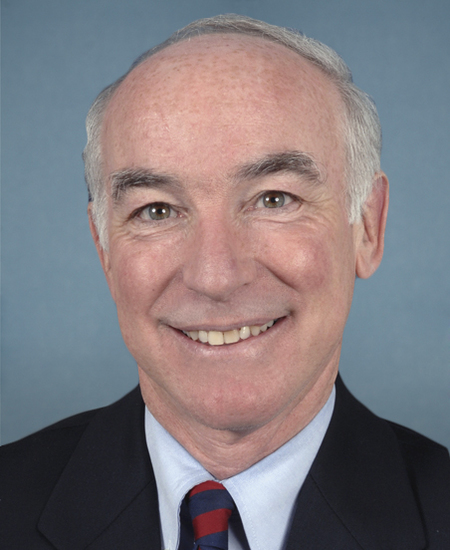
Rep. Joe Courtney
Sponsored bills
Maddy summaryHR 5224 reauthorizes the Missing Children's Assistance Act through fiscal year 2028, updating definitions and expanding services to better address child sexual exploitation. It adds specific terms like "sextortion" and "sexting" to clarify key concepts, and requires the Administrator to manage the CyberTipline for reporting missing children and exploitation. The bill mandates new data collection on children missing from state care, including those likely victims of sex trafficking, and increases annual funding authorization from $40 million to $49.3 million. These changes directly affect child welfare agencies, law enforcement, and organizations working with missing or exploited children by improving reporting systems, recovery support, and data transparency.
Maddy summaryThis bill establishes the Connecticut River Watershed Partnership program (Section 3) to coordinate restoration and protection efforts across the 5-state watershed (Connecticut, Maine, Massachusetts, New Hampshire, Vermont). It creates a competitive grant program (Section 4) providing up to 90% federal funding for eligible entities - including states, tribes, nonprofits, and local groups - to carry out projects that improve water quality, restore habitats, and support environmental justice communities. The program requires the Secretary of the Interior to collaborate with Tribal governments, state agencies, and conservation organizations to develop a unified strategy. It mandates annual reporting to Congress and prioritizes projects advancing nature-based solutions, public access, and equitable outcomes in communities facing environmental health risks.
Maddy summaryThe Nurse Corps Tax Parity Act of 2023 ensures that scholarship payments received by nurses under the Nurse Corps program (specifically, section 846 of the Public Health Service Act) are treated as tax-exempt, matching the tax treatment of other similar scholarship programs. This change directly affects nurses who receive these scholarships, preventing them from being taxed on these payments. The bill amends two sections of the Internal Revenue Code to include this scholarship program within the existing tax-exempt category for qualified scholarships. The new tax treatment applies to payments received in taxable years beginning after the law's enactment.
Maddy summary# Summary of the "Protecting Our Democracy Act" This comprehensive legislation aims to strengthen democratic processes, increase government transparency, and prevent foreign interference in elections. Key provisions include: ## Ethics and Transparency - **Ethics Pledge**: Requires all appointees to sign an ethics pledge committing to: - Ban on gifts from registered lobbyists - 2-year revolving door ban (prohibiting participation in matters related to former employers) - Golden parachute ban (no special payments from former employers) - Commitment to decision-making based on public interest - **Tax Transparency**: Requires presidential and vice presidential candidates to disclose 10 years of tax returns, with sitting presidents submitting returns within 30 days of enactment ## Campaign Finance and Foreign Interference - **Foreign Contact Reporting**: Requires political committees to report any contact with "covered foreign nationals" within 1 week - **Enhanced Penalties**: Criminal penalties of up to $1 million and 5 years in prison for violations - **Online Advertising Rules** ("Honest Ads Act"): - Requires clear disclosure of who paid for political ads online - Mandates machine-readable public databases of political ads - Requires visible sponsor identification that remains when ads are shared - Defines "qualified political advertisements" to include various online formats ## Preventing Patronage Systems - Limits exceptions to competitive service for federal positions - Restricts transferring positions between competitive and excepted service - Requires employee consent for position transfers ## Use of Federal Property - Prohibits holding national political conventions on federal property - Requires publicly available visitor records at White House and other official locations (with privacy exceptions) The legislation establishes detailed definitions, reporting requirements, and enforcement mechanisms across multiple agencies, with the goal of increasing transparency, preventing foreign interference, and ensuring ethical conduct in government service.
Increasing Land Access, Security, and Opportunities Act This bill provides statutory authority for and expands the Farm Service Agency's (FSA's) Increasing Land, Capital, and Market Access Program (the Increasing Land Access Program) for farmers, ranchers, and forest owners. Specifically, the FSA must make competitive grants to, enter into cooperative agreements with, or provide other capital support to eligible entities (e.g., state or local governments, Indian tribes, nonprofit organizations, and institutions of higher education) to provide direct assistance to farmers, ranchers, and forest owners who are (1) historically underserved, or (2) operating in high-poverty areas. The bill specifically excludes from assistance any foreign-based or foreign-owned corporation. The direct assistance may include payments to intended beneficiaries to acquire real property (including air rights and water rights), secure clear title on an heirs' property farmland, and improve or remediate land, water, and soil. Eligible entities may also use grants (1) to provide direct assistance to intended beneficiaries in assessing, purchasing, acquiring, or retaining eligible land; (2) for activities designed to support farm establishment and long-term viability; and (3) to provide technical assistance. The FSA must establish a stakeholder committee and, in collaboration with the committee, develop a process for evaluating proposals and distributing funds to eligible entities. In developing this process, the FSA must consider perspectives from diverse stakeholders, diverse geographic distribution, and diverse farming models, practices, and purposes.

Maddy summaryHRES 624 is a non-binding resolution recognizing Gibraltar's right to self-determination regarding its status as a British Overseas Territory. It highlights that Gibraltarians have consistently voted (99.6% in 1967, 98.48% in 2002) to remain under UK sovereignty and notes U.S. military reliance on Gibraltar's facilities since 1801, including during WWII and the 2011 Libya operation. The resolution states the House honors Gibraltar's security contributions and affirms that Gibraltarians' views must be central to any future discussions about its status. It does not change U.S. policy or impose new obligations, merely expressing the House's position.
Maddy summaryHR 4963, the Tax Fairness for Workers Act, would restore tax deductions for certain employee expenses. It creates an above-the-line deduction for union dues and expenses paid by wage-earning employees, and allows miscellaneous itemized deductions for other work-related expenses (like uniforms or supplies) that were previously disallowed after 2017 tax law changes. These provisions directly affect employees who pay union dues or incur qualifying job-related costs. The bill amends specific sections of the Internal Revenue Code to make these deductions available for taxable years beginning after December 31, 2022. It does not change tax rates or provide new benefits, only reinstating previously eliminated deductions for eligible workers.
Maddy summaryThe Rebuild America's Schools Act of 2023 creates a $20 billion annual federal grant program to fund long-term improvements to public school facilities across the United States. It requires states to prioritize school districts serving high-poverty students (with high percentages of students eligible for free/reduced lunch) and those with deteriorating infrastructure, while mandating that recipient schools develop 10-year facilities master plans. The bill specifies that funds must be used for construction, renovation, and modernization projects that improve energy efficiency, address environmental health hazards (including lead, asbestos, and poor air quality), and ensure school safety, while requiring the use of American-made materials for construction projects.
Maddy summaryThis bill regulates "ghost guns" (unserialized firearms assembled from kits or parts) by requiring all firearms to have unique serial numbers for traceability. It makes it unlawful for unlicensed individuals to manufacture, sell, transfer, or possess ghost guns in interstate commerce, with limited exceptions for licensed dealers during a one-year transition period. The law defines ghost guns as firearms lacking a serial number from a licensed manufacturer and prohibits unlicensed people from engraving serial numbers or using machines to manufacture firearms. It directly affects individuals building or possessing untraceable firearms, including those using 3D-printed parts or unfinished frames. The bill aims to improve law enforcement's ability to track firearms used in crimes, referencing that 27.4% of traced firearms in 2021 were recovered across state lines.