

Maddy summaryThis bill extends federal funding for Long Island Sound restoration programs through 2029. It reauthorizes two key grant programs: the Long Island Sound Grants (under the Clean Water Act) and the Long Island Sound Stewardship Grants (under the 2006 Stewardship Act), both now covering 2025-2029 instead of 2019-2023. The primary mechanism is simply updating the funding period in existing law, ensuring continued support for state and local projects focused on water quality, habitat restoration, and ecosystem health in the Sound. This directly affects states (Connecticut and New York) and local communities receiving these grants to address pollution and protect the Sound's environment.
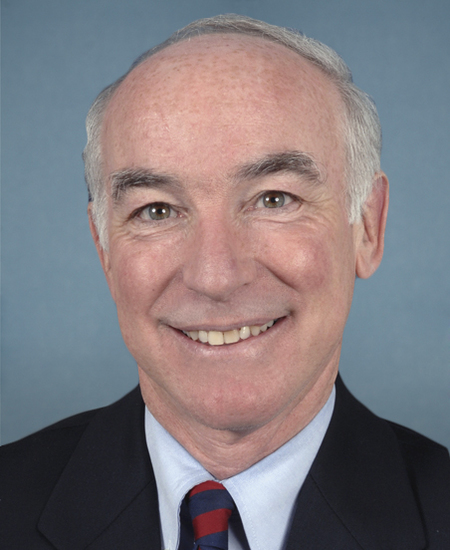
Rep. Joe Courtney
Sponsored bills
Maddy summaryThis bill increases healthcare affordability for low- and middle-income people by expanding eligibility for premium tax credits under the Affordable Care Act. It removes the previous 400% of poverty level cap for subsidy eligibility and replaces it with a new sliding scale based on income tiers, ranging from 0% to 8.5% of household income for coverage costs. The scale adjusts linearly across income levels, with households earning 300-400% of poverty paying 6.0%-8.5% of income (up from the prior fixed 400% cap), while lower-income households pay progressively less. These changes apply to tax years beginning after December 31, 2025, directly affecting individuals purchasing health insurance through marketplace plans.
Maddy summaryHR 82, the Social Security Fairness Act of 2023, repeals two provisions that reduce Social Security benefits for certain government workers. It eliminates the Government Pension Offset (GPO), which cuts spousal or survivor benefits for people with pensions from jobs not covered by Social Security (like federal or state government roles), and the Windfall Elimination Provision (WEP), which lowers retirement benefits for those with similar pensions. The law takes effect for benefits paid after December 2023, requiring the Social Security Administration to adjust benefit calculations to remove these reductions. This change directly affects public-sector employees who previously had their Social Security benefits reduced due to their government pensions.
Washington, D.C. Admission Act This bill provides for the establishment of the State of Washington, Douglass Commonwealth, and its admission into the United States. The state is composed of most of the territory of the District of Columbia (DC), excluding a specified area that encompasses the U.S. Capitol, the White House, the U.S. Supreme Court building, federal monuments, and federal office buildings adjacent to the National Mall and the U.S. Capitol. The excluded territory shall be known as the Capital and serve as the seat of the government of the United States, as provided for in Article I of the Constitution. The state may not impose taxes on federal property except as Congress permits. The bill provides for the DC Mayor to issue a proclamation for the first elections to Congress of two Senators and one Representative of the state. The bill eliminates the office of Delegate to the House of Representatives. The bill applies current DC laws to the state. DC judicial proceedings and contractual obligations shall continue under the state’s authority. The bill also provides for specified federal obligations to transfer to the state upon its certification that it has funds and laws in place to assume the obligations. These include maintaining a retirement fund for judges and operating public defender services. The bill establishes a commission that is generally comprised of members who are appointed by DC and federal government officials to advise on an orderly transition to statehood.
Maddy summaryThis bill amends federal law to establish "Election Day" as an official federal holiday, adding it to the list of recognized holidays for federal employees. It directly affects federal workers by designating Election Day (the Tuesday following the first Monday in November) as a day when federal offices close. The key mechanism is a simple insertion into the existing list of federal holidays under Title 5 of the U.S. Code. This change does not alter voting procedures or create new voting requirements.
Maddy summaryThe Autism CARES Act of 2024 reauthorizes and enhances federal programs supporting individuals with autism spectrum disorder. It requires the National Institutes of Health to expand research to include more fields like gerontology and psychiatry, and to ensure research reflects the full range of needs of people with autism, including those with co-occurring conditions. The bill mandates regular reports to Congress on progress, mental health needs, and transition services for young adults with autism, while increasing funding for autism-related programs from fiscal year 2025 through 2029. This legislation directly affects individuals with autism, their families, caregivers, and healthcare providers by improving access to evidence-based services and research.
Maddy summaryThis bill, HR 1097 (Everett Alvarez, Jr. Congressional Gold Medal Act of 2023), authorizes the award of a Congressional Gold Medal to Everett Alvarez, Jr., in recognition of his service as a U.S. Navy pilot and Vietnam War prisoner of war. It directly honors Alvarez, who was the first U.S. pilot shot down in the Vietnam War, spent over 8.5 years in captivity, and later served in the Peace Corps and Veterans Administration. The bill’s key mechanism is directing the U.S. Mint to strike a gold medal bearing his name and image, with bronze duplicates available for sale to cover costs. It does not create new policies or affect any group beyond the honoree.
Maddy summaryThe MAGNET Act creates a new supplemental diversity grant program to help magnet schools promote racial and socioeconomic integration. It amends the Magnet Schools Assistance Program to allow State educational agencies to apply for grants, requiring applicants to demonstrate how they'll use evidence-based practices to increase school diversity through inclusive enrollment, transportation access, and community engagement. The grants can fund activities like improving facilities, implementing weighted lotteries for enrollment, strengthening educator pipelines, and developing community partnerships. Recipients must report annually on how the funds improved diversity, academic achievement, and school climate, with grants limited to $7.5 million over 5 years and prohibiting application fees.
Maddy summaryThe SERVICE Act reduces the required number of qualifying monthly payments for Public Service Loan Forgiveness from 120 to 96. It expands what counts as a qualifying payment to include certain periods of deferment (like military service, medical treatment, or Peace Corps work) and forbearance, and creates a "buyback" process allowing borrowers to pay to count months of public service employment without making qualifying payments. The bill also adds an online portal for borrowers to track their progress toward loan forgiveness, clarifies treatment of independent contractors as public service workers, and improves the reconsideration process for denied applications. This directly affects borrowers with Federal Direct Loans who work in public service jobs, including those who may have missed payments due to circumstances like military service, medical treatment, or other qualifying deferments. The changes aim to make loan forgiveness more accessible by simplifying the process and expanding eligibility criteria.
Maddy summaryThe Essential Caregivers Act of 2024 requires nursing homes and similar facilities to allow residents to designate essential caregivers who provide emotional support or assistance with daily activities. During emergencies when regular visitation is restricted, facilities must permit at least one essential caregiver access to residents daily and cannot deny access without following specific procedures. Facilities may deny access for a maximum of 7 days during emergencies (or 14 days with state approval), and must provide a written explanation and appeal process if access is denied. The bill establishes a 48-hour appeal process for residents and caregivers to challenge denials, with facilities required to prove violations during appeals. This law applies to Medicare skilled nursing facilities, Medicaid nursing facilities, intermediate care facilities, and certain inpatient rehabilitation facilities.