

Maddy summaryThis bill expands Medicare's drug price negotiation program to cover 50 drugs (up from 20) and requires health insurers to apply negotiated prices to cost-sharing for beneficiaries. It establishes annual out-of-pocket cost-sharing limits for prescription drugs under group health plans and insurance coverage, with specific limits of $2,000 for self-only coverage in 2027 that will increase annually. The bill also sets specific cost-sharing limits for insulin products, requiring coverage with no deductible and cost-sharing of no more than $35 per 30-day supply or 25% of the negotiated price. These provisions affect Medicare beneficiaries, people with group health plans, and health insurers across the country. The bill applies to plan years beginning on or after January 1, 2027.
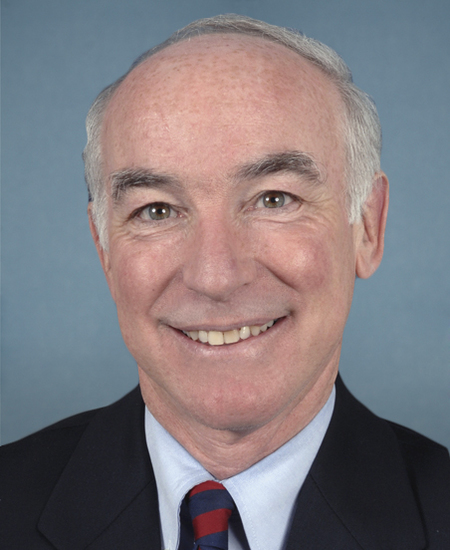
Rep. Joe Courtney
Sponsored bills
Maddy summaryThis bill (HR 6015) ensures existing labor agreements between the Department of Veterans Affairs (VA) and employee unions remain in full effect through their scheduled terms. It also cancels two executive orders (14251 and 14343) that previously excluded VA from standard federal labor-management programs. The bill directly affects VA employees and their unions by preserving current collective bargaining rights and requiring VA to follow standard federal labor rules. It does not change veterans' benefits or healthcare access; it only modifies VA's internal labor relations procedures. This is a procedural bill focused on labor-management processes, not direct policy changes for veterans.
Maddy summaryHR 6146, the STAY Act, requires the Department of Defense to submit a report by March 2026 analyzing options to reduce frequent military relocations (permanent changes of station) and sea-shore rotations (moving between ship assignments and shore duty). The report must assess costs, potential savings, and impacts on service member retention, spouses' employment, and children's education across all military branches. It will identify feasible adjustments to tour lengths or rotations while maintaining mission readiness and career progression, and recommend legislative or policy changes for potential pilot programs. This bill does not change current policy but mandates a study to inform future decisions about military assignment patterns.
Maddy summaryHR 5894, the RESTRAIN Act, prohibits the United States from conducting any explosive testing of nuclear weapons or other nuclear explosions. It directly affects U.S. nuclear weapons programs by banning such testing using federal funds for fiscal year 2026 and beyond. The bill's key mechanism is a funding restriction: no money authorized for fiscal year 2026 or later may be used for explosive nuclear testing or other nuclear explosions. However, it explicitly excludes subcritical nuclear tests (which do not sustain a chain reaction) from this prohibition. The law aims to enforce a permanent ban on nuclear detonations while preserving the ability to conduct certain non-explosive testing.
Maddy summaryHR 6056, the International Human Rights Defense Act of 2025, establishes a permanent Special Envoy at the State Department to lead U.S. foreign policy efforts addressing discrimination and violence against LGBTQI+ people globally. The bill requires the U.S. government to develop and update a biannual global strategy to prevent criminalization and violence against LGBTQI+ individuals, mandate detailed reporting on such abuses in annual country reports, and ensure all U.S. foreign assistance programs include inclusive nondiscrimination policies. This legislation directly affects U.S. foreign policy implementation, federal agencies receiving funding, and LGBTQI+ communities facing persecution worldwide. The bill aims to coordinate U.S. government efforts across departments and with international partners to advance LGBTQI+ rights globally through concrete policy mechanisms.
Maddy summaryHR 5940, the Seniors Deserve SMARTER Care Act of 2025, prohibits the implementation of the Medicare WISeR model (described in a July 2025 federal notice). The bill specifically blocks the Secretary of Health and Human Services from using the WISeR model, which would have required prior authorization for certain medical services under Medicare. This directly affects Medicare beneficiaries and healthcare providers who would have been subject to the model's requirements. The key provision is a clear ban on implementing WISeR or any substantially similar payment model, preventing changes to Medicare's service authorization process. The bill does not create new programs but stops a specific proposed Medicare policy change.
Maddy summaryThis bill requires adding the names of 74 crew members of the USS Frank E. Evans (killed in a 1969 incident) to the Vietnam Veterans Memorial Wall within one year of enactment. It directly affects the memorial's inscription and honors the families of those lost. The Secretary of Defense must consult on placement due to space limits and is exempt from standard memorial rules under the Commemorative Works Act.
Maddy summaryHR 5919, the Veterans HOPE Act, requires the Department of Veterans Affairs (VA) to conduct a comprehensive review of veteran deaths from opioid overdoses occurring between 2010 and 2016. The review must analyze demographic data (age, sex, race), medication histories (including black box warnings), prescribing patterns, combat trauma, and VA facility trends. Within 18 months of enactment, the VA must submit a public report to Congress detailing findings and recommendations to improve veteran safety and reduce opioid overdose rates. This procedural bill focuses on data collection and analysis, not new programs or funding.
Maddy summaryThe American Energy Independence and Affordability Act extends multiple clean energy tax credits that were set to expire between 2025 and 2026. It specifically extends residential clean energy credits through 2034, clean electricity investment credits for wind and solar through 2032, and clean vehicle credits for electric vehicles through 2032. The bill also reinstates special rates for sustainable aviation fuel and modifies requirements for energy-efficient home improvements. These provisions directly affect homeowners installing solar panels, businesses investing in clean energy infrastructure, and manufacturers producing clean energy equipment.
Maddy summaryHRES 786 is a symbolic resolution designating September 30, 2025, as "Impact Aid Recognition Day" to commemorate the 75th anniversary of the Impact Aid program. It does not create new policies or funding but formally recognizes the program's history and purpose. The resolution highlights that Impact Aid reimburses local schools for revenue losses due to tax-exempt federal properties (like military bases or tribal lands), serving over 8 million students across 1,100 school districts. It emphasizes bipartisan support for the program since its 1950 establishment and its role in ensuring equitable education access for federally connected children. The resolution has no binding effect beyond the symbolic recognition.