

Cultivating Opportunity and Recovery from the Pandemic through Service Act or the CORPS Act This bill makes several changes to AmeriCorps programs during the COVID-19 health emergency. Specifically, the bill: increases living allowance payments to program participants; increases educational awards for program participants; relaxes program requirements, including reducing the age requirement for AmeriCorps Seniors to 45 and older; creates a pilot program to allow state commissions to directly place individuals in approved AmeriCorps programs; and allows for targeted AmeriCorps grants to fund recovery projects in communities disproportionately affected by COVID-19. The bill also excludes AmeriCorps living allowance payments and educational awards from taxable income for program participants.
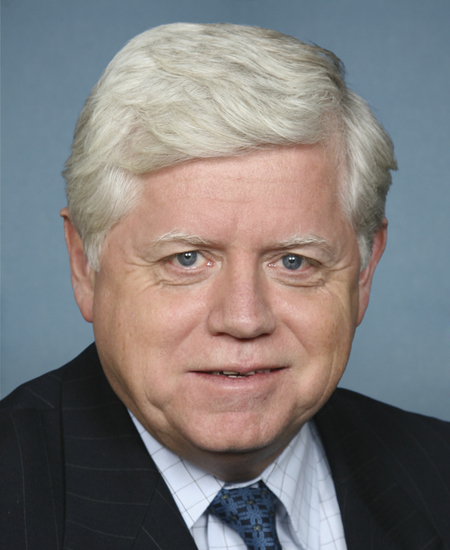
Rep. John B. Larson
Sponsored bills
Unclaimed Savings Bond Act of 2021 This bill establishes requirements and procedures for the Department of the Treasury to transfer ownership of certain matured, unredeemed savings bonds and related records to states.
Vanessa Guillén Military Justice Improvement and Increasing Prevention Act This bill modifies the process and policy related to the disposition of charges and convening of courts-martial for certain sexual assault cases and other specified offenses under the Uniform Code of Military Justice (UCMJ). Among other elements, the bill provides that the determinations on the preferral, disposition, and referral of charges for specified offenses under the UCMJ must be made by a commissioned officer of the Armed Forces who is designated as a court-martial convening authority (in grade O-6 or higher) and who is available for detail as trial counsel, has significant trial experience, and is outside the chain of command of the member subject to the charges.
Puppy Protection Act of 2021 This bill requires the Department of Agriculture to expand standards that govern the humane handling, care, treatment, and transportation of animals to include new requirements for commercial dog dealers. Specifically, the standards must require dog dealers to provide to dogs adequate housing, exercise, and veterinary care; appropriate and nutritious food; continuous access to potable water; and meaningful socialization with humans and compatible dogs for at least 30 minutes each day. The standards must also include requirements for breeders to use safe breeding practices and make all reasonable efforts to find humane placement for retired breeding dogs.
This resolution expresses support for the efforts of health and wellness coaches.
Caregivers, Access, and Responsible Expansion for Kids Act of 2021 or the CARE for Kids Act of 20 21 This bill extends eligibility for the National School Lunch Program and school breakfast program of the Department of Agriculture. A local educational agency (including any school operated by the Bureau of Indian Education) may certify as eligible for free lunches or breakfasts the following: children whose placement with a caregiver was carried out with the involvement of an agency that administers a state plan or a tribal child welfare agency, without regard to whether the agency is responsible for the care and placement of the child; children being raised by a relative who receives adoption or guardianship assistance; and children of a family that lives in housing dedicated to low-income families with a caregiver who is a grandparent or another older person that cares for the child full-time or that receives housing or housing assistance under the Native American Housing Assistance and Self-Determination Act of 1996. The bill also extends eligibility for free or reduced-price school lunches for children who were determined to be eligible in the school year prior to placement with a grandparent or relative for the school year immediately following placement. The bill provides children who receive medical assistance under the Medicaid program with direct certification for free lunches and breakfasts under the school lunch and breakfast programs.
Promoting Employment of Skilled Workers and Foster Youth Act of 2021 This bill expands the work opportunity tax credit to (1) allow the rehiring of certain construction industry employees participating in an apprenticeship program, and (2) include qualified pre-apprenticeship graduates and foster care transition youth as targeted group members for purposes of the credit.
Work Without Worry Act This bill modifies eligibility for Social Security Disability Insurance (SSDI) benefits for individuals who have a disability that began before age 22. Under current law, these individuals may obtain SSDI benefits based on the work record of a retired, disabled, or deceased parent. However, an individual with earnings after age 22 that exceed a specified monetary limit (i.e., constitute substantial gainful activity) permanently loses eligibility for such benefits. This bill allows individuals to retain eligibility for such benefits regardless of the amount of earnings after age 22. Additionally, individuals who apply for SSDI benefits on a parent's record and also independently qualify for Social Security benefits on their own record will receive the larger of the two benefit amounts.
Trade Adjustment Assistance Modernization Act of 2021 This bill reauthorizes through FY2028 and otherwise revises the Trade Adjustment Assistance Program, including by expanding program eligibility to additional workers, increasing relocation and job search allowances, establishing a child care allowance, and expanding eligibility for and increasing the maximum benefit of wage insurance. The bill also permanently extends the tax credit for health insurance costs and increases the percentage of such credit.
Generalized System of Preferences and Miscellaneous Tariff Bill Modernization Act of 2021 This bill reauthorizes and revises specified U.S. trade programs and provisions. Specifically, the bill extends through December 31, 2024, the Generalized System of Preferences (GSP), which provides duty-free treatment to products imported from designated beneficiary countries. The bill makes various changes to the GSP, including by (1) adding human rights, environmental, and other criteria for designation as a beneficiary developing country; (2) requiring a review of laws relating to worker and gender rights; and (3) requiring a study on rules of origin and GSP utilization rates. Additionally, the bill provides through December 31, 2023, and retroactively applies to 120 days before this bill's enactment, temporary duty suspensions or reductions to eligible imported products. This authorization is commonly known as the Miscellaneous Tariff Bill (MTB). The last version of the MTB was enacted in September 2018 and the temporary treatment for those products listed in the MTB expired on December 31, 2020. The bill also extends the American Manufacturing Competitiveness Act of 2016 for two future MTB cycles (one in 2022 and one in 2025). This extension allows the U.S. International Trade Commission to conduct the MTB petition, review, and recommendation process for those additional cycles.