

United States Innovation and Competition Act of 2021 This bill addresses U.S. technology and communications, foreign relations and national security, domestic manufacturing, education, trade, and other matters. Among other provisions, the bill provides funding for FY2022-FY2026 to support U.S. semiconductor manufacturing, research and development, and supply chain security; provides funding for wireless supply chain innovation; establishes a Directorate for Technology and Innovation in the National Science Foundation; extends through 2025 the authority of the National Aeronautics and Space Administration (NASA) to lease its non-excess real property and related personal property; authorizes various programs and policies related to space exploration; authorizes various international affairs programs and activities, including foreign assistance for the Indo-Pacific region; requires federal infrastructure programs to provide for the use of materials produced in the United States; imposes sanctions on China for cybersecurity and human rights abuses; requires the Department of Health and Human Services to consider national security risks associated with sensitive genetic information; includes initiatives related to elementary and secondary education, including those to increase computer science education; contains provisions related to higher education, including those reauthorizing through FY2027 international education programs and addressing China's influence on institutions of higher education; modifies and expands the schedule for graduated merger filing fees; prohibits federal funding for the Wuhan Institute of Virology; requires the U.S. Trade Representative to take certain actions related to digital trade and censorship practices; and extends through 2027 the Generalized System of Preferences.
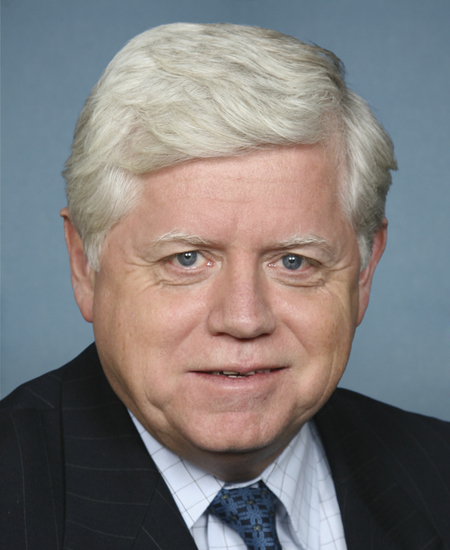
Rep. John B. Larson
Sponsored bills
Respect, Advancement, and Increasing Support for Educators Act of 2022 or the RAISE Act of 2022 This bill allows eligible educators (i.e., any elementary or secondary teacher and any early childhood educator) a refundable tax credit of $1,000 plus an additional amount (based upon a specified student poverty ratio) for eligible educators employed at a qualifying school (i.e., a public elementary or secondary school that is eligible for certain federal assistance or is funded by the Bureau of Indian Education), or an early childhood education program for children receiving certain federal assistance. The bill also increases the amount of the tax deduction for the expenses of elementary and secondary school teachers and expands such credit to include early childhood educators. The bill provides additional funding to local educational agencies that maintain or increase the salaries of their teachers.
Pride in Mental Health Act This bill expands programs that prevent and treat child abuse and neglect to address issues facing youth who are lesbian, gay, bisexual, transgender, queer or questioning, nonbinary, or gender-variant members of indigenous communities (e.g., Two Spirit). Specifically, these programs include (1) research and reporting requirements, (2) providing technical assistance, (3) grants to states and local agencies to train child-welfare personnel, and (4) community-based prevention-service grants. The bill also establishes a grant program to provide mental and behavioral health resources for such youth, including trauma-informed care.
This resolution celebrates the contributions of small businesses in every U.S. community and supports the designation of National Small Business Week. Further, it supports efforts to provide small businesses with aid and assistance through certain programs and initiatives.
Highlands Conservation Reauthorization Act of 2022 This bill extends through FY2029 the Highlands Conservation Act, which provides for land conservation in Highlands states (i.e., Connecticut, New Jersey, New York, and Pennsylvania). The bill authorizes the Fish and Wildlife Service to add a municipality to the Highlands region upon the request of a Highlands state, with the concurrence of the municipality. The bill revises the way in which land is identified for conservation to require using the best available science and geographic information systems. The bill allows political subdivisions of states to enter into agreements with the Department of the Interior for land conservation projects. A Highland state that receives funds for a land conservation partnership project may not use more than 5% of the funds to administer that project. The bill extends through FY2029 Forest Service and other Department of Agriculture programs to conserve land and natural resources in the Highlands region. With respect to an appraisal related to a land acquisition carried out under this bill, a Highlands state shall use an appraisal methodology approved by the Department of the Interior.
This resolution recognizes that Black women are experiencing high, disproportionate rates of maternal mortality and morbidity in the United States and that Black Maternal Health Week is an opportunity to deepen the national conversation about Black maternal health.
Civic Duty to Vote Act This bill requires each eligible citizen to vote in each regularly scheduled general election for federal office. The bill establishes a $20 civil monetary penalty for failure to vote. In the case of an individual's first violation of the voting requirement, the penalty shall not apply and the appropriate state election official must notify the individual that a penalty will be assessed for any subsequent violation. Further, the bill outlines an additional exception and waiver to the assessment of a penalty. The penalty shall not apply in instances when the individual certifies to the appropriate state election official that the individual has a valid and sufficient reason for not voting, or the state election official grants a waiver to an individual who either certifies that the individual cannot afford to pay the penalty or attests that the individual will complete one hour of community service. The bill prohibits state election officials from sharing information with law enforcement agencies regarding an individual's certification or waiver of the penalty. Further, the bill prohibits law enforcement agencies from using this information to subject the individual to additional penalties or criminal investigation. The bill also requires the Election Assistance Commission to (1) develop and publish best practices for states to implement this bill's requirements, and (2) make grants to states to implement this bill's requirements.
Targeting Resources for Equitable Access to Treatment for Long COVID Act or the TREAT Long COVID Act This bill requires the Department of Health and Human Services to award competitive grants to create or expand the capacity of clinics that treat patients with persistent, long-term symptoms following recovery from acute COVID-19 (i.e., Long COVID). Eligible recipients include federally qualified health centers, rural health clinics, urban Indian health centers, and state and local health departments.
Suspending Normal Trade Relations with Russia and Belarus Act This bill suspends normal trade relations with Russia and Belarus. It also permanently authorizes the President to impose visa- and property-blocking sanctions based on violations of human rights. Specifically, the bill authorizes the President to proclaim increases in the rates of duty applicable to products of Russia or Belarus. This authority terminates on January 1, 2024. The President may restore normal trade relations with Russia and Belarus, subject to congressional disapproval. The bill directs the U.S. Trade Representative to (1) condemn the recent aggression in Ukraine, (2) encourage other World Trade Organization (WTO) members to suspend trade concessions to Russia and Belarus, (3) consider steps to suspend Russia's participation in the WTO, and (4) seek to halt the accession process of Belarus.
Ending Importation of Russian Oil Act This bill prohibits the importation of energy products from Russia. Specifically, the bill prohibits the importation of Russian products that are classified under chapter 27 of the Harmonized Tariff Schedule (which includes mineral fuels, mineral oils and products of their distillation, bituminous substances, and mineral waxes). The President may terminate this prohibition, subject to congressional disapproval, if the President certifies that Russia (1) has reached an agreement to withdraw Russian forces and cease military hostilities in Ukraine, (2) poses no immediate military threat of aggression to any North Atlantic Treaty Organization member, and (3) recognizes the right of the Ukrainian people to independently and freely choose their own government.