

Maddy summaryThis bill prohibits forced arbitration for race discrimination claims under federal, tribal, state, or local law. It makes pre-existing arbitration agreements unenforceable for disputes involving discrimination based on race, color, or national origin, allowing affected individuals to pursue cases in court instead. The law directly impacts employees, job applicants, and others facing alleged race discrimination who would otherwise be barred from court by mandatory arbitration clauses. It requires courts - not arbitrators - to decide if the law applies to a dispute, ensuring legal clarity for affected parties.
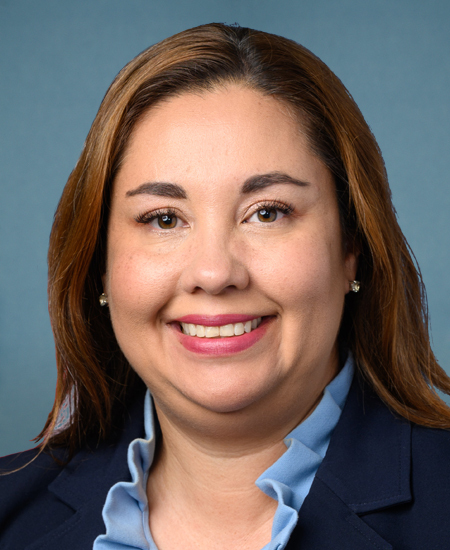
Rep. Yadira Caraveo
Sponsored bills
Maddy summaryThis bill establishes a Space National Guard as part of the organized militia in states, territories, Puerto Rico, and D.C. where the Space Force operates, creating two distinct components: state-level "Space National Guard" forces and a federal "Space National Guard of the United States" that serves as the Space Force's reserve component. It defines these terms in federal law, clarifies their structure (including personnel requirements and status when not on active duty), and requires implementation within 18 months, with annual congressional briefings on progress. The bill does not create new missions or funding but formalizes existing National Guard roles within the Space Force framework.
Maddy summaryThe Postal Police Reform Act of 2023 updates federal law to explicitly include "Postal Service police officers" alongside Postal Inspectors as authorized personnel for enforcing regulations on U.S. Postal Service property. It clarifies that the Postmaster General can establish and post rules for protecting postal property, with violations punishable by fines or up to 30 days in jail. This change directly affects USPS police officers (by formalizing their role), the Postmaster General (by expanding regulatory authority), and anyone on postal property who must follow posted rules. The bill makes existing enforcement procedures more explicit without altering penalties or creating new requirements.
Maddy summaryThis bill increases the tax deduction rate for volunteer drivers who transport people or property for qualifying organizations. It sets a minimum standard mileage rate of 14 cents per mile for general charitable driving but allows the IRS to set a higher rate (at least equal to the standard business mileage rate) specifically for volunteer transportation services. The change directly affects volunteers driving for tax-exempt organizations like charities, religious groups, or community nonprofits. It modifies IRS rules to better align charitable mileage deductions with current business travel rates. The policy change applies to tax returns filed for 2023 and later.
Maddy summaryHR 3024, the Life Saving Leave Act, amends the Family and Medical Leave Act to provide eligible employees with up to 40 hours of additional unpaid leave per year for bone marrow or blood stem cell donation activities. This leave covers predonation, donation, and postdonation medical care, and can be taken intermittently. Employees may substitute accrued paid leave (like vacation or sick days) for this time, but employers cannot require it. The bill requires employees to give employers at least 30 days' notice (or as soon as practicable if urgent) and to schedule the leave to minimize disruption.
Maddy summaryThis bill protects living organ donors from insurance discrimination by prohibiting life, disability, and long-term care insurers from denying coverage, raising premiums, or altering policy terms solely because someone donated an organ while alive. It also updates the Family and Medical Leave Act to include recovery from organ donation surgery as a qualifying health condition, allowing donors to take protected leave for this purpose. Additionally, the bill requires the Health and Human Services Secretary to update public educational materials about living donation benefits, risks, and insurance protections within six months of enactment. These changes directly affect living organ donors, insurers, employers, and healthcare systems by ensuring fair access to insurance and workplace leave.
Maddy summaryHR 2907, the "Let Doctors Provide Reproductive Health Care Act," prohibits states from restricting or penalizing health care providers (including doctors, nurses, and pharmacists) who offer reproductive health care services - such as abortion, contraception, or in vitro fertilization - that are legal in the state where the care is provided. The bill allows providers, patients, or the federal government to sue states or officials enforcing such restrictions, with courts able to block those laws and award legal fees. It also allocates $40 million for legal defense grants to help providers facing lawsuits and $40 million for security grants to protect clinics and patients. The law directly affects reproductive health care providers, their staff, patients, and insurers, ensuring they cannot be denied services, insurance, or face disciplinary action for providing legally permitted care.
Maddy summaryThis bill adjusts veterans' disability and survivor benefits to match the annual cost-of-living increase for Social Security. It requires the Veterans Affairs Secretary to raise specific payments - such as disability compensation for veterans, dependency payments for spouses and children, and clothing allowances - effective December 1, 2023, by the same percentage as the Social Security COLA for that year. The adjustment directly affects veterans receiving disability compensation under 38 U.S.C. § 1114, surviving spouses under § 1311, and children under §§ 1313-1314, as well as those receiving clothing allowances. The change ensures these benefits keep pace with inflation, using the Social Security Act’s established adjustment formula.
Maddy summaryThe Child Care for Working Families Act establishes a federal entitlement program providing subsidized child care for working families with children under age 6 who are not yet in kindergarten. It creates a sliding fee scale where families at or below 85% of State median income pay no copayment, while higher-income families pay up to 7% of their income based on income thresholds. The bill requires states to develop quality rating systems for child care providers and ensures providers receive sufficient funding to meet quality standards, including wages equivalent to elementary educators. It prioritizes access for underserved populations including children with disabilities, infants and toddlers, children experiencing homelessness, and families in low-income communities. The program is funded with $20 billion for fiscal year 2024 and subsequent years through 2029.
Maddy summaryThe Combating Child Labor Act strengthens penalties for employers violating child labor laws under the Fair Labor Standards Act. It increases criminal fines to $500,000 or up to 10 years in prison for willful violations causing death or serious injury to children under 18, and raises civil penalties for such violations up to $700,000 per incident. The bill also requires the Department of Labor to publish an annual report detailing child labor violations, including employer names, types of violations, and trends by industry or region. This report will help track enforcement efforts and identify high-risk areas, directly affecting employers who violate child labor rules and the Department of Labor’s oversight role.