

Maddy summaryThis bill reauthorizes the Never Again Education program, which funds Holocaust education initiatives in schools. It extends the program's funding authorization period from ending after four fiscal years to continuing annually through fiscal year 2030. The bill modifies the existing law (Public Law 116-141) by updating the funding timeline without changing program requirements or eligibility. It directly affects the existing grant program supporting educational materials and teacher training on the Holocaust. The change ensures continued federal funding for these specific educational efforts until 2030.
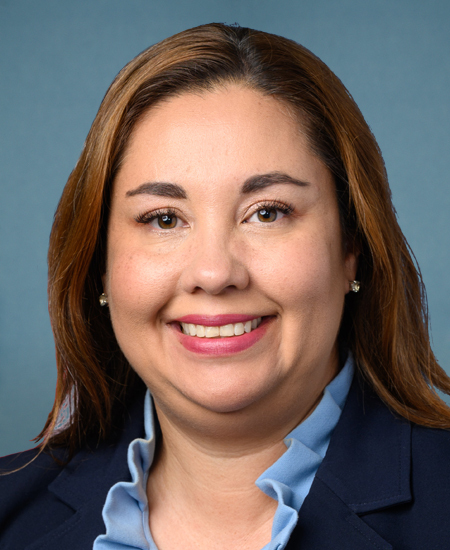
Rep. Yadira Caraveo
Sponsored bills
Maddy summaryHRES 870 is a symbolic House resolution supporting National Rural Health Day, observed annually on the third Thursday of November. It recognizes rural health care providers and the 60+ million people living in rural communities who face challenges like hospital closures, limited access to care, and health disparities. The resolution expresses commitment to improving rural health care accessibility and affordability but includes no new funding, programs, or policy changes - only a formal acknowledgment of existing efforts. It directly affects rural communities by honoring their health care contributions through a non-binding statement.
Maddy summaryHRES 893 designates November 2023 as "National Homeless Children and Youth Awareness Month" to highlight the issue of homelessness among children and youth in the U.S. The resolution does not create new programs or funding but encourages businesses, governments, schools, and organizations to raise awareness about the causes and solutions to child and youth homelessness. It cites statistics showing high rates of homelessness among students (e.g., 68% high school graduation rate for homeless youth vs. 85.5% overall) and links homelessness to health, education, and mental health challenges. The bill formally supports existing efforts to address homelessness through awareness and prevention, urging continued collaboration to support affected youth. This is a symbolic resolution with no direct policy changes or affected individuals beyond raising public attention.
Maddy summaryThe DOULA for VA Act of 2023 establishes a 5-year pilot program to provide doula support services to pregnant and postpartum women veterans enrolled in VA care. It authorizes up to 10 doula sessions per veteran (including pre-delivery, during labor, and postpartum sessions, with some via VA Video Connect) through the VA's Whole Health model, with payments capped at $3,500 per veteran. The pilot targets VA facilities with high or low female veteran enrollment, frontier states, and areas with higher maternal health risks, requiring doulas to receive training on military trauma and PTSD. The program mandates annual reports to Congress on outcomes and includes requirements for stakeholder consultation and tracking of veteran experiences.
Maddy summaryHR 6451, the Mental Health Justice Act of 2023, provides $250 million in federal grants to states, tribes, and localities to hire mental health professionals as first responders for specific emergencies. It directs these professionals to replace police in situations involving mental health crises, substance use, or intellectual/developmental disabilities - such as when a 911 caller describes a mental health emergency or a first responder identifies someone needing mental health support. The bill requires grantees to train responders in de-escalation techniques, link individuals to community-based services (not incarceration), and report on outcomes like reduced arrests or use of force. It also mandates data collection on demographics and prevents funneling people into institutional settings, with annual reports to Congress on program effectiveness.
Maddy summaryHR 6415, the CARE for First Responders Act, creates targeted mental health support for first responders, including law enforcement, firefighters, EMTs, and 911 operators (previously excluded from many services). It establishes a 24/7 confidential mental health hotline integrated with the 988 Suicide Lifeline, funds mobile crisis teams for disaster response, and mandates specialized training to reduce stigma and improve access to culturally competent care. The bill requires the development of peer support programs and education for responders and their families on mental health coping strategies. It authorizes $5 million annually (2024-2028) for grants to states and organizations to implement these services, specifically addressing the higher rates of mental health challenges and suicide among first responders compared to the general population.
This resolution supports the designation of National Microtia and Atresia Awareness Day. Microtia is a congenital condition affecting the outer ear; it is often accompanied by aural atresia (the absence or closure of the external ear canal resulting in hearing loss).
Maddy summaryHR 6424, the SIGHT Act, establishes a new Chief Innovation Officer for Health within USAID's Global Health Bureau to coordinate and advance research and development of health technologies specifically designed for low-resource settings in low- and middle-income countries. It creates a Global Health Research and Development Advisory Council to advise USAID on priorities, requires a dedicated budget line for these activities (ensuring funding is "additional" and not replacing existing programs), and authorizes grants to support technology development, evaluation, and capacity-building in partner countries. The bill directly affects USAID's global health programming, partner nations, and health technology developers working on diseases like malaria, neglected tropical diseases, and pandemic preparedness. It aims to improve the effectiveness and sustainability of USAID's health programs by structuring innovation efforts around community and country needs in resource-limited contexts.
Maddy summaryHR 3601, the Student Veteran Work Study Modernization Act, expands eligibility for a Veterans Affairs work-study allowance to veterans enrolled at least half-time in rehabilitation, education, or training programs - lowering the previous requirement from three-quarter-time. The bill establishes a five-year pilot program to test this change, requiring the VA to apply the same allowance rules to these veterans as to other participants, except for the enrollment threshold. It also mandates annual reports to Congress tracking participation numbers, four-year degree completion rates, and full-time VA employment outcomes for participants. The policy directly affects veterans seeking education benefits while balancing academic and personal responsibilities.
Maddy summaryThe Veteran Improvement Commercial Driver License Act of 2023 modifies rules for veterans' educational benefits to streamline approval of commercial driver education programs at branch locations. It allows a branch of an educational institution to be exempt from full approval requirements if it is appropriately licensed and uses the same curriculum as an approved main location. Schools must submit an annual report to the Department of Veterans Affairs verifying curriculum consistency, and the VA may withhold this exemption if needed. The changes will take effect 180 days after the VA establishes reporting rules, which must be finalized within 180 days of the bill's enactment.