

American Families United Act This bill authorizes the Department of Homeland Security (DHS) or the Department of Justice (DOJ) to exercise discretion in certain immigration cases. The bill also removes certain requirements related to birthright citizenship. Under this bill, DOJ or DHS may, on a case-by-case basis, exercise discretion by declining to remove an alien or bar an alien from entering the United States to prevent hardship for the alien's U.S. citizen spouse, parent, or child. However, DOJ or DHS may not exercise this discretion if the alien is removable or inadmissible due to certain grounds, including specified crime- and security-related grounds. The bill also removes certain requirements related to birthright citizenship for a child born outside of the United States to one U.S. citizen parent and one alien parent. Specifically, the bill removes a provision that requires the U.S. citizen parent to be physically present in the United States for at least five years before the child's birth in order for the child to acquire U.S. citizenship at birth.
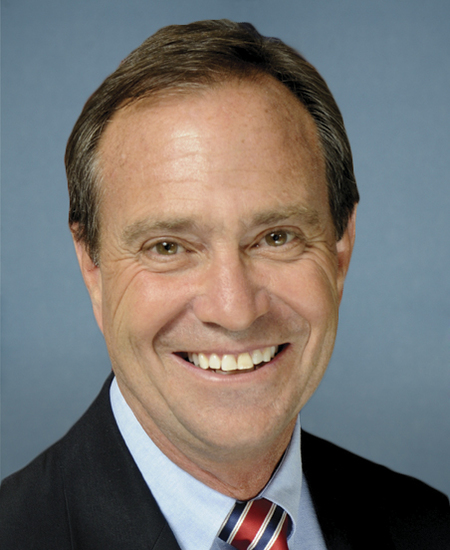
Rep. Ed Perlmutter
Sponsored bills
Maddy summaryThis House Resolution (HRES 1242) is a symbolic measure designating July 20, 2022, as "National Heroes Day" to honor everyday individuals who risked their lives during mass shootings, such as those in Aurora (2012), Uvalde (2022), and Buffalo (2022). It does not create new laws or policies but calls on all U.S. citizens to observe the day through community service, displaying the flag, or other charitable acts. The resolution specifically recognizes heroic actions during recent tragedies, including people shielding others during attacks. It directly affects the public by encouraging personal reflection and community engagement, though it has no legal force. The resolution was introduced on July 20, 2022, by Rep. Perlmutter and colleagues.
Improving Digital Identity Act of 2021 This bill establishes the Improving Digital Identity Task Force to establish a government-wide effort to develop secure methods for governmental agencies to validate identity attributes to protect the privacy and security of individuals and support reliable, interoperable digital identity verification in the public and private sectors. The National Institute of Standards and Technology (NIST) shall develop and periodically update a framework of standards, methodologies, procedures, and processes as a guide for federal, state, and local governments to follow when providing services to support digital identity verification. The Department of Homeland Security (DHS) shall award grants to states to upgrade systems that provide drivers' licenses or other types of identity credentials to support the development of highly secure, interoperable state systems that enable digital identity verification. The Government Accountability Office shall submit to Congress a report that includes (1) an analysis of legal and regulatory requirements with respect to the collection and retention of Social Security numbers by nongovernmental organizations, and (2) a recommendation on the necessity and effectiveness of any such legal and regulatory requirement analyzed and the use of a form of identification other than a Social Security number. DHS shall issue binding operational directives to federal agencies to implement (1) the Digital Identity Guidelines published by NIST; and (2) the memorandum of the Office of Management and Budget issued on May 21, 2019, which includes the subject Enabling Mission Delivery through Improved Identity, Credential, and Access Management .
Ensuring Women's Right to Reproductive Freedom Act This bill prohibits anyone acting under state law from interfering with a person's ability to access out-of-state abortion services. ( Abortion services includes the use of any drugs that are approved to terminate pregnancies and any health care services related to an abortion, whether or not provided at the same time or on the same day.) Specifically, the bill prohibits any person acting under state law from preventing, restricting, impeding, or retaliating against health care providers who provide legal abortion services to out-of-state residents, any person or entity who helps health care providers to provide such services, any person who travels to another state to obtain such services, any person or entity who helps another person travel to another state to obtain such services, or the movement in interstate commerce of drugs that are approved to terminate pregnancies. The Department of Justice may enforce this bill through civil actions; the bill also establishes a private right of action for violations.
Active Shooter Alert Act of 2022 This bill requires a designated officer of the Department of Justice to act as the national coordinator of an Active Shooter Alert Communications Network regarding an emergency involving an active shooter. The bill sets forth duties of the coordinator, including to work with state, tribal, and local governments to encourage coordination of various elements of the network. The coordinator must also encourage federal, state, local, and tribal government agencies to establish procedures for responding to active shooters. Finally, the bill requires the Government Accountability Office to study and report on state and local responses to active shooters and situations requiring the issuance of a public alert or warning.
Veterans Equal Access Act This bill directs the Department of Veterans Affairs (VA) to authorize VA health care providers to (1) provide veterans with recommendations and opinions regarding participation in their state's marijuana programs, and (2) complete forms reflecting such recommendations and opinions.
My Body, My Data Act of 2022 This bill establishes protections, subject to certain limits, for personal reproductive or sexual health information. This includes information relating to past, present, or future surgeries or procedures, such as the termination of a pregnancy. Specifically, commercial entities, including individuals, nonprofits, and common carriers, may not collect, retain, use, or disclose personal reproductive or sexual health information except (1) with the express written consent of the individual to whom such information relates, or (2) as is strictly necessary to provide a requested product or service. Commercial entities also must provide individuals with access to, and a reasonable mechanism to delete, any of their reproductive or sexual health information upon request. Further, commercial entities must maintain and publish a privacy policy describing their practices with respect to such information. The bill's provisions do not apply to entities that are subject to certain existing health-related privacy regulations, such as the privacy regulations issued under the Health Insurance Portability and Accountability Act of 1996. Additionally, the provisions do not apply to the disclosure of personal reproductive or sexual health information for the publication of newsworthy information of legitimate public concern. The bill provides for enforcement by the Federal Trade Commission and by private civil actions.
Advanced Research Project s Agency-Health Act or the ARPA-H Act This bill establishes within the Department of Health and Human Services (HHS) the Advanced Research Projects Agency-Health to accelerate health and medical innovation by investing in high-risk, high-reward research. The bill also establishes a committee to advise on agency activities. HHS must transfer all authorities, functions, funds, and personnel from a similar entity within the National Institutes of Health to a new, independent agency. Additionally, the President must appoint a director to lead the agency. The director may submit testimony and recommendations concerning the agency to Congress without review or approval by other federal officers or agencies. The director must appoint personnel to administer the agency's research programs, including by selecting projects to support and making recommendations about terminating or continuing projects. The agency may use grants, prize competitions, and a variety of other mechanisms to support the research projects. The agency's budget is separate from that of HHS. The agency must coordinate with the Food and Drug Administration and the Centers for Medicare & Medicaid Services to expedite development and coverage of high-need cures. Additionally, the agency may partner with other public and private entities (e.g., institutions of higher education and patient advocacy organizations). The bill also requires the agency to develop and periodically update a strategic plan and annually report on its activities. Furthermore, (1) the National Academies of Sciences, Engineering, and Medicine must evaluate the agency's performance; and (2) the Government Accountability Office must review the research portfolio of HHS and its components, including the new agency.
Save America’s Forgotten Equines Act of 2021 or the SAFE Act of 2021 This bill prohibits the transporting, receiving, possessing, purchasing, selling, or donation by a person of an equine (e.g., horse) that the person has reason to believe will be slaughtered for human consumption.
Downpayment Toward Equity Act of 2021 This bill establishes a grant program through the Department of Housing and Urban Development for states and other entities to provide qualifying assistance to certain first-time, first-generation home buyers in purchasing their first homes. Qualifying assistance includes assistance for mortgage down payments, mortgage closing costs, reduction of mortgage interest rates, subsidies for shared equity homes, or for certain preoccupancy modifications to a home to accommodate persons with disabilities. The bill also establishes grant requirements regarding home buyer income, types of housing, homeowner occupancy, types of mortgages, and home buyer counseling.