Capitol Remembrance Act This bill requires the Architect of the Capitol (AOC) to design and install in a prominent location in the U.S. Capitol a permanent exhibit that depicts the January 6, 2021, attack on the Capitol. To the extent possible, the AOC must preserve property that was damaged during the attack and include it in the exhibit. The AOC must also include (1) existing photographic records relating to the attack; and (2) a plaque to honor the U.S. Capitol Police and other law enforcement agencies that protected the Capitol, the individuals who died or sustained injuries to protect the Capitol, and the staff who helped restore the Capitol complex after the attack.
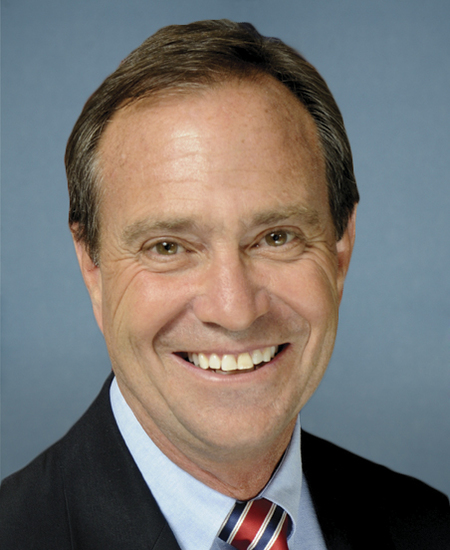
Rep. Ed Perlmutter
Sponsored bills
Federal Labs Modernization Act of 2021 This bill requires the inclusion of certain information related to research infrastructure in specified reports to Congress. The bill requires the Office of Science and Technology Policy to include in a report to Congress a description of the deficiencies in funding for research infrastructure in research facilities and major instrumentation located at federal laboratories and national user facilities at academic institutions that are widely accessible for use by researchers in the United States. The General Accountability Office must submit a report to Congress on research infrastructure.
This resolution thanks and honors the journalists and news staff who risked themselves to chronicle the insurrection at the U.S. Capitol on January 6, 2021, and it condemns the harassment and violent attacks on the media during the insurrection.
This resolution honors Officers Brian Sicknick and Howard Liebengood of the U.S. Capitol Police, and it commends the bravery and service demonstrated by officers of the U.S. Capitol Police, the Metropolitan Police Department of the District of Columbia, and the other law enforcement agencies and protective entities that assisted in responding to the January 6, 2021, attack on the U.S. Capitol.
Treat and Reduce Obesity Act of 2021 This bill expands Medicare coverage of intensive behavioral therapy for obesity. Specifically, the bill allows coverage for therapy that is provided by (1) a physician who is not a primary care physician; or (2) other health care providers (e.g., physician assistants and nurse practitioners) and approved counseling programs, if provided upon a referral from, and in coordination with, a physician or primary care practitioner. Currently, such therapy is covered only if provided by a primary care practitioner. The bill also allows coverage under Medicare's prescription drug benefit of drugs used for the treatment of obesity or for weight loss management for individuals who are overweight.
Restricting the Use of Solitary Confinement Act This bill imposes restrictions on the use of solitary confinement for inmates in federal custody. Among the restrictions, the bill prohibits placement in solitary confinement for nondisciplinary reasons; it limits the duration of such placement; and it provides an administrative review process for inmates to contest such placement.
Preventing Future Pandemics Act of 2021 This bill establishes measures to address global public health risks posed by wildlife markets, which are commercial markets that sell or slaughter wildlife for human consumption as food or medicine in communities where alternative nutritional or protein sources are available. Specifically, the bill prohibits importing, exporting, purchasing, or selling live wild animals in the United States for human consumption as food or medicine. The Department of the Interior must hire, train, and deploy at least 50 new U.S. Fish and Wildlife Service law enforcement attachés around the world, and the U.S. Agency for International Development must increase specified activities to address the threats and causes of zoonotic (animal-to-human transmission) disease outbreaks. Additionally, the United States must work with other United Nations member states to urge a global ban on commercial wildlife markets and enforcement of laws to end wildlife trafficking. Further, the President may impose sanctions against a foreign country or foreign nationals that the Department of State has determined are taking certain actions that enable or facilitate commercial wildlife markets. Among other reports required by the bill, the National Academies of Sciences, Engineering, and Medicine must conduct a study and submit a report that includes an evaluation of (1) the impact that consumption of terrestrial wildlife as food or medicine has on the transmission of novel viral and other pathogens, (2) the role of consuming terrestrial wildlife as food or medicine in the transmission of microbes from animals to humans, and (3) the conditions at live wildlife markets that lead to this transmission.
Build America's Libraries Act This bill establishes and provides funds through FY2024 for the Build America's Libraries Fund, from which the Institute of Museum and Library Services (IMLS) must allocate funding to states and, through them, need-based grants to libraries to make long-term improvements to library facilities. The IMLS must also award grants to Indian tribes and organizations that primarily serve and represent Native Hawaiians. Specifically, the bill requires each state that receives an allocation, and each library that receives a grant, to carry out certain activities to improve library facilities. These activities include constructing and renovating library facilities, investing in infrastructure projects to improve internet access and connectivity, improving indoor air quality, and making facilities accessible to individuals with disabilities. The bill also outlines administrative and oversight provisions, including by requiring library projects to use iron and steel products that are produced in the United States.
Research Investment to Spark the Economy Act of 2021 or the RISE Act of 2021 This bill authorizes the Departments of Agriculture, Commerce, Defense, Education, Energy, the Interior, Health and Human Services, and Transportation, National Aeronautics and Space Administration (NASA), National Science Foundation, and Environmental Protection Agency to provide support for research regarding COVID-19 (i.e., coronavirus disease 2019) or research disrupted by the COVID-19 pandemic. Support may be used to provide supplemental funding to extend the duration of a grant to a research institution, national laboratory, or individual that was awarded prior to the enactment of this bill, or to expand the purposes of such a grant as specified; issue awards to research the effects of the current pandemic and potential future pandemics; and provide flexibility on awards to account for facility closures or other limitations during the COVID-19 public health emergency. Agencies must provide the support as rapidly as possible. Provided funds shall remain available through FY2021.
Protecting America's Wilderness and Public Lands Act This bill provides for the preservation, conservation, and recreational use of public lands, including in Arizona, California, Maine, North Carolina, Oregon, Virginia, Washington, and the U.S. Virgin Islands. In Colorado, the bill designates wilderness, potential wilderness, a recreation management area, wildlife conservation areas, a national historic landscape, and special management areas and establishes the Greater Thompson Divide Fugitive Coal Mine Methane Use Pilot Program, the Fugitive Methane Emission Leasing Program, and a recreation area. In California, the bill establishes a recreation area, partnerships, and a special management area; designates a trail, wilderness, potential wilderness, and wild, scenic, and recreational rivers; establishes a special conservation management area; establishes the San Gabriel National Recreation Area Public Advisory Council and the San Gabriel National Recreation Area Partnership; and adds specified areas to the Rosie the Riveter/World War II Home Front National Historical Park. In Washington, the bill designates wilderness and wild, scenic, and recreational rivers. In Arizona and Oregon, the bill withdraws specified federal lands. In North Carolina and Virginia, the bill requires a study of designating an area as the Great Dismal Swamp National Heritage Area. In Maine, the bill designates a recreational river. In the U.S. Virgin Islands, the bill establishes a heritage area. In Virginia, the bill adds certain lands to Rough Mountain and Rich Hole Wildernesses. The bill extends the Cape Cod National Seashore Advisory Commission until September 26, 2028. The bill establishes an outdoor recreation legacy partnership grant program. The bill establishes a National Heritage Area System.