

Dentist and Optometric Care Access Act of 2021 or the DOC Access Act of 20 21 This bill prohibits private health insurance plans from setting rates for items and services, except for dental cleanings, provided by a doctor of optometry, of dental surgery, or of dental medicine for which the plan does not pay a substantial amount. Additionally, an agreement between a plan and such a doctor for limited scope dental or vision benefits may last longer than two years only with the prior acceptance of the doctor for each term extension. Plans also may not restrict such a doctor's choice of laboratories or suppliers. Such doctors may elect to waive the application of the payment amount and choice of laboratories provisions of this bill. The bill establishes a private right of action for a person adversely affected by a violation of this bill. The bill does not supersede state laws regarding health insurers and dental or vision benefit plans.
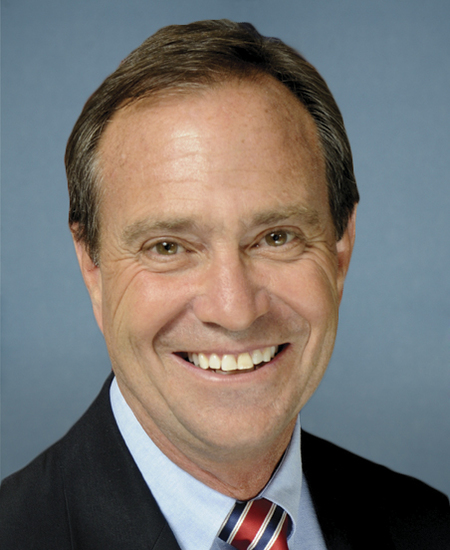
Rep. Ed Perlmutter
Sponsored bills
Diversifying by Investing in Educators and Students to Improve Outcomes For Youth Act or the Diversify Act This bill revises the Teacher Education Assistance for College and Higher Education (TEACH) grant program. The TEACH program awards grants to undergraduate and graduate students who commit to teaching in a high-need field and in an elementary or secondary school that serves low-income students. First, the bill raises the maximum amount for TEACH grants. Second, the bill allows TEACH grants to cover the full cost of attendance. Currently, these grants may be used only for tuition, fees, and on-campus housing. The bill allows teaching in a high-need early childhood education program to count toward service requirements for the program. Next, the bill eliminates the process for converting a TEACH grant to a loan if a recipient does not complete the requirements of the program. Further, the bill prohibits the Department of Education (ED) from instituting or creating a monetary penalty for failure or refusal to complete the service requirement. In addition, the bill requires ED to send an electronic certificate to grant recipients who have completed their service requirement. The bill also exempts the TEACH program from sequestration, which is a process of automatic, usually across-the-board spending reductions under which budgetary resources are permanently cancelled to enforce specific budget policy goals.
Jobs, On-the-Job 'Earn-While-You-Learn' Training, and Apprenticeships for Young African Americans Act This bill makes changes to the national apprenticeship system aimed at promoting diversity. Specifically, the bill establishes the Diversity and Inclusion Administrator in the Office Apprenticeship within the Office of Employment and Training Administration at the Department of Labor, requires every apprenticeship program that registers or renews an apprenticeship with the Office of Apprenticeship to submit a plan to increase participation by individuals who are African American, and requires the Diversity and Inclusion Administrator to award grants to create or expand diversity in registered apprenticeship programs.
School Safety Drill Research Act of 2021 This bill requires the Department of Education to enter into an agreement with the National Academies of Sciences, Engineering, and Medicine to study and report on the mental health effects that may result from a lockdown drill or active shooter drill in elementary and secondary schools.
Midwives for Maximizing Optimal Maternity Services Act of 2021 or the Midwives for MOMS Act of 2021 This bill establishes grants within the Health Resources and Services Administration (HRSA) for establishing or expanding midwifery programs at institutions of higher education and nursing schools. HRSA may prioritize funding for institutions that focus on increasing the number of midwife professionals from underrepresented groups and that promote practicing in areas with limited access to professional health care.
Railroad Rehabilitation and Improvement Financing Equity Act This bill directs the Department of Transportation to refund credit risk premiums under the Railroad Rehabilitation and Improvement Financing loan program upon the satisfaction of a loan's obligations.
Combating Sexual Harassment in Science Act This bill addresses sexual harassment and gender harassment in the science, technology, engineering, and mathematics (STEM) fields by supporting research regarding such harassment and efforts to prevent and respond to such harassment. (Sec. 4) This bill directs the National Science Foundation (NSF) to award grants to institutions of higher education or nonprofit organizations (or their consortia) to expand research into sexual harassment and gender harassment in the STEM workforce, including students and trainees; and examine interventions for reducing the incidence and negative consequences of such harassment. (Sec. 5) The NSF must convene a working group composed of representatives of federal statistical agencies to develop questions on sexual harassment and gender harassment in STEM departments in order to gather national data on the prevalence, nature, and implications of such harassment in institutions of higher education. (Sec. 6) The NSF shall enter into agreements with the National Academies of Sciences, Engineering, and Medicine to (1) update a responsible conduct guide issued by the National Academies to include, among other things, updated professional standards of conduct in research and evidence-based practices for fostering a climate that is intolerant of sexual harassment and gender harassment; and (2) study the influence of such harassment in institutions of higher education on the career advancement of individuals in the STEM workforce. (Sec. 7) The National Science and Technology Council shall establish an interagency working group to coordinate the federal science agencies' efforts to reduce the prevalence of sexual harassment and gender harassment involving grant personnel. The Office of Science and Technology Policy must develop a uniform set of policy guidelines for such agencies to prevent and respond to reports of sexual harassment and gender harassment.
Ghost Army Congressional Gold Medal Act This bill directs the Speaker of the House of Representatives and the President pro tempore of the Senate to award a Congressional Gold Medal to the 23rd Headquarters Special Troops and the 3133d Signal Service Company, known as the Ghost Army , collectively, in recognition of its service during World War II.
STEM Opportunities Act This bill provides for guidance, data collection, and grants for groups historically underrepresented in science, technology, engineering, and mathematics (STEM) education at institutions of higher education (IHEs) and at federal science agencies. Specifically, the bill requires the Office of Science and Technology Policy (OSTP) to provide specified guidance related to such groups to federal science agencies and IHEs. Each federal science agency must collect comprehensive demographic data on recipients of merit-reviewed research and development grants given to IHEs and federal laboratories supported by that agency. Each agency must also implement recommendations from the OSTP report titled Reducing the Impact of Bias in the STEM Workforce . In addition, each agency must carry out a pilot program and implement evidence-based policies and practices to minimize the effect of implicit bias in the grant review process. The National Science Foundation (NSF) must carry out and publish a survey to collect data on the demographics of STEM faculty, by broad fields of STEM, at different types of IHEs. The NSF must also carry out a variety of grant programs, including grants for increasing (1) the recruitment, retention, and advancement of individuals from underrepresented minority groups in STEM careers; (2) the recruitment and retention of minority students who are underrepresented in STEM fields; and (3) student participation in computer science and computational thinking education programs at tribal colleges and universities.
Supporting Early-Career Researchers Act This bill authorizes the National Science Foundation to establish a two-year pilot program to award grants to highly qualified early-career investigators to carry out an independent research program at the institution of higher education chosen by such investigator, to last for a period not greater than two years. The NSF shall select grantees from among citizens, nationals, and lawfully admitted permanent resident aliens of the United States. The NSF shall conduct program outreach to recruit fellowship applicants (1) from all regions of the country; (2) from historically underrepresented populations in the fields of science, technology, engineering, and mathematics (STEM); and (3) who graduate from or intend to carry out research at a variety of types of institutions of higher education, including Historically Black Colleges and Universities.