

Rebuild America's Schools Act of 2022 This bill provides support for long-term improvements to public elementary and secondary school facilities. First, the bill sets forth allocations to states and establishes a need-based grant program for local educational agencies (LEAs) to improve school facilities. Further, the bill specifies allowable uses of grant funds, including carrying out major repairs, improving indoor air quality, and making facilities accessible to disabled individuals. Additionally, the bill requires LEAs that receive funds for new construction, modernization, or renovation projects to comply with hazard-resistance building codes and performance criteria under the WaterSense program of the Environmental Protection Agency. Further, the bill requires such LEAs to adopt certain green practices (environmental standards) and requires the use of iron, steel, and manufactured products that are made in the United States (Buy America). The bill restores school infrastructure tax credit bonds. The bill also sets forth reporting requirements, including annual reports on grant program projects and a report by the Government Accountability Office that requires a study of the geographic distribution of projects, the impact of selected projects on student and staff health and safety, and the accessibility of projects to high-poverty schools. The bill also establishes the Office of School Infrastructure and Sustainability within the Department of Education. Next, the bill extends through FY2027 the Impact Aid Construction program. Finally, the bill establishes a grant program to assist LEAs with repairing or replacing concrete foundations affected by pyrrhotite (an iron sulfide material linked to crumbling foundations).
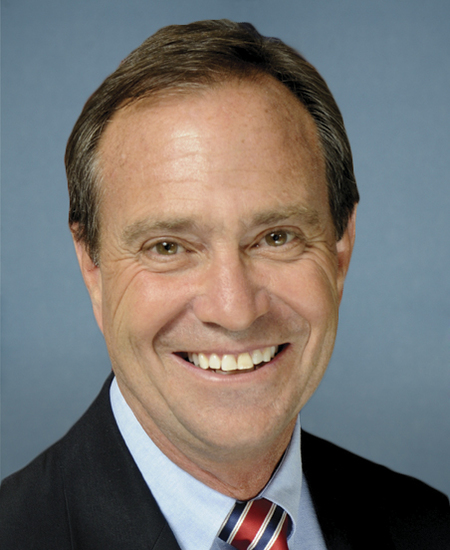
Rep. Ed Perlmutter
Sponsored bills
VA Employee Fairness Act of 2021 This bill repeals provisions excluding any matter or question concerning professional conduct or competence; peer review; or the establishment, determination, or adjustment of employee compensation from the applicability of collective bargaining rights for Veterans Health Administration employees.
Maddy summaryHRES 1522 is a symbolic resolution condemning the November 19, 2022, mass shooting at Club Q, an LGBTQ+ nightclub in Colorado Springs that killed five people and injured 22. It honors the victims, offers condolences to their families, and expresses support for those impacted by the attack. The resolution also highlights the broader context of anti-LGBTQ+ violence and hate, including the Pulse nightclub tragedy, and calls for an end to anti-LGBTQ+ hate and violence. As a ceremonial resolution, it contains no new laws or funding but serves as a formal statement of solidarity with the LGBTQ+ community.
Innovative Technologies Impacted by COVID-19 Act This bill extends for one year certain Medicare pass-through payment adjustments for new drugs or biologics that would otherwise expire on December 31, 2022.
Simplifying Outdoor Access for Recreation Act or the SOAR Act This bill addresses access to public lands for outdoor recreation, including through special recreation permits and annual entrance passes. The bill sets forth and revises provisions regarding special recreation permits for use by individuals and groups to engage in recreational activities on federal recreational lands and waters. The bill requires the Department of the Interior and the Department of Agriculture to sell online the America the Beautiful-the National Parks and Federal Recreational Lands Pass. The Forest Service and the Bureau of Land Management shall (1) enhance private-sector volunteer programs; (2) actively promote private-sector volunteer opportunities; and (3) provide outreach to, and coordinate with, the private sector for such purposes.
Respect for Marriage Act This act provides statutory authority for same-sex and interracial marriages. Specifically, the act replaces provisions that define, for purposes of federal law, marriage as between a man and a woman and spouse as a person of the opposite sex with provisions that recognize any marriage between two individuals that is valid under state law. (The Supreme Court held that the current provisions were unconstitutional in United States v. Windsor in 2013.) The act also replaces provisions that do not require states to recognize same-sex marriages from other states with provisions that prohibit the denial of full faith and credit or any right or claim relating to out-of-state marriages on the basis of sex, race, ethnicity, or national origin. (The Supreme Court held that state laws barring same-sex marriages were unconstitutional in Obergefell v. Hodges in 2015; the Court held that state laws barring interracial marriages were unconstitutional in Loving v. Virginia in 1967.) The act allows the Department of Justice to bring a civil action and establishes a private right of action for violations. The act does not (1) affect religious liberties or conscience protections that are available under the Constitution or federal law, (2) require religious organizations to provide goods or services to formally recognize or celebrate a marriage, (3) affect any benefits or rights that do not arise from a marriage, or (4) recognize under federal law any marriage between more than two individuals.
Commitment to Veteran Support and Outreach Act This bill authorizes the Department of Veterans Affairs (VA) to provide grants to states and Indian tribes to implement programs that improve outreach and assistance to veterans and their families to ensure that such individuals are fully informed about veterans' benefits and programs. Specifically, the VA may provide grants to states and tribes to (1) implement or enhance outreach activities; (2) increase the number of county or tribal veterans service officers in the state or tribe; or (3) expand, implement, or otherwise enhance existing programs and services of the existing state or tribal organization that is recognized by the VA in the preparation, presentation, and prosecution of claims for veterans benefits through representatives who hold positions as county or tribal veterans service officers. The VA must prioritize awarding grants in areas with a critical shortage of county or tribal veterans service officers, areas with high rates of suicide among veterans, and areas with high rates of referrals to the Veterans Crisis Line. The bill also extends certain loan fee rates through February 10, 2031, under the VA's home loan program. During FY2024-FY2028, the VA is authorized to hire two or more additional full-time equivalent employees in the VA's Office of General Counsel to carry out duties under the accreditation, discipline, and fees program.
Maddy summaryHR 9417 would tie congressional salaries to judicial pay scales under the Legislative Reorganization Act of 1946. It sets the Speaker's salary at the higher of $274,200 or a Supreme Court associate justice's pay, leadership roles at $236,900 or a circuit judge's pay, and all other members at $223,400 or a district judge's pay. The bill requires congressional pay to automatically adjust based on judicial salary changes, ensuring it never falls below these specified minimums. This applies to all 535 members of Congress, including delegates and resident commissioners, starting after the November 2024 election.
Maddy summaryHR 9416 would create a $2,500 monthly housing stipend for all House Members, including Delegates and Resident Commissioners, who serve in Washington, D.C. To qualify, Members must apply with a statement confirming they won't use their office for overnight stays and provide additional required information. The stipend must be used exclusively for housing within the Washington metropolitan area, defined as Washington, D.C., and specific counties in Maryland and Virginia. This policy change directly affects House Members' housing costs in the D.C. area, replacing or supplementing existing housing arrangements.
Maddy summaryThis bill restores cost-of-living pay adjustments for Members of Congress that were illegally blocked by prior laws violating the 27th Amendment. It directly affects current and past Members of Congress whose pay was reduced by laws passed before elections, which the 27th Amendment prohibits. The bill amends existing law to retroactively apply the pay rates that would have been in effect without those blocked adjustments, calculating the correct rates based on what would have applied before the prohibited laws. The House and Senate leaders must determine and publish these restored rates within 60 days of the bill's enactment.