

Rights for the Transportation Security Administration Workforce Act of 2022 or the Rights for the TSA Workforce Act of 2022 This bill modifies the workplace rights, protections, and benefits applicable to Transportation Security Administration (TSA) personnel. Specifically, the bill by December 31, 2022, eliminates personnel authorities of the Department of Homeland Security (DHS) and the Department of Transportation governing the conditions of employment for TSA employees, thus making TSA employees subject to the personnel management system applicable to other federal employees; sets forth transition rules that protect the pay rates, leave rights, and other rights of TSA employees; and requires DHS to consult with the exclusive representative of TSA screening employees to carry out the conversion of those positions. The bill also permits the TSA to consult with organizations representing federal air marshals to address concerns, including mental health and suicide rates; directs the TSA to ensure its employees are provided proper guidance regarding prevention and protections against COVID-19; requires the TSA to provide a one-time bonus payment of $3,000 to each TSA employee carrying out duties that require substantial contact with the public during the COVID-19 national emergency; and requires the Government Accountability Office to report on implementation of the bill, TSA recruitment efforts, and specified TSA personnel policies.
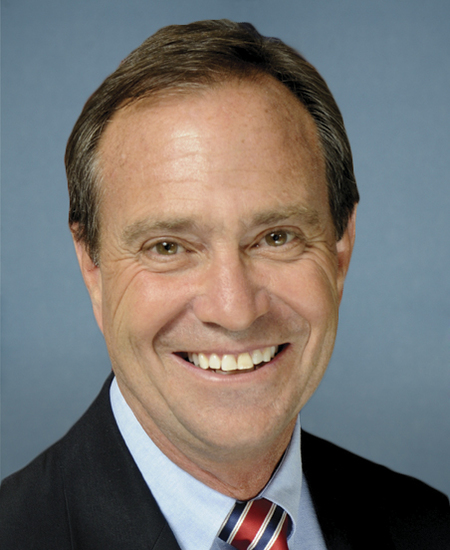
Rep. Ed Perlmutter
Sponsored bills
Affordable Housing and Area Median Income Fairness Act of 2022 This bill reauthorizes through FY2032 the Community Development Block Grant and other specified programs that support affordable housing. The bill also requires the Department of Housing and Urban Development (HUD) to assess alternative methods of calculating area median income (i.e., any metric used to refer to the median income level for a given area or jurisdiction for purposes of any program administered by HUD) and the use of alternative metrics in order to make housing more affordable for low-income families in urban areas.
Federal Firefighters Fairness Act of 2022 This bill makes it easier for federally employed firefighters who contract certain illnesses to qualify for federal workers' compensation. Specifically, the bill provides that chronic obstructive pulmonary disease, mesothelioma, and specified other cancers of those employed in fire protection activities for at least five years are presumed to be proximately caused by such employment for purposes of a disability or death claim under the federal workers' compensation program. This presumption also applies to federal employees employed in fire protection activities for at least five years who experience a sudden cardiac event or stroke within 24 hours of performing a fire protection activity. The bill also requires the Department of Labor to conduct a review to determine whether breast cancer, gynecological cancer, and rhabdomyolysis should be included under the presumption and to conduct periodic reviews to determine whether other diseases should be included. In addition, a person may petition Labor to include another disease under the presumption. An employee in fire protection activities is a firefighter, paramedic, emergency medical technician, rescue worker, ambulance personnel, or hazardous material worker who (1) is trained in fire suppression; (2) has the legal authority and responsibility to engage in fire suppression; (3) is engaged in the prevention, control, and extinguishing of fires or response to emergency situations where life, property, or the environment is at risk, including the prevention, control, suppression, or management of wildland fires; and (4) performs such activities as a primary responsibility.
Reparations for Ukraine through Sovereign nation Support and Integration Act or the RUSSIA Act This bill directs the President to seek to enter into an agreement with other countries that have frozen the assets of Russia's central bank to (1) transfer the frozen assets into a single account at an international financial institution, and (2) distribute such assets to provide for the reconstruction of Ukraine after the cessation of hostilities in Ukraine.
Benjamin Berell Ferencz Congressional Gold Medal Act This bill provides for the award of a Congressional Gold Medal to Benjamin Berell Ferencz in recognition of his service to the United States and the international community during the post-World War II Nuremberg trials and his lifelong advocacy for international criminal justice and the rule of law.
This resolution extends collective bargaining rights prescribed in the Congressional Accountability Act of 1995 to employees of the House of Representatives.
United States Innovation and Competition Act of 2021 This bill addresses U.S. technology and communications, foreign relations and national security, domestic manufacturing, education, trade, and other matters. Among other provisions, the bill provides funding for FY2022-FY2026 to support U.S. semiconductor manufacturing, research and development, and supply chain security; provides funding for wireless supply chain innovation; establishes a Directorate for Technology and Innovation in the National Science Foundation; extends through 2025 the authority of the National Aeronautics and Space Administration (NASA) to lease its non-excess real property and related personal property; authorizes various programs and policies related to space exploration; authorizes various international affairs programs and activities, including foreign assistance for the Indo-Pacific region; requires federal infrastructure programs to provide for the use of materials produced in the United States; imposes sanctions on China for cybersecurity and human rights abuses; requires the Department of Health and Human Services to consider national security risks associated with sensitive genetic information; includes initiatives related to elementary and secondary education, including those to increase computer science education; contains provisions related to higher education, including those reauthorizing through FY2027 international education programs and addressing China's influence on institutions of higher education; modifies and expands the schedule for graduated merger filing fees; prohibits federal funding for the Wuhan Institute of Virology; requires the U.S. Trade Representative to take certain actions related to digital trade and censorship practices; and extends through 2027 the Generalized System of Preferences.
National Discovery Trails Act This bill amends the National Trails System Act to include national discovery trails as part of the national trails system. Such trails (1) shall be extended, continuous, interstate trails located to provide for outstanding outdoor recreation and travel and to connect representative examples of America's trails and communities; (2) shall provide for the conservation and enjoyment of significant natural, cultural, and historic resources and be so located as to represent metropolitan, urban, rural, and back country regions of the Nation; and (3) may be designated on federal lands and, with the owner's consent, on nonfederal lands. The 6,000-mile American Discovery Trail extending from Cape Henlopen State Park in Delaware, to Point Reyes National Seashore in California, splitting into northern and southern routes near Cincinnati, Ohio, and rejoining at Denver, Colorado, is designated as a national discovery trail. The bill sets forth requirements for designation of a trail as a national discovery trail. The appropriate federal department for each national discovery trail shall (1) administer the trail in cooperation with at least one competent trailwide volunteer-based organization; and (2) submit a comprehensive plan for the trail's protection, management, development, and use.
Armenian Genocide Education Act This bill requires the Library of Congress to maintain a public website and otherwise support educational initiatives to promote understanding about the Armenian Genocide.
Helicopter Passenger Protection Act This bill requires that certain rotorcraft manufactured before April 5, 2020, comply with Federal Aviation Administration requirements relating to fuel system crash resistance. The requirement does not apply to an unmanned aircraft that does not carry occupants. The bill also allows a tax credit equal to 10% of the costs of making changes to a fuel system in an emergency medical rotorcraft to comply with certain requirements for fuel system crash resistance.