

Maddy summaryThe Headwaters Protection Act of 2023 reauthorizes and improves the Water Source Protection Program under the Healthy Forests Restoration Act, focusing on protecting watersheds and water supplies on National Forest lands and adjacent non-Federal lands. It expands eligible partners to include acequia associations, local water management entities, land-grant mercedes, and private water delivery organizations, requiring projects to address watershed health, water quality, climate resilience, and wildfire risk. The bill increases annual funding to $30 million (for fiscal years 2024-2033) and sets aside 10% for non-Federal partner capacity building. It also mandates adjacent landowner support for projects on their property and clarifies that the program does not alter land ownership or management.
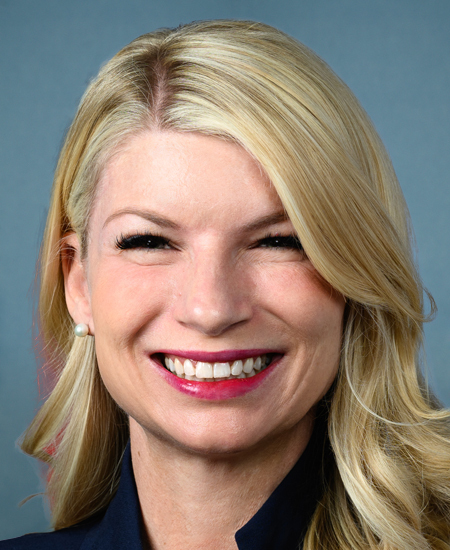
Rep. Brittany Pettersen
Sponsored bills
Providing for Unhoused People with Pets Act of 2023 or the PUPP Act of 2023 This bill permits the Department of Agriculture to award grants for interim and permanent housing that accommodates individuals (or families) who are homeless and have pets. Entities eligible for the grant include local governments, nonprofits, and entities that house or shelter homeless individuals. Additionally, grant recipients must make available supportive services and basic veterinary care.
Increasing Land Access, Security, and Opportunities Act This bill provides statutory authority for and expands the Farm Service Agency's (FSA's) Increasing Land, Capital, and Market Access Program (the Increasing Land Access Program) for farmers, ranchers, and forest owners. Specifically, the FSA must make competitive grants to, enter into cooperative agreements with, or provide other capital support to eligible entities (e.g., state or local governments, Indian tribes, nonprofit organizations, and institutions of higher education) to provide direct assistance to farmers, ranchers, and forest owners who are (1) historically underserved, or (2) operating in high-poverty areas. The bill specifically excludes from assistance any foreign-based or foreign-owned corporation. The direct assistance may include payments to intended beneficiaries to acquire real property (including air rights and water rights), secure clear title on an heirs' property farmland, and improve or remediate land, water, and soil. Eligible entities may also use grants (1) to provide direct assistance to intended beneficiaries in assessing, purchasing, acquiring, or retaining eligible land; (2) for activities designed to support farm establishment and long-term viability; and (3) to provide technical assistance. The FSA must establish a stakeholder committee and, in collaboration with the committee, develop a process for evaluating proposals and distributing funds to eligible entities. In developing this process, the FSA must consider perspectives from diverse stakeholders, diverse geographic distribution, and diverse farming models, practices, and purposes.
This concurrent resolution opposes actions that undermine Israel's future as a Jewish, democratic state. The resolution expresses that democracy is at the core of the special relationship between the United States and Israel, and that Congress stands with all Israelis seeking to defend liberal democracy, judicial review, and independent political institutions.
Maddy summaryHR 4963, the Tax Fairness for Workers Act, would restore tax deductions for certain employee expenses. It creates an above-the-line deduction for union dues and expenses paid by wage-earning employees, and allows miscellaneous itemized deductions for other work-related expenses (like uniforms or supplies) that were previously disallowed after 2017 tax law changes. These provisions directly affect employees who pay union dues or incur qualifying job-related costs. The bill amends specific sections of the Internal Revenue Code to make these deductions available for taxable years beginning after December 31, 2022. It does not change tax rates or provide new benefits, only reinstating previously eliminated deductions for eligible workers.
Protect Innocent Victims Of Taxation After Fire Act This bill excludes from gross income, for income tax purposes, any amount received after 2019 and before 2026 by an individual taxpayer as a qualified wildfire relief payment. The bill defines such payment as compensation for expenses or losses incurred as a result of a federally declared forest or range fire disaster.
Disclosure of Tax Havens and Offshoring Act This bill requires certain members of a multinational enterprise group that are also issuers of securities to annually disclose information related to the tax jurisdiction, income, and assets of their constituent entities on a country-by-country basis. (Multinational enterprise groups have two or more entities with different tax jurisdictions.)
Maddy summaryThis bill establishes new federal requirements for employers to prevent heat-related illness and injury among workers. It mandates that employers provide safe work environments by implementing specific measures, including access to cool water, scheduled rest breaks in shaded areas, employer-paid cooling equipment, and training for employees and supervisors on recognizing heat illness symptoms. The Secretary of Labor must create these standards within one year, requiring employers in high-heat occupations (like construction, agriculture, and outdoor labor) to adopt engineering controls, administrative schedules, and health protocols. Key provisions include ensuring hydration, rest, and language-accessible training, while preserving existing safety protections and allowing for updates as scientific evidence evolves.
Maddy summaryHR 4942 extends and modifies the Conrad State 30 program, which allows states to sponsor foreign medical graduates to work in medically underserved areas in exchange for a commitment to practice for three years. The bill directly affects foreign medical graduates seeking to work in the U.S., states that sponsor them, and health facilities in underserved communities. Key provisions include creating mechanisms for physicians to change employers or states if they face issues with their current employment, adding requirements for employment agreements (including prohibitions on non-compete clauses), and establishing exceptions to the three-year work requirement under certain circumstances. The bill also creates a process for states to recapture waiver slots when physicians leave their employment and requires annual reporting on the program's usage. These changes aim to improve physician retention in underserved areas by providing more flexibility and protections for foreign medical graduates.
Maddy summaryThis bill expands employee ownership in S corporations by extending tax deferral for selling company stock to employee ownership plans (ESOPs), creating a Treasury Department office to provide education and technical assistance for ESOPs, and amending small business rules to maintain eligibility for government programs after ESOP ownership exceeds 49%. It establishes a new Labor Department "Advocate for Employee Ownership" to coordinate federal efforts, educate stakeholders, and recommend policy improvements. The bill directly affects S corporations using ESOPs, their employees who become owners, and small businesses that might lose government program access due to ESOP acquisitions. Key provisions include tax incentive extensions, new support offices, and updated small business classification rules.