

21st Century Entrepreneurship Act This bill requires the Small Business Administration (SBA) to develop a curriculum for volunteers with the Service Corps of Retired Executives (SCORE) to teach underrepresented students (e.g., minority students, English learners, and children with disabilities) about entrepreneurship. The SBA shall develop and implement a strategy to encourage partnerships between the SCORE program and community learning centers to teach this curriculum and, in developing the curriculum, collaborate with education specialists and groups with experience serving underrepresented children. The SBA must submit a biennial report on partnerships between the SCORE program and community learning centers, the use of funds by the program, the number of students reached through the entrepreneurship curriculum, and plans for improving the curriculum.
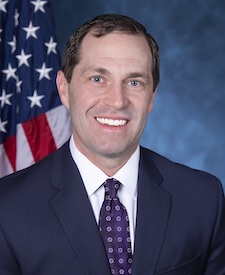
Rep. Jason Crow
Sponsored bills
This resolution recognizes the significance of Asian/Pacific American Heritage Month as an important time to celebrate the contributions of Asian Americans, Native Hawaiians, and Pacific Islanders to the history of the United States. The resolution also recognizes that the Asian American, Native Hawaiian, and Pacific Islander communities enhance the rich diversity of the United States.
Pride in Mental Health Act This bill expands programs that prevent and treat child abuse and neglect to address issues facing youth who are lesbian, gay, bisexual, transgender, queer or questioning, nonbinary, or gender-variant members of indigenous communities (e.g., Two Spirit). Specifically, these programs include (1) research and reporting requirements, (2) providing technical assistance, (3) grants to states and local agencies to train child-welfare personnel, and (4) community-based prevention-service grants. The bill also establishes a grant program to provide mental and behavioral health resources for such youth, including trauma-informed care.
Childhood Cancer Survivorship, Treatment, Access, and Research Reauthorization Act of 2022 or the Childhood Cancer STAR Reauthorization Act This bill reauthorizes through FY2028 and modifies pediatric cancer research and related programs, including to expand collection of and access to relevant biospecimens and to support the transition of pediatric cancer survivors to primary care.
Modernizing Access to our Public Land Act or the MAPLand Act This bill directs the Department of the Interior, the Forest Service, and the U.S. Army Corps of Engineers to jointly develop and adopt interagency standards to ensure compatibility and interoperability among federal databases for the collection and dissemination of outdoor recreation data related to federal lands and used to depict locations at which recreation uses are available to the public. Interior, the Forest Service, and the Corps of Engineers must digitize and publish geographic information system data that includes federal interests, including easements and rights-of-way, in private land; status information as to whether roads and trails are open or closed; the dates on which roads and trails are seasonally opened and closed; the types of vehicles and recreational uses that are allowed on each segment of roads and trails; and the boundaries of areas where hunting or recreational shooting is permanently restricted or closed. Interior, the Forest Service, and the Corps of Engineers may work with the U.S. Geological Survey to collect, digitize, standardize, or publish data to meet the requirements of this bill.
This resolution thanks the teachers of the United States and promotes the teaching profession by encouraging students, parents, school administrators, and public officials to recognize National Teacher Appreciation Week.
This resolution celebrates the contributions of small businesses in every U.S. community and supports the designation of National Small Business Week. Further, it supports efforts to provide small businesses with aid and assistance through certain programs and initiatives.
Protection of Civilians in Military Operations Act This bill implements policies and procedures within the Department of Defense (DOD) related to the harm of civilians during U.S. military operations.
Department of Defense Civilian Harm Transparency Act This bill requires the Department of Defense (DOD) to designate a senior official to serve as the civilian harm investigation coordinator to conduct a review of each investigation of civilian harm and assess whether applicable laws, policies, guidelines, and processes were followed during the investigations. DOD must also appoint a general counsel to assist the coordinator with such duties. The coordinator must annually submit to Congress a report on civilian harm resulting from U.S. military operations during the preceding year. DOD must make publicly available in an electronic format a detailed list of all ex gratia payments (i.e., payments that are not legally required) and other payments in response to civilian harm paid by the United States. Some information may be excluded to ensure safety or privacy of payment recipients. DOD must provide specified information to Congress to certify the need for confidentiality. DOD must provide an easily accessible electronic method by which individuals may request ex gratia or other condolence payments.
Asset Seizure for Ukraine Reconstruction Act This bill establishes a working group to determine the legal mechanisms that may be used to seize assets belonging to certain foreign persons (i.e., individuals and entities) affiliated with Russia's political leadership and addresses related issues. The interagency working group must determine the constitutional mechanisms by which the President may take steps to seize and confiscate assets belonging to any sanctioned foreign person whose wealth is derived through support for or corruption related to the regime of Russian president Vladimir Putin. The working group must report to Congress on certain issues including (1) recommendations to impose additional energy-related sanctions on Russia's government, and (2) any additional authorities the President needs to take steps to seize and confiscate the assets. The President must report to Congress a determination as to whether to expand existing sanctions related to certain Russian government activities to cover additional persons.