

Break the Cycle of Violence Act This bill establishes federal grant programs and related entities to support violence intervention initiatives. Specifically, the bill directs the Department of Health and Human Services (HHS) to award grants for coordinated community violence intervention initiatives in communities disproportionately impacted by homicides and community violence. HHS must also establish several related entities, including an Office of Community Violence Intervention to administer programs and activities related to violence intervention; the Community Violence Intervention Advisory Committee to advise and assist the office and HHS; and the National Community Violence Response Center to provide training and technical assistance, coordinate research, and develop data collection policies. Additionally, the bill directs the Department of Labor to award grants for job training and workforce programs in communities disproportionately affected by gun violence to connect youth ages 16 to 24 to in-demand occupations.
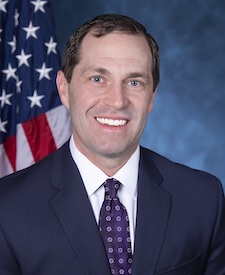
Rep. Jason Crow
Sponsored bills
Working to Integrate Networks Guaranteeing Member Access Now Act or the WINGMAN Act This bill directs the Department of Veterans Affairs (VA) to provide veterans with the option to grant read-only access to their records in the databases of the Veterans Benefits Administration to covered congressional employees. The covered congressional employees must be employed in the office of the Member of Congress who represents the district where the veteran resides. Under the bill, a covered congressional employee is (1) a permanent, full-time employee of a Member of Congress who is responsible for assisting constituents with federal agencies and departments; (2) designated by the Member; and (3) someone who satisfies the criteria required by the VA for recognition as an agent or attorney. However, the bill specifies that a covered congressional employee may not be recognized as an agent or attorney with respect to veterans' benefit claims.
Social Security Fairness Act of 2021 This bill repeals provisions that reduce Social Security benefits for individuals who receive other benefits, such as a pension from a state or local government. The bill eliminates the government pension offset , which in various instances reduces Social Security benefits for spouses, widows, and widowers who also receive government pensions of their own. The bill also eliminates the windfall elimination provision , which in some instances reduces Social Security benefits for individuals who also receive a pension or disability benefit from an employer that did not withhold Social Security taxes. These changes are effective for benefits payable after December 2021.
This resolution recognizes (1) the celebration of Hispanic Heritage Month; and (2) the integral role of Latinos and their manifold heritage in the economy, culture, and identity of the United States.
Access to Reproductive Care for Servicemembers Act This bill establishes leave policies for the military departments regarding abortion care for members of the Armed Forces, including policy elements related to privacy. Additionally, the bill requires the military departments to reimburse members for travel costs incurred if a member must travel to a different jurisdiction for an abortion. Under the bill, no member may be subject to any adverse action for requesting or taking leave in relation to abortion care.
Peace Corps Reauthorization Act of 2022 This bill reauthorizes through FY2024 and modifies operations of the Peace Corps. Changes include increasing the readjustment allowance paid to volunteers when their service terminates and providing statutory authority for an executive order that grants returned volunteers noncompetitive eligibility for federal civil-service positions. Additionally, the bill entitles returned volunteers to sixty days of health care benefits. The Peace Corps must also provide volunteers with information about enrolling in U.S. health plans before service termination and mental health care during and after service. The bill also includes provisions to address involuntary termination of Peace Corps service in emergencies, including by expediting re-enrollment of involuntarily terminated volunteers. The Peace Corps must also adequately insure volunteers' safety and must coordinate with the Department of State to periodically update agreements concerning the security of Peace Corps volunteers and staff abroad. The bill also authorizes Peace Corps to recruit domestically based volunteers to serve in the United States at the request of another agency or to provide services in a host country virtually, modifies the Peace Corps National Advisory Council's membership and functions, expands whistleblower protections for volunteers, increases the rate of pay that applies to a volunteer's workers compensation claim, requires Peace Corps to implement a zero tolerance drug use policy regarding volunteer involvement with illegal drugs, and emphasizes the use of the internet in Peace Corps programs. Furthermore, the bill requires reporting, including on the provision of mental health services to volunteers.
Patient Advocate Tracker Act This act requires the Office of Patient Advocacy within the Veterans Health Administration to establish an information technology system that allows veterans or their representatives to electronically file a complaint with a patient advocate and review the status of a filed complaint.
Improving Seniors' Timely Access to Care Act of 2022 This bill establishes several requirements and standards relating to prior authorization processes under Medicare Advantage (MA) plans. Specifically, MA plans must (1) establish an electronic prior authorization program that meets specified standards, including the ability to provide real-time decisions in response to requests for items and services that are routinely approved; (2) annually publish specified prior authorization information, including the percentage of requests approved and the average response time; and (3) meet other standards, as set by the Centers for Medicare & Medicaid Services, relating to the quality and timeliness of prior authorization determinations.
Supporting Medicare Providers Act of 2022 This bill extends a payment increase under Medicare's physician fee schedule through the end of 2023 (currently set to expire at the end of 2022).
Healthcare Cybersecurity Act of 2022 This bill requires the Cybersecurity and Infrastructure Security Agency (CISA) to undertake activities to improve the cybersecurity of the health care and public health sector. Specifically, CISA must collaborate with the Department of Health and Human Services (HHS) to improve cybersecurity in that sector. This includes making resources, including cyber-threat indicators and appropriate defense measures, available to federal and nonfederal entities that receive information through HHS programs. In addition, CISA must provide training on cybersecurity risks and mitigation strategies to owners of assets in the health care and public health sector. CISA must also conduct a study on cybersecurity risks in the health care and public health sector. The study must address, among other topics, the impact of the risks on rural entities and small- and medium-sized entities, cybersecurity workforce shortages in the sector, and challenges related to the COVID-19 emergency.