

Maddy summaryThe Essential Caregivers Act of 2024 requires nursing homes and similar facilities to allow residents to designate essential caregivers who provide emotional support or assistance with daily activities. During emergencies when regular visitation is restricted, facilities must permit at least one essential caregiver access to residents daily and cannot deny access without following specific procedures. Facilities may deny access for a maximum of 7 days during emergencies (or 14 days with state approval), and must provide a written explanation and appeal process if access is denied. The bill establishes a 48-hour appeal process for residents and caregivers to challenge denials, with facilities required to prove violations during appeals. This law applies to Medicare skilled nursing facilities, Medicaid nursing facilities, intermediate care facilities, and certain inpatient rehabilitation facilities.
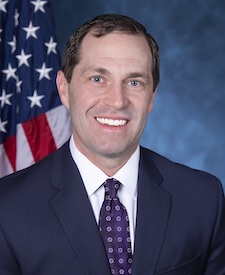
Rep. Jason Crow
Sponsored bills
Maddy summaryThis bill establishes Medicare coverage for diabetes prevention program services to help prevent type 2 diabetes in at-risk beneficiaries. It defines these services as structured behavioral health sessions following a CDC-approved curriculum, available to Medicare beneficiaries who haven't been diagnosed with diabetes (other than gestational diabetes) and meet specific medical criteria. The bill creates a new payment structure for diabetes prevention program suppliers, requiring them to be recognized by the CDC and meet administrative requirements for tracking participant data and maintaining program standards. It also sets a transition deadline of January 1, 2025, for ending the previous Medicare Diabetes Prevention Program Expanded Model and requires a report on the program's impact by 2028.
Maddy summaryThis bill clarifies that Medicare must cover fully implanted active middle ear hearing devices as prosthetics, not as hearing aids. It requires the Centers for Medicare & Medicaid Services (CMS) to update its rules within 60 days of the bill's enactment to remove these devices from Medicare's hearing aid coverage exclusion. This directly affects Medicare beneficiaries who rely on these specific implanted devices for hearing. The change means these devices will now be covered under Medicare's prosthetic benefits, not excluded under hearing aid rules, without altering existing coverage for other hearing aids.
Maddy summaryThis bill, HR 6860, protects patients with end-stage kidney disease (ESRD) who require dialysis by preventing health insurance plans from discriminating against them. It amends Medicare rules to prohibit plans from treating dialysis coverage differently than other medical services based on a patient’s ESRD diagnosis, need for dialysis, or any other factor. The bill clarifies that plans can still choose which dialysis providers to include in their networks but cannot deny or limit coverage for dialysis services solely because of the patient’s condition. It ensures Medicare remains the secondary payer for these services as intended, without forcing plans to cover specific providers.
Maddy summaryThis bill prohibits health insurance plans from charging healthcare providers fees for electronic payments (EFTs) and payment advice transactions. It directly affects doctors, hospitals, and clinics that receive electronic payments from health plans by banning any charges, including withholdings, for these transactions. The law, effective January 1, 2024, amends the Social Security Act to require health plans to cover these costs themselves, eliminating fees for providers.
Maddy summaryThis bill adds audiology services to Medicare's covered benefits under Section 1861(s)(2)(KK), effective January 1, 2025. It allows qualified audiologists to provide hearing and balance assessments and diagnostic/treatment services without requiring a physician referral or supervision, directly affecting Medicare beneficiaries seeking these services and audiologists practicing under state law. Payment will be 80% of the lower of actual charge or the Medicare fee schedule. The bill does not expand the types of audiology services covered but changes how they are accessed and paid for under Medicare.
Maddy summaryHR 6417 amends the existing "Ending Importation of Russian Oil Act" to ban imports of energy products (classified under Harmonized Tariff Schedule chapter 27) produced at any refinery using crude oil originating in Russia. This directly affects U.S. importers and companies bringing in such refined petroleum products. The key provision prohibits these imports regardless of where the refinery is located, targeting oil that has been "laundered" through foreign processing. The bill updates the existing law by adding this origin-based import ban as a new section.
Maddy summaryHR 5663, the ALS Better Care Act, creates a new Medicare payment system to improve reimbursement for specialized care services provided to ALS patients. It establishes a $800 per visit payment rate starting in 2025 for qualified ALS care facilities, with annual increases based on market basket adjustments. The bill requires the Comptroller General to report on appropriate payment amounts and ensures this new payment is in addition to, not replacing, existing Medicare payments for ALS-related services. This aims to reduce wait times, support facilities in rural areas through telehealth access, and address funding challenges for ALS clinical trials.
Maddy summaryThis bill makes permanent Medicare coverage for telehealth services provided by Federally Qualified Health Centers (FQHCs) and Rural Health Clinics (RHCs), including audio-only visits. It directly affects Medicare beneficiaries who use these services and the FQHCs/RHCs delivering them by removing location restrictions - allowing telehealth visits to occur regardless of the patient's geographic location. Key provisions include permanently covering audio-only telehealth (previously temporary), treating telehealth visits as equivalent to in-person visits for payment, and ensuring costs for telehealth are included in FQHC/RHC payment calculations. These changes simplify access to telehealth for rural and underserved communities while maintaining consistent Medicare reimbursement for providers.
Maddy summaryThe MORE Act (HR 5601) would federally decriminalize cannabis by removing it from the Schedule I list of controlled substances under the Controlled Substances Act. It requires federal courts to expunge non-violent cannabis convictions and associated arrests, with a focus on addressing racial disparities in cannabis enforcement. The bill creates an Opportunity Trust Fund that would allocate 50% of funds to criminal justice programs, 20% to small business assistance for minority cannabis entrepreneurs, and 20% to community reinvestment grants for individuals impacted by the War on Drugs. It also prohibits federal agencies from denying benefits or security clearances based on cannabis use or past cannabis convictions, and establishes a Cannabis Justice Office to administer these programs.