

Maddy summaryThis bill reauthorizes the United States Commission on International Religious Freedom (USCIRF) through fiscal year 2026. It extends the commission's funding authorization from 2023-2024 to 2025-2026 and delays the expiration date of its statutory authorization from September 30, 2024, to September 30, 2026. The bill directly affects USCIRF by ensuring its continued operation and funding without altering its existing mandate or reporting requirements. It is a procedural extension, not a policy change.
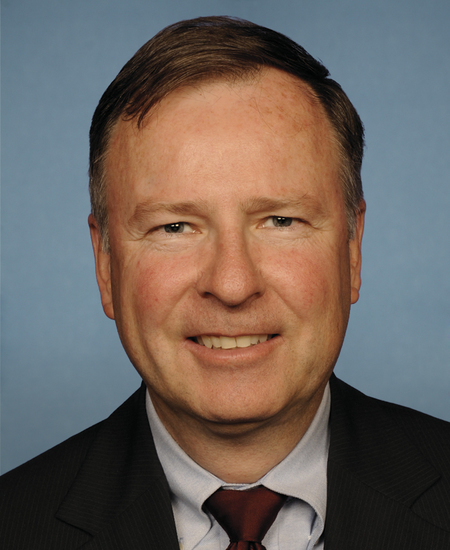
Rep. Doug Lamborn
Sponsored bills
Maddy summaryHR 8985, the Preventing Forced Abortions Act of 2024, prohibits federal courts from enforcing any surrogacy contract clause requiring a surrogate mother to have an abortion at the request of intended parents or their agents. The bill mandates courts to enforce payment to the surrogate for her services, regardless of any contract term tied to abortion, including clauses penalizing refusal (like reduced pay or liquidated damages). It directly affects surrogacy agreements between intended parents and surrogate mothers, ensuring surrogates cannot be forced to undergo abortions against their will while protecting their contractual compensation. The law defines "abortion" as intentionally terminating a pregnancy except in specific medical circumstances, such as after fetal viability or removing a non-viable fetus.
Maddy summaryThe Conscience Protection Act of 2024 would strengthen protections for health care providers, facilities, and organizations that refuse to participate in or provide coverage for abortions, assisted suicide, or other procedures conflicting with their religious or moral beliefs. It creates a private right of action allowing individuals or entities to sue when their conscience rights are violated, and requires the Department of Health and Human Services to enforce existing conscience protections through the Office for Civil Rights. The bill prohibits discrimination against health care entities that decline to provide or facilitate these services, while ensuring these protections don't interfere with emergency care requirements under existing law. It also establishes clearer enforcement mechanisms, including the ability to terminate federal funding for non-compliance with conscience protections.
Maddy summaryHRES 1311 is a symbolic resolution commemorating the second anniversary of the Supreme Court's Dobbs decision (June 24, 2022), which overturned *Roe v. Wade*. It celebrates the ruling as a step toward protecting unborn life and commits the House to supporting families and policies aligned with its view of unborn life's humanity. The resolution does not create new laws or affect any specific group directly - it is purely ceremonial, expressing the House's position on the Dobbs ruling.
Maddy summaryThis bill rescinds unspent funds from specific federal programs. It targets leftover money from pandemic relief (like the CARES Act and American Rescue Plan) and certain infrastructure initiatives (including education stabilization funds and transportation programs like the Congestion Mitigation Program). The rescission is limited to amounts already allocated for Israel, Ukraine, and Indo-Pacific security supplements under recent appropriations. Unspent funds must be returned to the Treasury, with no new spending created.
Maddy summaryHRES 1300 is a non-binding House resolution condemning campus protests and the groups organizing them. It specifically targets protesters at universities like Columbia and George Washington for actions including blocking classes, using antisemitic rhetoric, and defacing U.S. flags with Palestinian flags. The resolution condemns organizations like Students for Justice in Palestine and George Soros for funding these protests, and calls for an investigation into foreign adversaries involved. It also urges politicians to reject contributions from groups supporting anti-American or antisemitic demonstrations. The resolution does not create new laws but expresses the House's position on campus protests.
Maddy summaryThis bill amends the Northern Border Security Review Act to establish a new annual deadline for threat analysis (September 2, 2025, and each year after) and requires the Department of Homeland Security to update its northern border strategy within 90 days of each analysis. It mandates that the Secretary provide a classified briefing to congressional committees within 30 days of each threat analysis and develop performance measures for U.S. Customs and Border Protection's Air and Marine Operations to secure the northern border in air and maritime areas within six months of enactment. The bill directly affects the Department of Homeland Security and congressional committees by imposing specific reporting deadlines and review requirements. These changes focus on improving the frequency and structure of security assessments without altering existing border security operations.
Maddy summaryHR 537 authorizes a Congressional Gold Medal to honor 60 diplomats who saved Jewish lives during the Holocaust by issuing visas and passports against their governments' orders, risking expulsion and personal danger. The medal will be presented to the next of kin of these diplomats, alongside representatives from their home countries, and permanently displayed at the United States Holocaust Memorial Museum. The bill also permits the sale of bronze duplicates to cover production costs, with proceeds going to the U.S. Mint. This legislation recognizes the diplomats' humanitarian actions without creating new government programs or altering existing laws.
Maddy summaryHR 8693, the "No American Land for Communist China Act," prohibits U.S. citizens or entities from purchasing real estate adjacent to specific federal lands if owned by the Chinese government or businesses with 25%+ Chinese government ownership. It directly affects Chinese government entities and Chinese-owned businesses operating in the U.S., restricting their ability to buy land near protected federal areas. The bill requires the President to take necessary actions to block such purchases, covering lands managed by Interior, Defense, Agriculture (Forest Service), or designated Indian country. This is a policy restriction, not a funding measure, targeting land transactions near sensitive federal properties.
Maddy summaryHR 8653 authorizes the posthumous award of a Congressional Gold Medal to Major Thomas D. Howie, a U.S. Army officer who died during the Battle of Normandy in WWII. The bill specifies the medal will be presented to his nephew, Tom Howie, or his next of kin, and then permanently displayed at The Citadel Museum. It also permits the U.S. Mint to produce and sell bronze duplicates to cover costs. This is a commemorative measure honoring Major Howie's military service and sacrifice, with no substantive policy changes.