Stop Greenlighting Driver Licenses for Illegal Immigrants Act This bill prohibits a state from receiving certain federal law enforcement grants if it takes certain immigration-related actions. Specifically, a state may not receive such grants if it (1) issues a driver license to an individual who does not have proof of U.S. citizenship or lawful presence in the United States, or (2) prohibits a local or state government entity or official from sharing immigration enforcement information with the Department of Homeland Security.
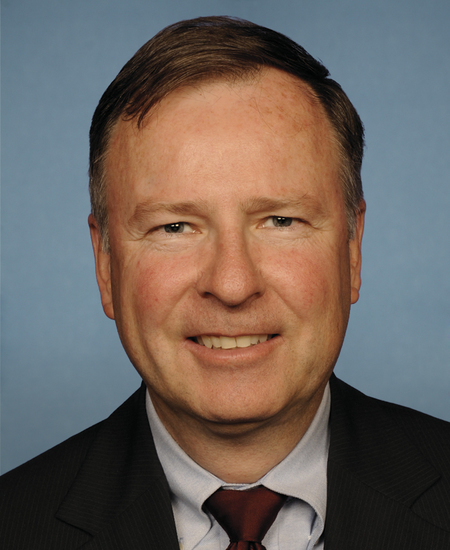
Rep. Doug Lamborn
Sponsored bills
Just and Unifying Solutions To Invigorate Communities Everywhere Act of 2021 or the JUSTICE Act This bill addresses policies and issues regarding policing practices and law enforcement accountability. The bill funds state and local grants, incentivizes state and local reporting on the use of certain policing practices, creates new federal offenses for certain misconduct, and establishes best practices and training requirements. The bill funds state and local grants, including to support the use of body-worn cameras, to implement information sharing systems for disciplinary records of law enforcement officers, and to prohibit officers from engaging in sexual acts under color of the law. Further, it requires state and local governments that receive grants under the Edward Byrne Memorial Justice Assistance Grant program to report information related to use-of-force incidents and the use of no-knock warrants. At the federal level, the bill establishes new criminal offenses related to falsifying police reports and engaging in sexual acts under color of law. The bill directs the Department of Justice to develop training on de-escalation tactics, behavioral health crises, alternatives to the use of force, and the duty to intervene when another officer uses excessive force. Finally, the bill establishes and funds the National Criminal Justice Commission. Among other tasks, the commission must develop best practices for policing tactics and procedures.

Teleabortion Prevention Act of 2021 This bill restricts the use of telehealth for chemical abortions (also known as medication abortions). Specifically, it requires a provider who dispenses or prescribes medication for a chemical abortion to physically examine the patient, be physically present at the location of the chemical abortion, and schedule a follow-up visit. The bill provides an exception for a chemical abortion that is necessary to save the life of a mother whose life is endangered by a physical disorder, illness, injury, or condition. The bill establishes criminal penalties—a fine, a prison term of up to two years, or both—for a provider who does not comply with the requirements. A patient who undergoes a chemical abortion may not be prosecuted.
Born-Alive Abortion Survivors Protection Act This bill establishes requirements for the degree of care a health care practitioner must provide in the case of a child born alive following an abortion or attempted abortion. Specifically, a health care practitioner who is present must (1) exercise the same degree of care as would reasonably be provided to any other child born alive at the same gestational age, and (2) ensure the child is immediately admitted to a hospital. Additionally, a health care practitioner or other employee who has knowledge of a failure to comply with the degree-of-care requirements must immediately report such failure to law enforcement. A health care practitioner who fails to provide the required degree of care, or a health care practitioner or other employee who fails to report such failure, is subject to criminal penalties—a fine, up to five years in prison, or both. An individual who intentionally kills or attempts to kill a child born alive is subject to prosecution for murder. The bill bars the criminal prosecution of a mother of a child born alive under this bill and allows her to bring a civil action against a health care practitioner or other employee for violations.
This resolution urges the U.S. Capitol Police Board to direct the Architect of the Capitol to remove the fencing installed around the perimeter of the U.S. Capitol complex in response to the attacks of January 6, 2021, and it recommends the end of the National Guard's mission in the District of Columbia in response to those attacks.
This resolution removes Representative Eric Swalwell from the House Permanent Select Committee on Intelligence.
Let States Cut Taxes Act This bill removes a prohibition on states and territories using COVID-19 (i.e., coronavirus disease 2019) relief funding under the American Rescue Plan Act of 2021 to offset a reduction in revenue resulting from a reduction in taxes or a delay in the imposition of a tax or tax increase.
Jumpstart Our Businesses by Supporting Students Act of 2021 or the JOBS Act of 2021 This bill expands student eligibility for Pell Grants by establishing the Job Training Federal Pell Grant program. Specifically, the bill requires the Department of Education to award a job training Pell Grant to a student who does not have a degree; attends an institution of higher education (IHE); is enrolled in a career and technical education program at an IHE that provides 150 to 600 clock hours of instructional time over a period of 8 to 15 weeks and provides training aligned with high-skill, high-wage, or in-demand industry sectors (i.e., job training programs); and meets all other eligibility requirements for a Pell Grant. It also specifies that any period during which a student receives a job training Pell Grant counts toward that student's Pell Grant eligibility period.
Global War on Terrorism Memorial Location Act This bill authorizes the establishment of a National Global War on Terrorism Memorial in the area of the National Mall.
Fair Access to Banking Act This bill restricts certain banks, credit unions, and payment card networks from refusing to do business with a person who is in compliance with the law. Restrictions include prohibiting the use of certain lending programs, initiating the process of terminating an institution's depository insurance, and instituting specified civil penalties.