

Resilient Federal Forests Act This bill modifies and sets forth provisions regarding forest management activities on National Forest System, public, and tribal lands. The bill provides for, among other things the Departments of Agriculture (USDA) and Interior to conduct fireshed management projects in fireshed management areas, certain categorical exclusions for various purposes, the balancing of the short- and long-term effects of forest management activities while considering injunctive relief, USDA and Interior to establish their own discretionary arbitration pilot programs as an alternative dispute resolution process for forest management activities, increasing the maximum term for a stewardship end result contract to 20 years, demonstration projects to support the development and commercialization of biochar on Indian forest lands or rangelands and in nearby communities by providing reliable supplies of feedstock from federal lands, the decommissioning of certain Forest Service Roads within designated high fire-prone areas, repealing of the Eastside Screens requirements on National Forest System lands, making the Northwest Forest Plan Survey and Manage Mitigation Measure Standards and Guidelines inapplicable to any National Forest System lands or public lands, development of a protection plan for giant sequoia trees on National Forest System lands and public lands, and permanent rights of access to the Oregon and California Railroad grant lands and the Coos Bay Wagon Road grant lands for private landowners issued reciprocal road rights-of-way.
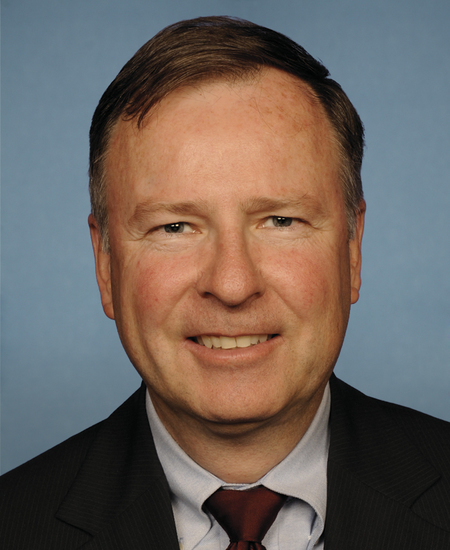
Rep. Doug Lamborn
Sponsored bills
Active Forest Management, Wildfire Prevention and Community Protection Act This bill establishes forest management, forest conservation, and wildfire prevention programs and activities. The bill establishes a collaborative prescribed fire program, an incentive program for large, cross-boundary prescribed fires, a program to remove or treat bark beetle-killed or infested trees, the Restoration and Resilience Partnership Program, and Forest Reserve Revenue Areas to generate revenue for counties. The bill also provides for, among other things the removal of certain trees or parts of those trees that come within 500 feet of an electric power line as hazard trees, the selection and implementation of landscape-scale forest restoration projects, removing the maximum term limits on stewardship end result contracting projects, study of only two alternatives (action vs. nonaction) in proposed collaborative forest management activities, the balancing of the long- and short-term effects of forest management activities on the affected ecosystem while considering injunctive relief, categorical exclusions from certain environmental requirements for specified forest management activities, and the expansion of the fire regime areas outside the wildland-urban interface for which a collaborative restoration project may be conducted.
This resolution condemns the Chinese Communist Party and its violation of the human rights of the people of China.
Space Resources Institute Act This bill directs the National Aeronautics and Space Administration (NASA) to submit a report on the merits of, and options for, establishing an institute related to space resources in order to advance NASA's objectives for maintaining U.S. preeminence in space.
Restoring Military Focus Act This bill eliminates the position of Chief Diversity Officer within the Department of Defense (DOD), as well as the position of Senior Advisor for Diversity and Inclusion within the military departments. Additionally, the bill prohibits the use of federal funds to establish similar positions to that of Chief Diversity Officer or Senior Advisor for Diversity and Inclusion within DOD.
Securing Our Border States Act This bill requires the Department of the Treasury to provide grants to states for building barriers and related infrastructure along the U.S.-Mexico border. Within 30 days of receiving a certification from a border state that it intends to use such grant funding for constructing a border barrier, Treasury must disburse funds to the state, with the amount based on the number of miles of border in that state that currently does not have a border barrier. The bill provides $22 billion of funding for this grant program and permanently rescinds $22 billion from funds made available for various assistance programs related to COVID-19.
This resolution denounces socialism and opposes the implementation of socialist policies in the United States.
Protecting Life on College Campus Act of 2021 This bill prohibits the award of federal funds to an institution of higher education (IHE) that hosts or is affiliated with a school-based service site that provides abortion drugs or abortions to its students or to employees of the IHE or the site. An IHE that hosts or is affiliated with a site must, in order to remain eligible for federal funds, annually certify that the site does not provide abortion drugs or abortions to students or employees.
Public Land Renewable Energy Development Act of 2021 This bill sets forth provisions regarding development of geothermal, solar, or wind energy on public lands. The Department of the Interior shall establish priority areas on its land for geothermal, solar, and wind energy projects, consistent with the principles of multiple use and the renewable energy permitting goal. Among applications for a given renewable energy source, proposed projects located in priority areas for that renewable energy source shall be given the highest priority for incentivizing deployment, and be offered the opportunity to participate in any regional mitigation plan developed for the relevant priority areas. The bill provides for the disposition of revenues from the development of wind or solar energy. The bill establishes the Renewable Energy Resource Conservation Fund to make funds available to federal, state, and tribal agencies for distribution in regions in which renewable energy projects are located on federal land for (1) restoring and protecting natural water bodies and fish and wildlife habitat and corridors, and (2) preserving and improving recreational access to federal land and water in an affected region.
Pandemic Unemployment Assistance Fraud Protection Act This bill creates several requirements for states to address fraudulent claims for Pandemic Unemployment Assistance (PUA), temporarily increases penalties for fraud related to PUA, and requires each state to establish a hotline for victims of unemployment fraud. Specifically, the bill requires states to cross reference PUA claims with federal and state prison records and E-Verify to ensure that claimants are eligible for PUA, submit to the Department of Labor plans to recover fraudulently obtained PUA, develop an anti-fraud task force to investigate and recover fraudulently obtained PUA, make restitution to Labor for the amount of any overpayment of PUA made by the state, and establish a hotline designed to encourage individuals who are victims of unemployment fraud and have received an incorrect statement of unemployment compensation to report that fraud. The bill also temporarily enhances the maximum penalty for fraud related to PUA through December 31, 2021, so that the offense is classified as fraud in relation to a presidentially declared major disaster or emergency and punishable by up to 30 years imprisonment, a fine of up to $1,000,000, or both.