

Maddy summaryThis bill authorizes the posthumous award of a Congressional Gold Medal to honor the Jewish participants of the 1943 Warsaw Ghetto Uprising who resisted Nazi forces. The medal, designed by the Treasury Secretary, will be presented by congressional leaders and permanently displayed at the U.S. Holocaust Memorial Museum, with potential future loans to institutions like Warsaw's POLIN Museum. It directly commemorates the historical resistance of approximately 3,000 Jewish fighters who defended their community against Nazi deportation and extermination efforts. The bill also permits the sale of bronze duplicates to cover production costs. This is a commemorative measure focused on preserving historical memory, not on creating new policy.
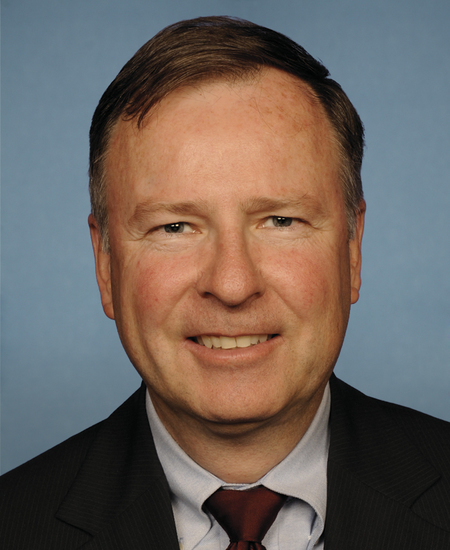
Rep. Doug Lamborn
Sponsored bills
Maddy summaryThis bill prohibits the Department of Defense from using funds to pay for or reimburse abortion services, except when the pregnancy endangers the mother's life, results from rape, or results from incest. It directly affects military personnel, civilian DOD employees, and contractors receiving medical care at military facilities by restricting funding for abortion-related expenses. Key provisions include amending federal law to ban reimbursement for travel or licensing costs related to abortion services and repealing a 2022 DOD memo that expanded access to such care. The bill explicitly blocks all funding for abortion services beyond the existing exceptions, with no new exceptions added. It does not change abortion access for civilians outside the military healthcare system.
Maddy summaryHR 1229, the "Stop CRT Act," codifies Executive Order 13950 into law and restricts federal funding for entities teaching specific concepts about race. It prohibits federal grants to organizations that teach any of six specified ideas, including that race determines moral worth, the U.S. is fundamentally racist, or individuals bear responsibility for historical actions based on race. The bill directly affects schools, nonprofits, and other recipients of federal funds by banning support for educational content matching these prohibitions. Key provisions require federal agencies to deny funding to any entity advancing these concepts, making the executive order legally binding. This policy change alters how federal funds are distributed based on mandated educational content.
Maddy summaryHR 1228 prohibits the U.S. military and Department of Defense-operated academic institutions from promoting specific anti-American or racist theories in training. It bans military programs that teach ideas such as "the U.S. is fundamentally racist," "the Constitution is fundamentally racist," or that "an individual’s worth is determined by race." The bill explicitly states it does not restrict protected speech, research access, or educational contexts that clearly disavow military endorsement of such theories. This directly affects military training curricula, workshops, and educational materials within the armed forces.
Maddy summaryThe Permitting for Mining Needs Act of 2023 streamlines federal permitting for mining projects on public lands by establishing specific time limits for environmental reviews (12 months for assessments, 24 months for impact statements) and allowing lead agencies to adopt applicant-prepared environmental documents that meet National Environmental Policy Act requirements. It enables mineral exploration with limited surface disturbance (up to 5 acres) to proceed without full environmental review, and creates mechanisms for coordination between agencies and project applicants through memorandums of agreement. The bill applies to all minerals, not just "critical" minerals, and ensures uranium is treated as a critical mineral for certain purposes. The legislation aims to expedite domestic mineral development while maintaining environmental review standards.
Maddy summaryHR 1200, the National Right-to-Work Act, prohibits requiring workers to join a union or pay dues as a condition of employment in both private-sector workplaces (covered by the National Labor Relations Act) and railroad industries (covered by the Railway Labor Act). The bill amends key sections of these laws to eliminate provisions that allowed union security agreements, meaning workers in unionized settings would no longer be forced to pay dues to retain their jobs. This directly affects employees in unionized workplaces across the U.S., particularly those in industries with existing union contracts that included mandatory dues. The law changes the legal framework to ensure union membership and dues payment remain voluntary for all workers.
Women's Public Health and Safety Act This bill allows a state to exclude from participation in the state's Medicaid program a provider that performs an abortion, unless (1) the pregnancy is the result of rape or incest, or (2) the woman suffers from a physical issue that would place her in danger of death unless an abortion is performed. Under current law, a state plan for medical assistance must provide that any individual eligible for medical assistance may obtain required services from any provider qualified to perform them.
Maddy summaryHR 1009 requires the President to develop a national strategy for using microreactors (small nuclear reactors under 20 MW thermal) to replace diesel generators during natural disasters. The strategy must evaluate current diesel generator use, compare environmental impacts, and address deployment logistics like storage, transportation, and maintenance. It mandates collaboration between agencies like FEMA, the Department of Energy, and the Nuclear Regulatory Commission, with annual reports to Congress. The bill aims to improve disaster response by providing reliable, low-emission power to critical facilities like hospitals and water plants, while reducing reliance on diesel.
Maddy summaryHR 356, the Unleashing American Energy Act, requires the federal government to hold annual offshore oil and gas lease sales in specific Gulf of Mexico regions and Alaska starting in 2023. It mandates that all unleased areas (not restricted by law) be included in these sales, following existing federal leasing rules. The bill also amends federal law to prevent the President from delaying or blocking these leasing processes without explicit congressional approval, creating a rebuttable presumption that such actions are unreasonable. This directly affects federal energy leasing programs and companies seeking offshore drilling rights.
Maddy summaryThis bill would require the U.S. to withhold funding for the UNRWA (United Nations refugee agency for Palestinians) unless the State Department certifies UNRWA staff, materials, and facilities comply with specific conditions. Key conditions include confirming no ties to terrorism or anti-Israel rhetoric (like denying Israel's right to exist or promoting BDS), no misuse of UNRWA resources for terrorist activities, and adherence to international financial audits. It also caps U.S. contributions to UNRWA at levels comparable to Arab League countries and mandates annual reports to Congress on phasing out UNRWA support. These changes directly affect U.S. foreign aid decisions for Palestinian refugees in Jordan, Lebanon, Syria, Gaza, and the West Bank.