

Maddy summaryThis bill requires the Committee on Foreign Investment in the United States (CFIUS) to review real estate transactions involving foreign adversaries (including China, Russia, Iran, and North Korea) near sensitive sites like military installations, ports, or critical infrastructure. It defines "elevated risk real estate transactions" as purchases or leases by foreign adversaries near such sites, creating a presumption that these deals pose unresolvable national security risks unless CFIUS explicitly approves them with evidence. The bill also adds food security considerations to CFIUS reviews and mandates declarations for these high-risk transactions. These changes aim to prevent foreign adversaries from gaining access to strategic U.S. land or infrastructure through real estate deals.
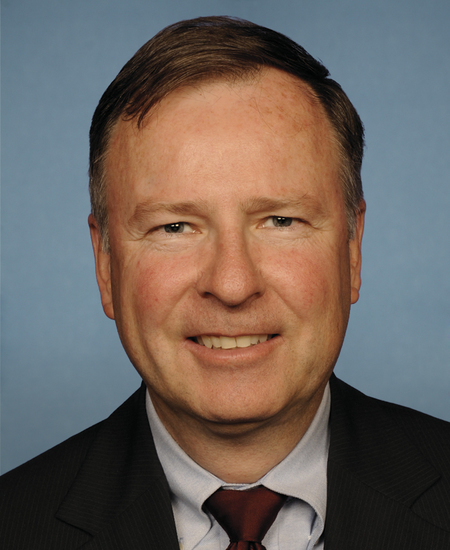
Rep. Doug Lamborn
Sponsored bills
Maddy summaryThis bill restricts eligibility for federal electric vehicle tax credits by barring manufacturers majority-owned by foreign adversaries (as defined in federal regulations) or their related entities from claiming these credits. It amends the Internal Revenue Code to require EV manufacturers to certify they meet this ownership standard to qualify for Section 30D tax credits. The provision applies to vehicles placed in service after the bill's enactment date. This directly affects EV manufacturers with significant ties to designated foreign governments, altering which companies can access these tax incentives.
Maddy summaryHJRES 44 is a congressional resolution seeking to block a 2021 rule by the Bureau of Alcohol, Tobacco, Firearms, and Explosives (ATF). The rule classified firearms with stabilizing braces as "short-barreled rifles," which would have required additional licensing and regulation. This resolution uses a specific legal process (under Title 5, U.S. Code) to formally disapprove the ATF rule, meaning the rule would no longer be in effect. It directly affects firearm owners, manufacturers, and dealers who would have been subject to the rule’s requirements.
Maddy summaryHRES 546 is a symbolic House resolution commemorating the one-year anniversary of the Supreme Court's June 24, 2022, Dobbs v. Jackson Women's Health Organization decision, which overturned Roe v. Wade. The resolution expresses support for the Court's ruling that the Constitution does not guarantee a right to abortion and celebrates the decision's impact on returning abortion policy authority to state legislatures. As a ceremonial resolution, it does not create new laws or directly affect any individuals or policies. The resolution focuses solely on marking the anniversary and affirming the position that unborn life should be protected.
Maddy summaryThis resolution (HRES 461) expresses the U.S. House of Representatives' disapproval of using public elementary or secondary school facilities to shelter individuals not admitted to the United States. It specifically references incidents in New York City where school gymnasiums were used for this purpose, arguing such use diverts educational resources, compromises student safety, and disrupts school routines. As a non-binding resolution, it does not create new laws or directly affect anyone but serves as a formal statement of opposition to the practice. The bill focuses on condemning the use of school facilities for sheltering non-admitted individuals, without proposing policy changes.
Maddy summaryThe HUBS for Veterans Act of 2023 establishes a federal grant program to improve transition support for service members, veterans, and their spouses. It authorizes $10 million over five years for grants to nonprofit organizations, state/local boards, or veterans service groups to coordinate key services - including career training, mental health support, legal aid, and benefits access - during the shift from military to civilian life. Eligible entities must cover at least half the program costs through matching funds. The program requires coordination between the Labor and Veterans Affairs departments, with priority given to organizations offering multiple integrated services.
Maddy summaryHJRES 45 is a congressional disapproval resolution targeting a specific Department of Education rule about federal student loans. It seeks to block the rule implementing "One-Time Federal Student Loan Debt Relief" (including modifications to Perkins, FFEL, and Direct Loan programs) by invoking the Congressional Review Act. If passed, this resolution would nullify the rule, preventing the Department of Education from using it to modify or waive student loan obligations. The bill directly affects borrowers who might have qualified for debt relief under the targeted rule.
Maddy summaryThis bill increases criminal penalties for non-citizens who reenter the U.S. after being deported or excluded. It specifically targets individuals with prior convictions for drug offenses, violent crimes, or multiple prior removals, imposing stricter fines and longer prison terms. For example, those convicted of an aggravated felony or two prior illegal reentries face mandatory minimum sentences of 5 years in prison, up to 20 years. The law also expands penalties for those who reenter without Homeland Security's permission after being removed under certain provisions.
Maddy summaryHR 277 would require Congress to approve major federal regulations before they take effect. Major rules are defined as those with significant economic impact ($100 million+ annually), major cost increases for consumers or industries, or significant adverse effects on competition, employment, or innovation. Agencies must submit detailed information about these rules to Congress, including cost-benefit analyses, before they can take effect. Congress would have 70 session days to approve the rule with a joint resolution; if they don't act within that timeframe, the rule would not take effect. This would increase congressional oversight of federal regulations and require more detailed information about proposed rules before they become law.
Maddy summaryThis bill bans displaying any flag other than the U.S. flag on the exterior or in hallways of public buildings, including government offices, military installations, and embassies. Exceptions allow specific flags like POW/MIA memorials, visiting diplomats' national flags, a member of Congress's home state flag, military unit flags, tribal flags, or local jurisdiction flags. It directly affects how public buildings display flags, requiring exclusive use of the U.S. flag in designated areas. The bill applies to all public buildings under federal definition, with limited exceptions for historical, diplomatic, or local displays.