

Maddy summaryHR 7866, the United States-Israel Anti-Tunnel Cooperation Enhancement Act, increases funding for U.S.-Israel collaboration on anti-tunnel technology from $50 million to $80 million. The bill directly affects U.S. defense and homeland security agencies working with Israel to detect, map, and disrupt underground terror tunnels used by groups like Hamas. Key provisions include authorizing the higher funding level under existing law to enhance joint efforts against subterranean threats, such as tunnels used for attacks, weapon storage, and hostage holding beneath civilian areas in Gaza. This focuses on concrete policy changes to scale up bilateral cooperation on a specific security technology.
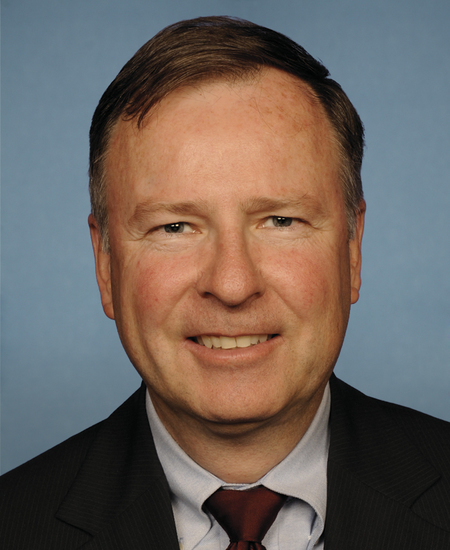
Rep. Doug Lamborn
Sponsored bills
Maddy summaryHR 7823, the Second Chance for Moms Act, requires new labeling on mifepristone (a medication used in medical abortions) and establishes a hotline. The bill mandates that mifepristone packaging include a warning label stating that natural progesterone may counteract the drug's effects, based on a statement from the American Society for Reproductive Medicine. It also directs the creation of a 24/7 toll-free hotline to provide support for women seeking to reverse the drug's effects. This bill directly affects pharmaceutical manufacturers (through labeling changes), healthcare providers, and women using mifepristone, with the labeling requirement taking effect six months after enactment.
Maddy summaryHCONRES 86 is a non-binding congressional resolution expressing that a carbon tax would harm the U.S. economy. It states that such a tax would raise energy prices for essentials like gasoline, electricity, and home heating, disproportionately affecting low-income families, the elderly, and fixed-income individuals. The resolution argues a carbon tax would reduce economic growth, encourage businesses to move overseas, and weaken U.S. global competitiveness, urging focus on pro-growth energy policies instead.
Child Tax Credit Integrity Act This bill requires an individual taxpayer to provide social security account numbers to claim the child tax credit. The social security number must be that of the taxpayer and the taxpayer's spouse (for joint returns) and the child named on the tax return.
Maddy summaryThis bill amends VA care standards to require the Department of Veterans Affairs to provide hospital care, medical services, or extended care for service-connected mental disorders rated at 50% or higher within five days of a veteran's request. It directly affects disabled veterans with qualifying mental health conditions who have a service-connected disability rating of 50% or more. The key provision establishes a strict 5-day timeline for accessing necessary mental healthcare services, replacing current access standards for this specific group. This is a concrete policy change to expedite care for veterans with significant mental health needs under VA community care programs.
Maddy summaryHR 6727 establishes the United States Foundation for International Conservation, a nonprofit organization that will provide grants to support long-term management of protected and conserved areas in eligible countries. The Foundation requires a 2:1 cost match from other sources, demands host country and community consent through binding agreements, and prioritizes areas with high biodiversity or species of significant importance. It will be governed by a Board of Directors including government officials and private sector experts, operate for 10 years with $1 million authorized for 2024 and $100 million annually from 2025-2035, and must follow international conservation standards while prohibiting funding for countries supporting terrorism or violating human rights.
Maddy summaryHR 6009, the Restoring American Energy Dominance Act, requires the Bureau of Land Management (BLM) to withdraw a specific proposed rule (88 Fed. Reg. 47562, July 24, 2023) concerning fluid mineral leases and leasing processes on public lands. The bill directly affects the BLM’s regulatory authority over oil and gas leasing by prohibiting the agency from finalizing, implementing, or enforcing that rule or any substantially similar rule. This is a procedural bill focused solely on reversing a specific regulatory action, with no new policy provisions or direct impact on energy producers beyond halting the proposed rule.
Maddy summaryThis bill prohibits the U.S. State Department from acquiring, leasing, or authorizing construction on overseas diplomatic facilities (like embassies and consulates) where the People’s Republic of China or its entities have ownership control (defined as 25% or more). It applies to all new building acquisitions, leases, and construction contracts after the law’s enactment. The law defines "covered construction" to include all building work, repairs, and essential systems like electrical or plumbing. Violations require the Secretary of State to notify relevant congressional committees within seven days.
Maddy summaryHR 7725 would block federal funding for graduate medical schools that require students or staff to adopt specific statements about race, gender, or identity (like claiming systemic racism or collective guilt), use race-based distinctions in admissions or programs, maintain DEI offices, or mandate "diversity statements" for admission. It directly affects graduate medical schools at colleges/universities receiving federal financial aid, including student loans. The bill exempts medical education about race-related health needs, demographic data collection for reporting, and religious institutions from adhering to policies conflicting with their beliefs. Schools violating these rules would lose eligibility for federal funds, though they could still comply with anti-discrimination laws and provide general academic instruction.
Maddy summaryHR 4278, the Restore VA Accountability Act of 2023, establishes new disciplinary procedures for VA supervisors and management officials (excluding senior executives and political appointees). It requires the VA Secretary to use "substantial evidence" for removal, demotion, or suspension, sets strict timelines (15 business days total for decisions), and creates a new internal grievance process. The bill limits judicial review to procedural errors, not penalty severity, and strengthens whistleblower protections by requiring Office of Special Counsel approval for disciplinary actions involving disclosures. This directly affects VA supervisors and managers whose performance or misconduct leads to disciplinary action.